-
-20%
-
Promotion
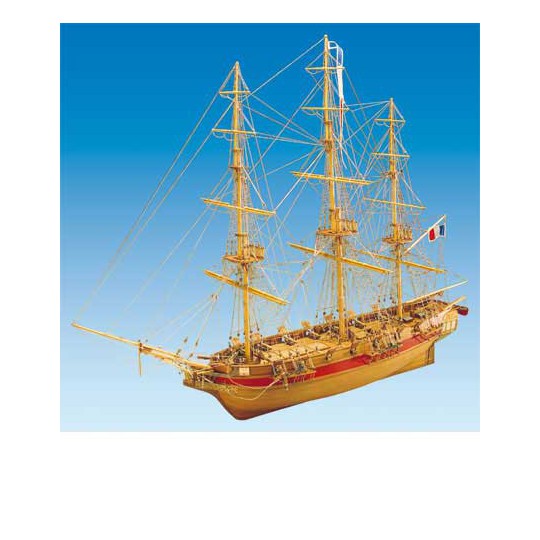
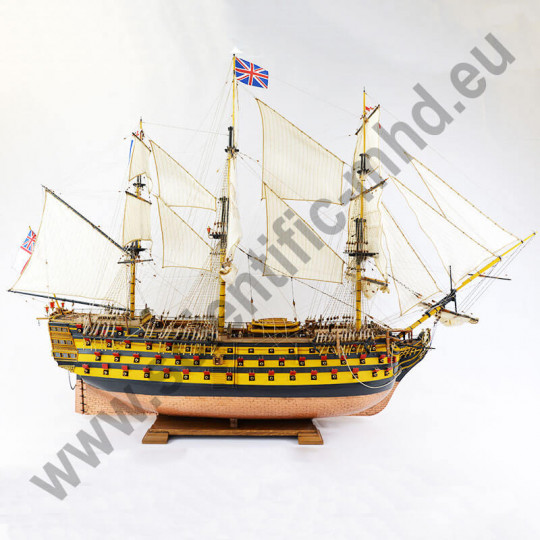
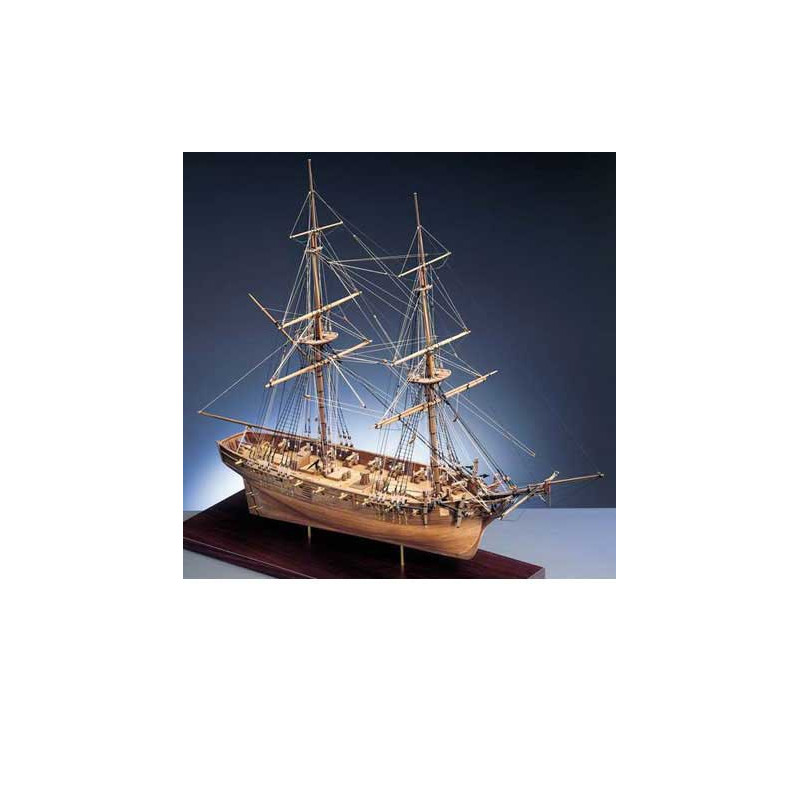
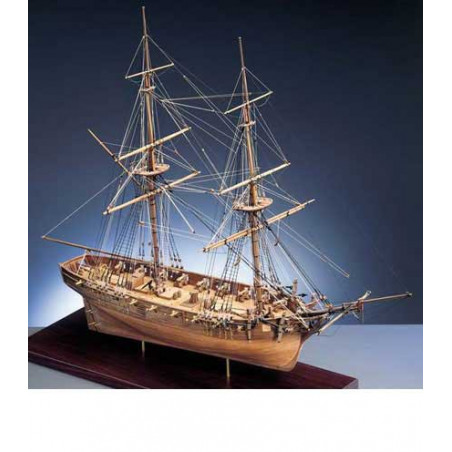
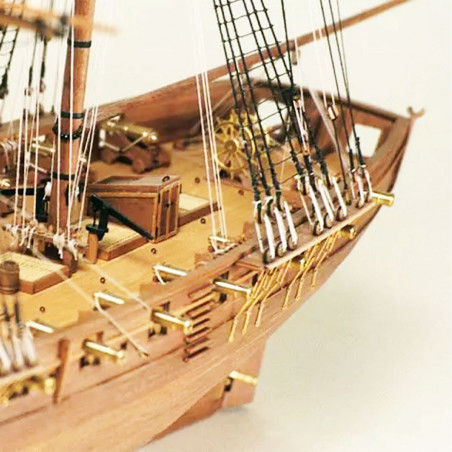
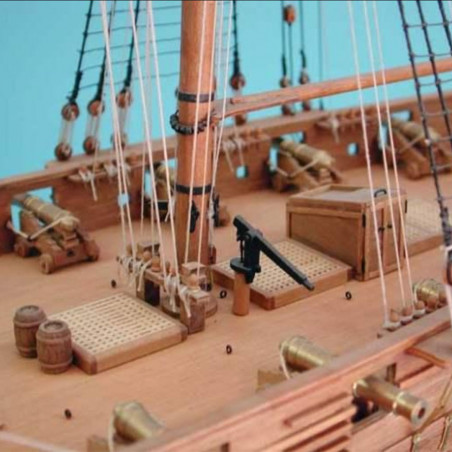
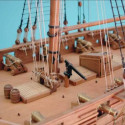
The Caldercraft HMS Cruiser 9001 kit reproduces the brig-sloop of the Royal Navy launched in 1797, at a scale of 1:64. With its 850 mm length, this model offers an excellent compromise between display presence, richness of details, and construction pleasure.
I find this scale particularly interesting for a historical ship model.
It allows working with elements large enough to remain accessible, while maintaining an elegant and realistic silhouette.
Once completed, the model measures approximately 850 mm long, 310 mm wide, and 610 mm high.
This last dimension takes into account the rigging and gives the Cruiser a beautiful presence on a piece of furniture or in a display case.

Model boat HMS Cruiser Caldercraft 1:64
Plus de detailsModel boat HMS Cruiser Caldercraft 1:64
Fast shipping
Via Chronopost 24H
Via DPD 24/48H
Colissimo 48/72H
337495 products in stock
Real-time stock displayed
Secure payment




Secure payment
In 3 or 4 installments

 4.6/5
4.6/5

Specialist since 1955
Fast shipping
Via Chronopost 24H
Via DPD 24/48H
Colissimo 48/72H
337495 products in stock
Real-time stock displayed
Secure payment
Secure payment
In 3 or 4 installments
4.6/5
Specialist since 1955
Here are the main features of the model.
| Feature | Detail |
|---|---|
| Brand | Caldercraft |
| Reference | 9001 / C9001 |
| Ship Represented | HMS Cruiser |
| Year Launched | 1797 |
| Ship Type | Royal Navy Brig-sloop |
| Scale | 1:64 |
| Model Length | 850 mm |
| Model Width | 310 mm |
| Model Height | 610 mm |
| Hull Construction | Double planking on frames |
| Wood Parts | Walnut elements and CNC-cut parts |
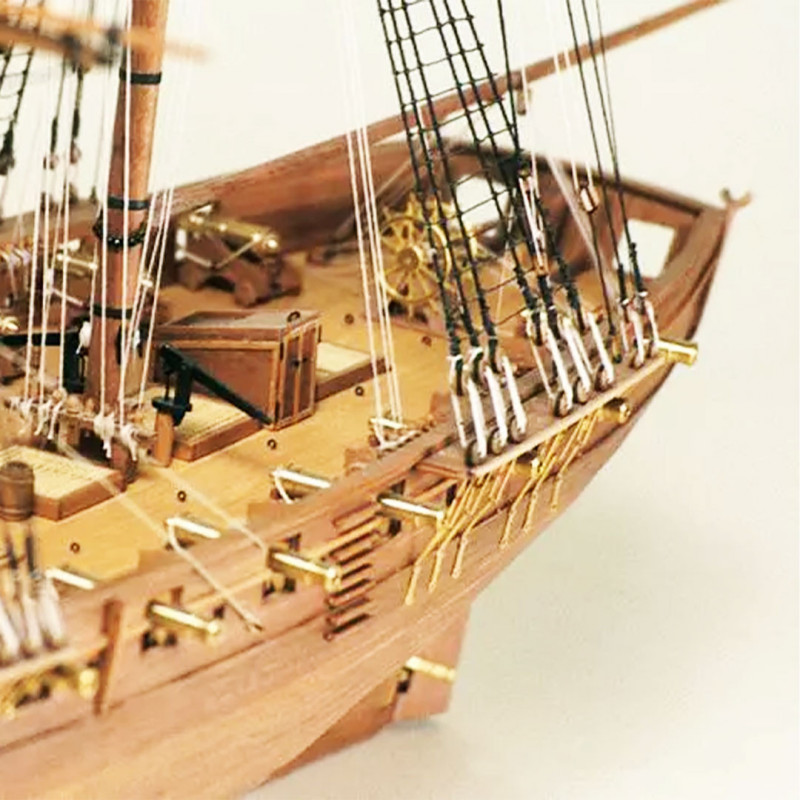
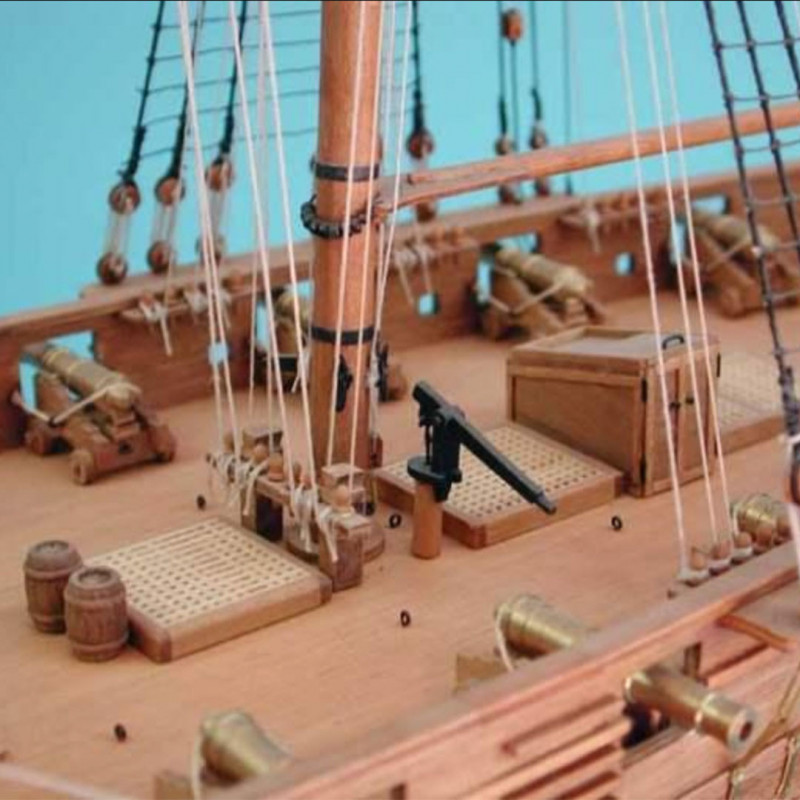
| Provided Artillery | 18 brass 6-pound cannons |
| Rigging | Black and natural thread |
| Documentation | Full-size plans and construction manual |
These features correspond to the information published for the Caldercraft 9001 kit by specialized distributors of the brand.
The Caldercraft HMS Cruiser was designed to be accessible to a beginner modeler already familiar with basic techniques, while offering enough detail to interest a more experienced builder.
The construction is based on a hull with double planking on frames.
This method allows for a precise hull but requires patience, especially during the planking and sanding process.
The manufacturer and specialized distributors generally classify this kit in a beginner to intermediate category.
A commercial estimate suggests about three months of evening work, but the actual time heavily depends on your construction method, experience, and desired level of finish.
I advise not to consider this duration as a target. With a wooden ship model, the result depends much more on the consistency of work rather than the speed of execution.
The HMS Cruiser, also spelled HMS Cruizer in historical sources, was the first ship of the Cruizer class in the Royal Navy. It was ordered in December 1796, built in Ipswich by Stephen Teague, and launched on December 20, 1797.
The ship was designed by Sir William Rule, Surveyor of the Navy, in the context of the French Revolutionary Wars. Its design met a very practical need of the Royal Navy: to have relatively small, fast, and adequately armed vessels for various missions.
The Cruiser was a brig-sloop, a small warship with two masts rigged as a brig.
This silhouette is one of the great attractions of this Caldercraft model. The two masts, square sails, relatively compact hull, and rigging give the model a very different appearance from that of a large frigate or ship of the line.
The brig-sloop was particularly suited for missions requiring speed, maneuverability, and versatility.
The Cruiser could participate in escort missions, reconnaissance, maritime surveillance, and combat against enemy vessels.
Sources dedicated to the Caldercraft kit also highlight its role in escort, reconnaissance, operations against enemy convoys, and coastal actions.
The HMS Cruizer itself had an active career in the North Sea, the English Channel, and the Baltic Sea.
It took part in several actions and notably captured French privateers and merchant vessels.
It is this type of career that gives this model of a British warship all its historical interest.
You are not just building a beautiful wooden hull, you are replicating a vessel designed for a highly mobile maritime war.
The HMS Cruiser was initially designed with 18 6-pound cannons, a configuration reproduced in the Caldercraft kit with 18 brass cannons.
However, the armament of the ship quickly evolved.
The Royal Navy replaced the broadside cannons with 16 32-pound carronades, while retaining two 6-pound cannons used as chase guns. This modification significantly increased the weight of the broadside but reduced the effective firing range.
This evolution is interesting for understanding the naval philosophy of that period. Carronades were particularly formidable at close range, which suited the close engagements that small warships could be involved in.
However, the Caldercraft kit provides 18 brass 6-pound cannons, in line with the configuration chosen for the model representation.
The HMS Cruiser is especially interesting because it was the origin of a particularly prolific class of warships.
The Cruizer class was developed from the design of the ship launched in 1797.
Sources dedicated to the Caldercraft kit indicate that 103 ships of this class were built between the 1797 Cruiser and the 1815 Zebra.
Detailed historical sources list over a hundred ships ordered based on this design.
The difference in counts is mainly due to the different ways of counting ships ordered according to periods and sources.
What is certain is the scale of the program. The Cruiser is therefore not an isolated ship.
It is the prototype of a family of small warships that would play an important role in the Royal Navy.
The HMS Cruiser belongs fully to the period of the Napoleonic Wars, even though its history should not be confused with that of the ship that transported Napoleon to the island of Elba.
Its activity took place during a period when the Royal Navy had to monitor European coasts, protect its maritime communications, and combat privateers and enemy vessels.
The HMS Cruizer operated notably in the North Sea from 1799 and took part in several captures of French privateers. Its activity then continued in the English Channel and the Baltic Sea.
The ship was finally placed in reserve in 1813 and sold for demolition in 1819.
No, the HMS Cruiser is not the ship that transported Napoleon to the island of Elba in 1814.
This clarification is important because the two ships belong to the same historical period and the Royal Navy, which can easily lead to confusion.
Napoleon was transported to his first exile aboard the HMS Undaunted, a British frigate with 38 guns.
The ship was commanded by Captain Thomas Ussher.
After Napoleon's abdication, the Undaunted was tasked with transporting the former emperor and his entourage to the island of Elba.
Napoleon embarked with his companions on April 28, 1814. The Undaunted arrived near the island on April 30, and Napoleon disembarked on May 3, 1814, at Portoferraio.
The history is particularly well-documented. The Royal Museums Greenwich notably preserve a handwritten letter from Thomas Ussher dated May 20, 1814, dedicated to Napoleon's voyage to the island of Elba.
Comparing the two ships helps to distinguish between them.
| HMS Cruiser | HMS Undaunted | |
|---|---|---|
| Type | Brig-sloop | Frigate |
| Launch | 1797 | 1807 |
| Armament | Originally 18 cannons | 38 cannons |
| Historical Role | Maritime warfare, escort, reconnaissance, captures | Transporting Napoleon to the island of Elba in 1814 |
| Caldercraft Kit Featured Here | Yes | No |
The historical link between the two vessels remains very interesting. Both belong to the Royal Navy of the Napoleonic Wars, but they did not serve the same role and did not have the same dimensions.
The Caldercraft 9001 kit includes the main elements needed to build the model of the HMS Cruiser at a 1:64 scale.
You will find:
The use of CNC-cut elements provides good regularity to the structural parts. For a wooden ship model, this precision also facilitates the assembly of the hull.
The HMS Cruiser Caldercraft is particularly suitable for modelers who want to build a detailed historical ship model without immediately moving to a very large-scale model.
With its 850 mm length, the finished model is sufficiently imposing to showcase the work done, while being easier to display than a large frigate or a ship of the line.
I would recommend it especially if you are looking for:
Caldercraft specializes in wooden ship model kits representing iconic historical vessels.
The HMS Cruiser holds an interesting place in this range.
Its 1:64 scale, reasonable dimensions, and history bring together three qualities that I personally look for in a historical model: a beautiful silhouette, a truly interesting construction project, and a history that gives meaning to the finished model.
The Cruiser is also an excellent choice if you want to gradually build a collection dedicated to Royal Navy ships.
The Caldercraft HMS Cruiser 9001 allows you to reproduce a British brig-sloop launched in 1797 at a 1:64 scale, at a time when the Royal Navy was engaged in numerous theaters of operation.
Its interest goes far beyond its decorative aspect.
By building this model, you will rediscover the structure of a small sailing warship, its planking, artillery, masts, and rigging. You will also discover the essential role played by these vessels in maritime surveillance and Royal Navy operations.
And if you are interested in Napoleon's history, the Cruiser serves as an excellent entry point to that period. It did not transport the emperor to Elba, but it does belong to the same great naval era.
For the historical voyage of 1814, it is the HMS Undaunted that should be remembered.
| Information | Value |
|---|---|
| Brand | Caldercraft |
| Reference | 9001 / C9001 |
| Model | HMS Cruiser |
| Type | Brig-sloop of the Royal Navy |
| Year of the ship | 1797 |
| Scale | 1:64 |
| Length | 850 mm |
| Width | 310 mm |
| Height | 610 mm |
| Hull | Double-planked on frames |
| Cannons | 18 brass cannons of 6 pounds |
| Wood parts | CNC-cut walnut elements |
| Plans | Full-size plans |
| Notice | Complete construction manual |
The Caldercraft HMS Cruiser 9001 model is built to a scale of 1:64. The model measures approximately 850 mm long, 310 mm wide, and 610 mm high when completed.
The HMS Cruiser, or HMS Cruizer, was launched on December 20, 1797 in Ipswich, England.
Yes. The ship had an active career during this period, particularly in the North Sea, the English Channel, and the Baltic Sea. It was involved in capturing privateers and enemy vessels.
The ship was initially armed with 18 cannons of 6 pounds.
Its armament later evolved to 16 32-pound carronades and 2 6-pound cannons.
The Caldercraft kit replicates the 18-cannon configuration and provides 18 brass pieces.
No. Napoleon boarded the HMS Undaunted, a 38-gun British frigate, in 1814.
He arrived at Elba on April 30 and landed at Portoferraio on May 3, 1814.
The HMS Cruiser is a brig-sloop, a small warship with two masts rigged as a brig. This type of ship was valued for its speed, maneuverability, and versatility.
Caldercraft targets this kit at beginner to intermediate modelers.
Building a double-planked hull, however, requires patience and precision, especially if you aim for a particularly neat finish.
The finished model measures approximately 850 mm long, with a width of 310 mm and a height of 610 mm.
The Cruiser allows you to explore the construction of a historic warship with a model that is less bulky than a large frigate.
However, its rigging, hull, and history offer a rich and detailed construction project.
The Caldercraft HMS Cruiser 9001 is a wooden ship model that is particularly interesting for those who want to combine construction, maritime history, and realism.
At a scale of 1:64, the model maintains reasonable dimensions while providing enough space to appreciate the planking, hull details, artillery, and rigging. Its history directly links it to the Royal Navy of the late 18th century and the Napoleonic Wars.
I also find that the confusion with Napoleon's voyage to Elba makes the subject even more intriguing.
The HMS Cruiser was not the Undaunted, but both ships belong to the same navy and historical period.
This distinction helps to better understand the diversity of vessels used by the Royal Navy during the Napoleonic Wars.
For a collector of historical ship models, the Cruiser is an elegant, well-documented model that is particularly evocative of British sailing navy of that period.