



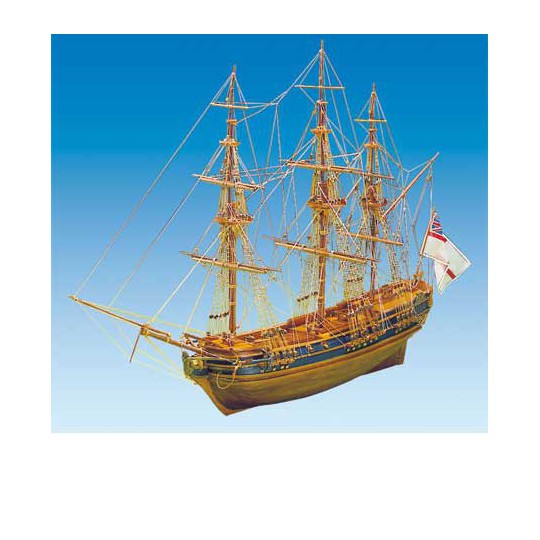
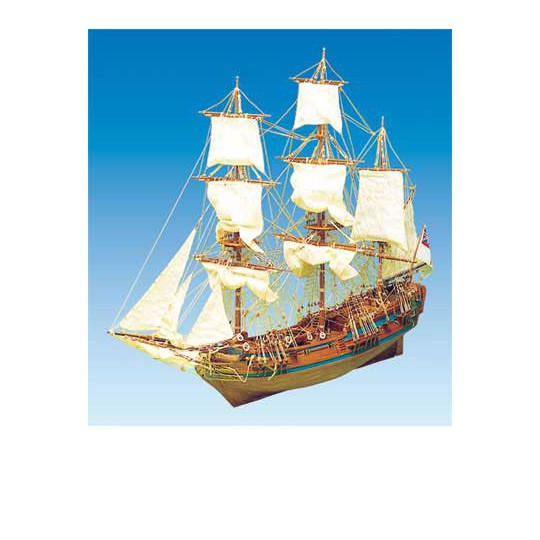
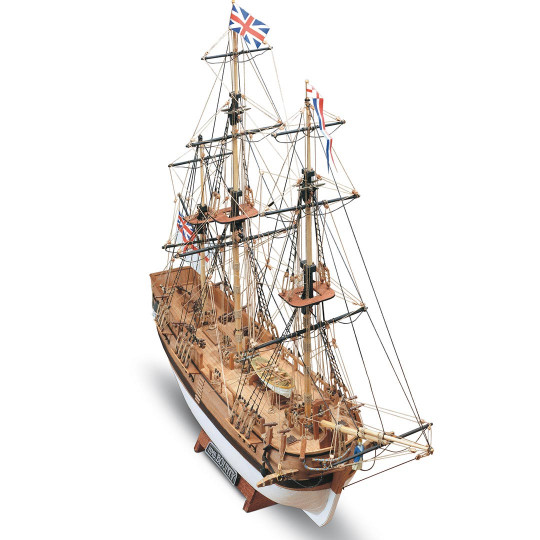
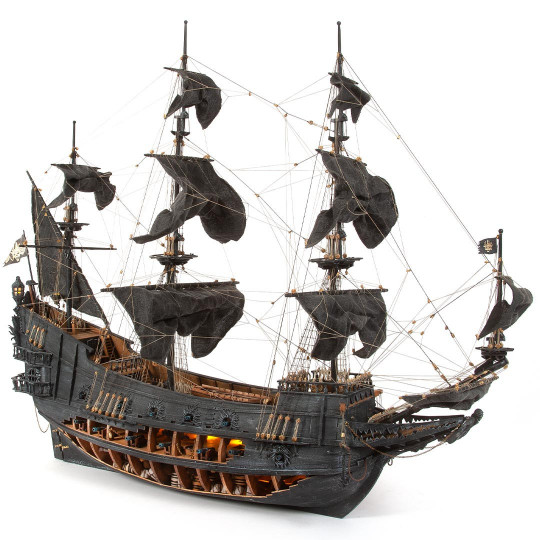



The OcCre Essex 1-60 model allows you to reproduce a historic wooden whaling ship associated with one of the most famous maritime tragedies of the 19th century.
This naval modeling kit includes 2,848 pieces and is aimed at intermediate modelers.
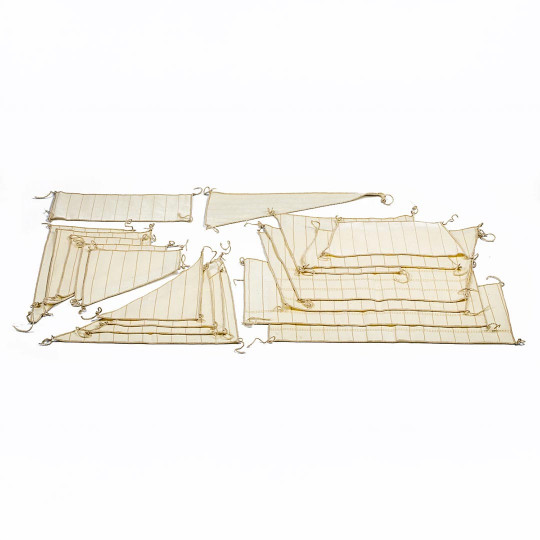
The sails, display stand, and step-by-step video tutorials will guide you through the construction of this ship designed for whaling.
Scale 1/60
Length 735 mm
Width 225 mm
Height 552 mm
Intermediate Level

Model Essex Whaler 1-60 - OcCre
Fast shipping
Via Chronopost 24H
Via DPD 24/48H
Colissimo 48/72H
329526 products in stock
Real-time stock displayed
Secure payment




Secure payment
In 3 or 4 installments

 4.6/5
4.6/5

Specialist since 1955
Fast shipping
Via Chronopost 24H
Via DPD 24/48H
Colissimo 48/72H
329526 products in stock
Real-time stock displayed
Secure payment
Secure payment
In 3 or 4 installments
4.6/5
Specialist since 1955
This wooden boat model combines different wood species, photogravure brass parts, and zamak molded accessories.
The rigging and deck elements require precision, while illustrated instructions and videos help follow the assembly steps.
Difficulty level: intermediate.
Estimated assembly time: 350 hours.
In 1819, the whaling ship Essex leaves Nantucket, Massachusetts, for a whale hunting campaign in the South Pacific.
Commanded by George Pollard Jr., the ship was supposed to stay at sea for several years.
In November 1820, while off the Marquesas Islands, it was repeatedly rammed by a large sperm whale and eventually sank.
The 21 crew members abandoned the ship and tried to reach the shore in small boats.
Their survival became an extreme struggle against hunger, thirst, and navigation conditions.
Only eight sailors survived this ordeal. The story of this disaster left a lasting mark on American maritime history.
This story notably inspired Herman Melville for his novel Moby Dick, published in 1851.
The OcCre model allows for the reproduction of a whaling ship linked to a significant episode in commercial navigation and the literary imagination surrounding sperm whale hunting.
With 2,848 pieces and an estimated 350 hours of assembly time, building the Essex is a project that requires consistency.
The intermediate level is suitable for modelers with some knowledge of wooden ship construction.
It is recommended to progress step by step: assembling the structure, installing the planking, deck details, and then setting up the masts and rigging.
Step-by-step video tutorials help visualize the different construction phases.
Take the time to check the alignment of the pieces before final gluing and organize the elements by step to avoid errors during the finer assemblies.
Prepare a modeling knife, fine sandpaper, precision tweezers, a small hammer, a hand drill, and wood-appropriate glue. A stable and well-lit workspace facilitates handling of small parts.
For rigging, fine tools help position the threads and adjust their tension without damaging the already assembled elements.
The Essex model uses various wood species selected according to the parts' function, from the structure to visible surfaces.
Laser-cut planks facilitate their adjustment.
Photogravure brass allows for reproducing fine details, while zamak molded parts complete the deck accessories, including some deck fittings.
Cotton is used for the sails and rigging threads of different thicknesses.
For painting and finishing, you can maintain the natural wood appearance on some parts or apply a color scheme as desired.
Prepare the surfaces before painting and perform a test on a less visible piece.
Paints and tools are to be prepared separately as they are not included in the standard kit contents.
Allocate a sufficiently clear space to preserve the masts, sails, and rigging.
The included display base allows presenting the model in a showcase or among a collection of historic ships.
The photogravure brass plate bearing the model's name completes its presentation.
For a diorama, you can envision a scene of departure from the port of Nantucket or a maritime environment inspired by 19th-century whaling campaigns.
A dock setting, some harbor elements, and a surface evoking the sea are enough to position the ship without diverting attention from the model.
Respect the scale of the accessories and allow enough space around the rigging.
The OcCre 1-60 Essex model is intended for naval modeling enthusiasts and maritime history buffs looking to build a wooden whaling ship.
Its intermediate level, 2,848 pieces, and estimated 350 hours of assembly make it a project that requires patience and precision.
The sails, display base, and step-by-step video tutorials help gradually approach the different stages until presenting the completed model.