
Key points to remember about Drift 1/43 and 1/16 radio-controlled cars.
- RC Drift cars in 1/43 and 1/16 scale are aimed at different audiences. Each scale has its own advantages depending on your skill level, budget, and the space you have available.
- The gyroscope truly transforms the driving experience. It makes drifting easier, improves stability, and allows for much faster progress.
- Full proportional control offers a more realistic driving experience than an "all or nothing" remote control.
- A 4WD transmission improves traction, accelerations, and control during drifts.
- The choice of surface is almost as important as the choice of the car. A simple parquet floor or tile can become an excellent playground.
- 1/43 Drift cars are ideal for beginners, while 1/16 models offer superior realism and performance.
- I always recommend choosing a car that suits your needs, rather than solely focusing on maximum speed.
- In this article, I explain how to choose your RC Drift car, the differences between 1/43 and 1/16 scales, how a gyroscope works, common mistakes to avoid, and especially which 1/43 Drift car to choose based on your profile.
Why do RC Drift cars fascinate drivers so much?
Radio-controlled drifting has been enjoying spectacular success in recent years.
I completely understand this enthusiasm. Few hobbies in modeling provide as much excitement with such a reasonable investment.
Unlike RC cars solely focused on speed, a RC Drift car is not aiming to break a speed record in a straight line.
Its goal is different. It must maintain a perfectly controlled slide throughout the turn.
That's precisely what makes this discipline so thrilling.
Each turn becomes a challenge.
Each trajectory can be improved.
Each acceleration directly affects the drift angle.
Very quickly, I realize that drifting is not just about making the car slide sideways.
It's about finding the right balance between acceleration, steering, and counter-steering to produce a smooth, consistent, and realistic slide.
It's this constant pursuit of precision that attracts both beginners and experienced hobbyists today.
Another significant advantage is that RC drifting can be done almost anywhere.
Depending on the chosen model, a few square meters are enough to fully enjoy your radio-controlled car.
This accessibility largely explains why 1/43 RC Drift cars are currently enjoying exceptional success.
What is an RC Drift car?
At first glance, a RC Drift car looks like a typical RC car.
However, their philosophy is completely different.
A speed car prioritizes:
- acceleration;
- maximum speed;
- grip.
A RC Drift car, on the other hand, seeks the exact opposite.
Its goal is to intentionally induce a loss of grip to maintain a controlled slide for as long as possible.
This technique, called drifting, originated in Japan before conquering circuits worldwide.
Today, it also exists in miniature form thanks to RC cars specially designed for this discipline.
The pleasure doesn't just come from speed.
It mainly comes from the quality of the driving.
A beautiful drift requires:
- a perfectly prepared entry into the turn;
- gradual acceleration;
- precise counter-steering;
- a perfectly controlled exit from the curve.
The more stable the car remains during the drift, the more realistic the driving appears.
That's precisely what enthusiasts are looking for.
Why is a Drift car different from a traditional RC car?
This question often arises among those new to modeling.
In my opinion, understanding this difference is essential before buying your first car.
A traditional RC car is designed to maintain maximum grip.
It aims to take corners as fast as possible.
A RC Drift car, on the other hand, willingly accepts losing grip to induce a controlled slide.
To achieve this, several elements are specific.
Generally, you find:
- a 4-wheel drive (4WD) transmission;
- tires specially designed for drifting;
- very precise steering;
- a fully proportional remote control;
- an electronic gyroscope on recent models.
All these equipment work together to facilitate drifting.
The result is immediately visible.
Trajectories become smoother.
Turns gain in realism.
The pleasure of driving increases significantly.
Why is RC drifting so successful today?
Several reasons explain this popularity.
The first is undoubtedly technological evolution.
Just a few years ago, achieving a beautiful drift required a lot of experience.
Today, the new generations of RC cars greatly facilitate learning.
Electronic gyroscopes, proportional controls, and all-wheel drive systems allow beginners to quickly achieve impressive results.
The second reason concerns the sizes of the new cars.
The emergence of 1/43 Drift cars has completely changed the market.
It is no longer necessary to have a large track.
A living room, an office, or a garage become real drift tracks.
Finally, we cannot ignore the influence of Japanese car culture.
The iconic drift cars continue to inspire millions of enthusiasts.
Their silhouette is immediately recognizable.
Their history is fascinating.
RC car manufacturers naturally draw inspiration from them to offer models replicating the lines of the most famous Japanese and European sports cars.
I believe that this emotional dimension significantly contributes to the pleasure of owning an RC Drift car.
Who is an RC Drift car for?
One common misconception is to think that drifting is only for experienced drivers.
I do not share this view.
Today, there are cars suitable for virtually all profiles.
For example:
- children easily discover driving thanks to 1/43 models equipped with a gyroscope;
- teenagers appreciate their speed and ease of use;
- adults rediscover the pleasure of driving miniature replicas of legendary cars;
- experienced modelers seek ever more precise trajectories.
This diversity explains why the market for remote-controlled drifting continues to grow.
Everyone can progress at their own pace.
Start simple.
Then gradually improve your technique.
Technologies have completely changed RC drifting
In my opinion, we are currently experiencing a real revolution in the field of remote-controlled cars.
Modern models have little resemblance to those marketed just a few years ago.
The main innovations include:
- ESP gyroscopes;
- 2.4 GHz remote controls;
- more efficient Li-Ion batteries;
- fully proportional controls;
- much more efficient 4WD transmissions;
- LED lighting;
- stiffer and more precise chassis.
These developments make cars easier to drive, more reliable, and more enjoyable to use.
I also note that manufacturers now offer equipment that was previously reserved for competition RC cars.
This is particularly true for 1/16 models, which now offer astonishing performance considering their size.
Why choosing the right scale is more important than choosing speed
When I talk to people who want to buy their first RC Drift car, I notice that they almost always ask the same question:
Which car is the fastest?
However, in my opinion, speed is not the right criterion.
I always prefer to ask another question.
Where will you actually use your car?
If you mainly want to drive in your living room, on a desk, or in an apartment, a 1/43 Drift car is often the best choice.
If you have a garage, a large terrace, or an indoor track, a 1/16 Drift car will quickly make sense.
The scale directly influences:
- driving sensations;
- stability;
- turning radius;
- speed;
- realism;
- required space.
This is why I consider it the first criterion to take into account even before comparing the technical characteristics.
Why are 1/43 Drift cars so successful?
If there is one category that has profoundly transformed the market of RC drifting, it is that of 1/43 RC Drift cars.
Before their arrival, many enthusiasts hesitated to get started. The 1/10 Drift cars required a higher budget, significant space, and some experience.
The 1/43 models have completely changed the game.
I believe they have democratized RC drifting.
Today, all it takes is a few square meters to have fun.
A living room.
An office.
A game room.
A garage.
A large table.
All these surfaces become real drift tracks.
It is precisely this simplicity that explains their success.
You can take out your car for a few minutes, set up two or three obstacles, and start driving immediately.
Few hobbies offer as much freedom.
A mini car... but real sensations
Don't be fooled by the size.
A 1/43 RC Drift car is small.
However, its driving sensations are surprisingly close to those of larger models.
Today's new generations have particularly advanced technologies.
These include:
- a 4WD all-wheel drive;
- fully proportional control;
- an electronic gyroscope;
- a 2.4 GHz remote control;
- realistic LED lighting.
In my opinion, it is precisely this combination that makes all the difference.
The driver no longer feels like they are driving a simple toy.
They are driving a real mini RC Drift car.
Why is the 1/43 scale ideal for beginners?
I often recommend a 1/43 Drift car to people who are new to modeling.
Several reasons explain this choice.
Firstly, the car remains extremely maneuverable.
It is easy to transport.
It can be stored in a drawer or a bag.
Furthermore, the risks of breakage are more limited than on a much faster car.
Finally, recent models equipped with a gyroscope greatly facilitate learning.
Even in the first few minutes of driving, it becomes possible to chain clean slides.
This rapid progression is very motivating.
I regularly observe that beginners gain confidence much faster with a 1/43 RC Drift car with gyroscope than with an old model without assistance.
What is the best 1/43 Drift car?
This is probably the most frequently asked question.
However, there is not a single answer.
In my opinion, the best 1/43 Drift car is above all the one that truly suits your needs.
I always advise looking at several criteria before making a choice.
Is there a gyroscope?
For me, it has become essential.
A RC car with a gyroscope offers:
- more consistent slides;
- better stability;
- faster learning;
- more fun from the first minutes.
If you are a beginner, I would always prioritize a model equipped with a gyro.
Is the steering proportional?
The difference is huge.
An "all or nothing" steering greatly limits precision.
Conversely, a proportional control allows:
- to adjust each turn;
- to more easily maintain the drift;
- to achieve much more natural trajectories.
Today, I consider this technology essential.
Is the transmission 4WD?
Again, the answer is simple.
Yes.
A 4WD Drift car remains more stable during slides.
The traction is better.
Accelerations are more progressive.
The behavior is more reassuring.
For a first purchase, I clearly recommend this architecture.
Is the chassis quality adequate?
Even on a miniature car, the chassis plays an essential role.
A good chassis allows:
- greater precision;
- more rigidity;
- a more consistent behavior;
- a better lifespan.
This is often what distinguishes a good Drift car from a simple remote-controlled toy.
The criteria I always look at before buying
When I discover a new model, I always look at the same elements.
They directly influence the driving pleasure.
I check:
- the presence of a gyroscope;
- 4WD transmission;
- proportional steering;
- battery life;
- ease of recharging;
- availability of spare parts;
- body quality;
- LED lighting;
- manufacturer's reputation.
In my opinion, these criteria are much more important than a difference of a few kilometers per hour.
Cars inspired by drift legends
Aesthetics also play an important role.
Many drivers choose their car because it replicates a model that they dream of.
I completely understand them.
Some silhouettes have become true icons.
We find body designs inspired by:
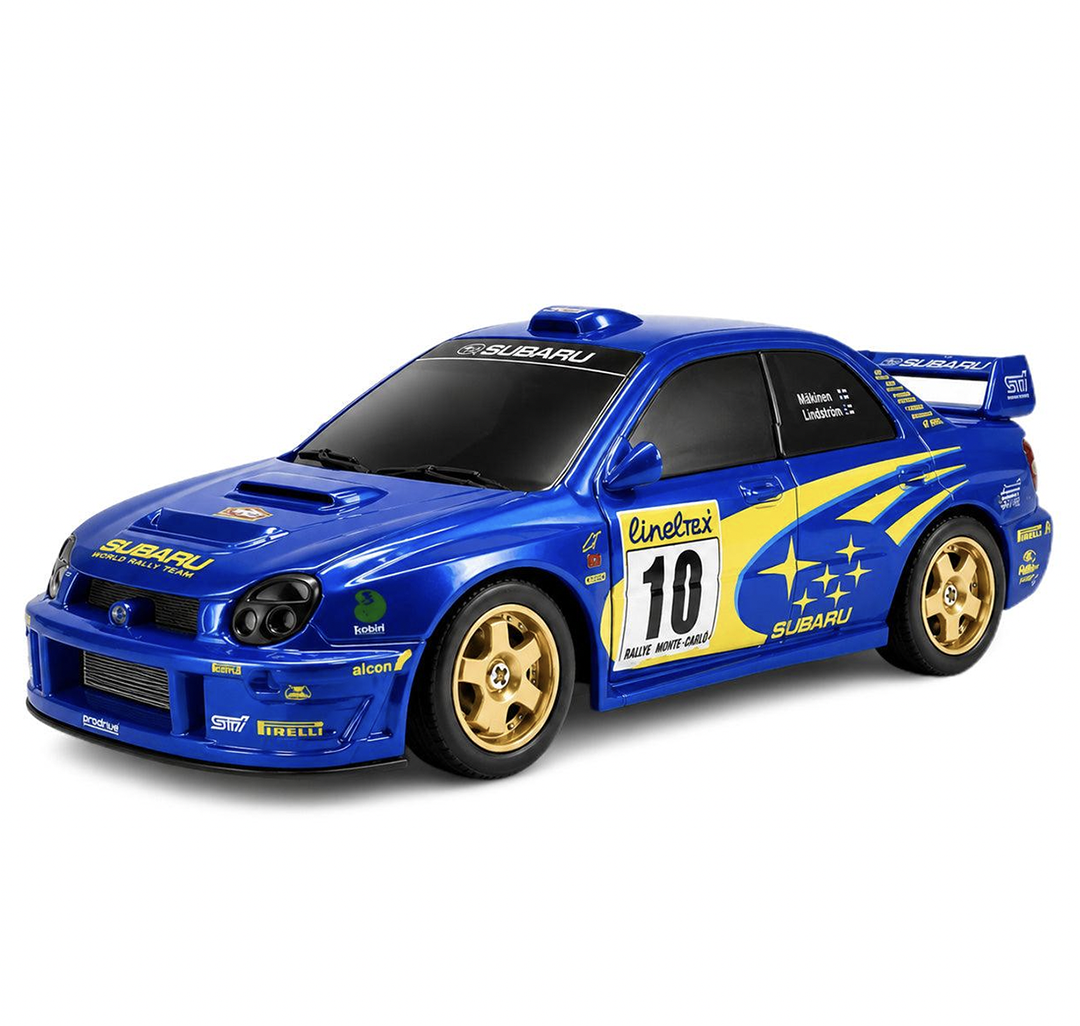
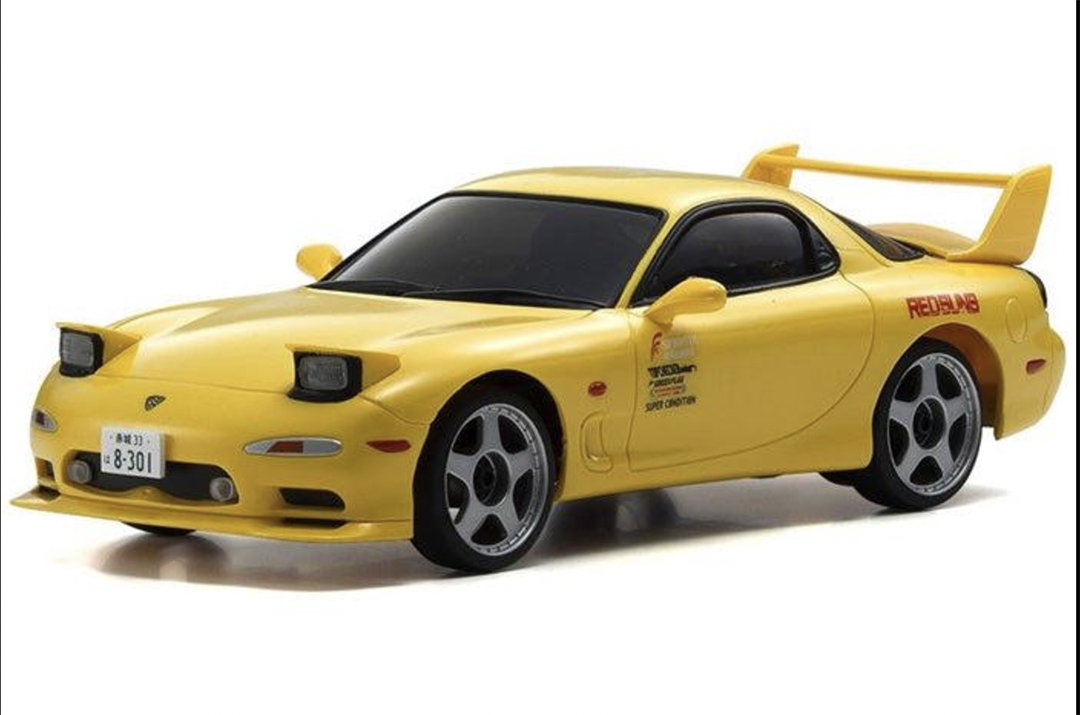
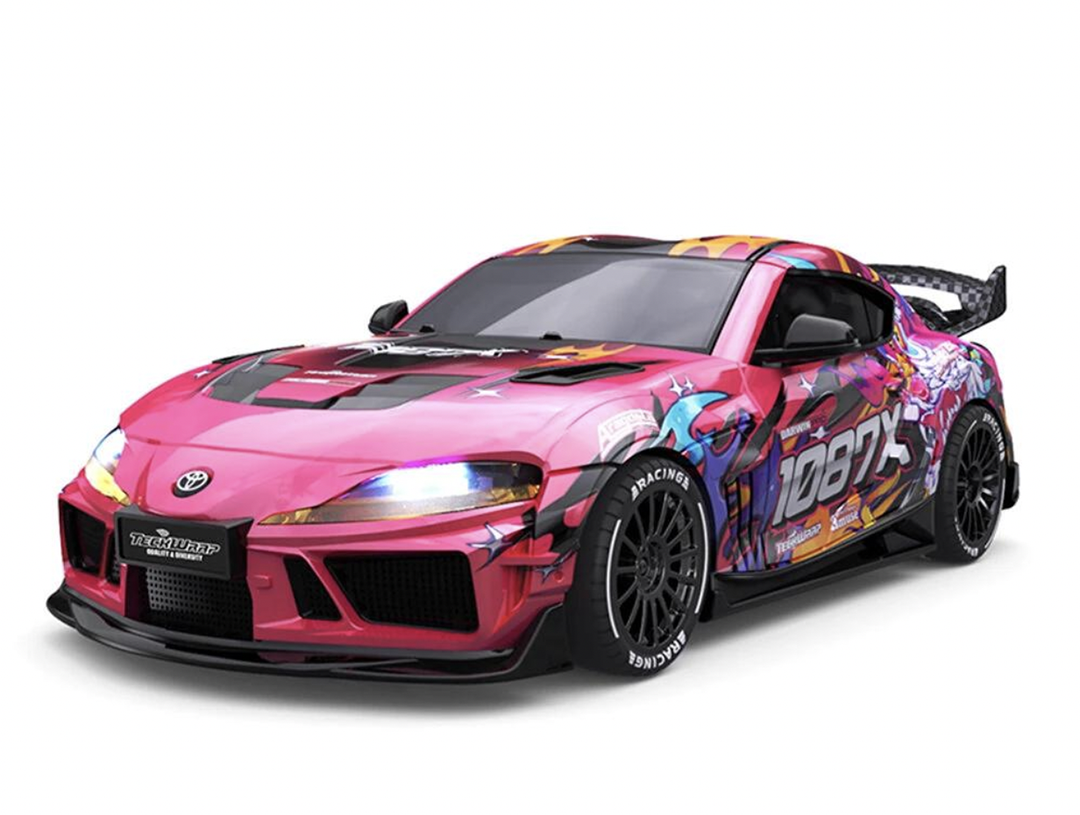
These cars have marked the history of Japanese drift.
Reproducing them in remote-controlled versions allows to rediscover a part of this automotive culture on a miniature scale.
In my opinion, this also explains the success of RC Drift cars among collectors.
What profile for a 1/43 Drift car?
I find it often simpler to reason by profile rather than technical characteristics.
Here is the type of user I have in mind.
| Your profile | Why choose a 1/43 Drift car? |
|---|---|
| Beginner | Quick handling, compact size, and reassuring driving. |
| Child | Compact format, suitable speed, and easy to use. |
| Teenager | Excellent compromise between realism and simplicity. |
| Adult | Perfect for practicing drift at home. |
| Collector | Many body designs inspired by legendary cars. |
| JDM Enthusiast | Rediscover the great Japanese icons in miniature version. |
Common mistakes I often see in beginners
By talking to many enthusiasts, I often find the same mistakes.
The first one is wanting a faster car all the time.
However, speed does not make a good driver.
I much prefer a well-balanced car, equipped with a gyroscope and proportional control, than a very fast model that is difficult to control.
Another common mistake is choosing a car without considering where it will be used.
A 1/43 RC Drift car reveals its full potential in a confined space.
Conversely, a larger car will require more space.
Finally, many beginners forget that good drift relies primarily on precision.
It is better to work on clean trajectories than to immediately seek spectacular slides.
Why the 1/43 Drift car remains a reference
Even with the arrival of 1/16 models, I believe that the 1/43 RC Drift car still holds an essential place in the modeling world.
It is compact.
Accessible.
Easy to transport.
Space-saving.
Economical to use.
Above all, it allows practicing drift practically anywhere.
For a first purchase, I often recommend it.
It already offers an excellent level of realism, especially when equipped with a gyroscope, 4WD transmission, and proportional control.
In the following article, we will discover why many drivers then choose to switch to a 1/16 RC Drift car, what the real differences are between these two scales, and in which cases this evolution allows to reach a real milestone in terms of realism and driving pleasure.
Why switch to a 1/16 Drift car?
After a few weeks or months spent with a 1/43 RC Drift car, many drivers start looking for more realism.
It's completely normal.
The more experience you gain, the more you enjoy working on your trajectories, precision, and corner sequences.
At that point, a 1/16 RC Drift car often becomes a logical progression.
The Retro Stage offered by Scientific MHD:
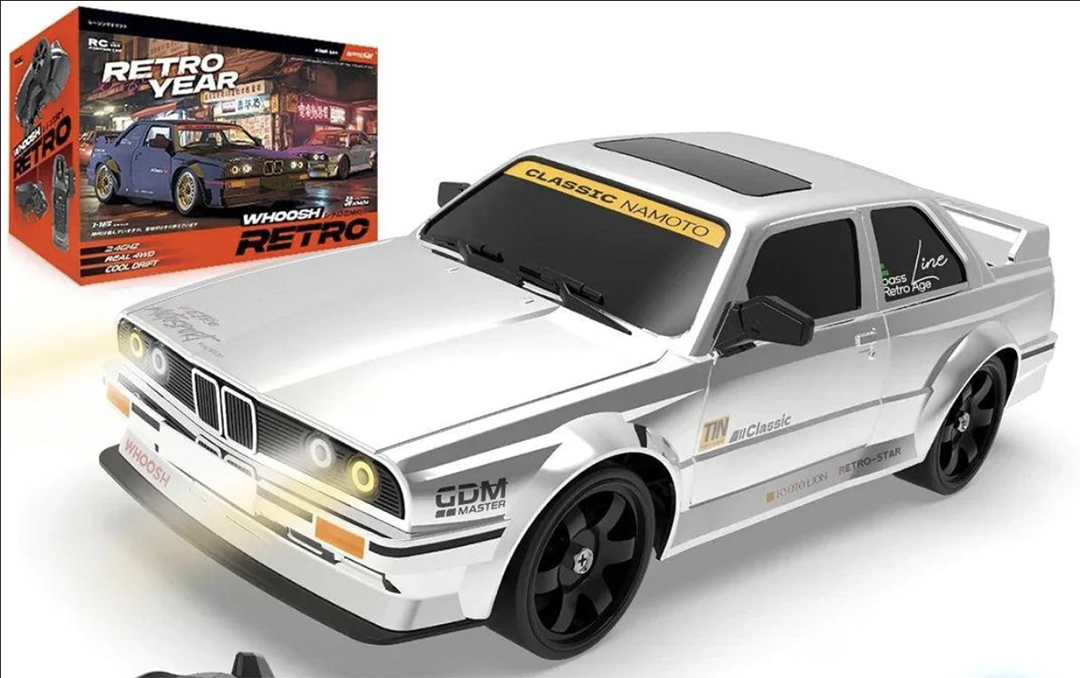
I wouldn't say it replaces a 1/43 Drift car.
I prefer to say it complements another way of practicing drifting.
The pleasure remains the same.
The sensations change.
The driving becomes more precise.
The car seems more alive.
The reactions are closer to those of a real drift chassis.
That's precisely what attracts many enthusiasts.
Why does the 1/16 scale offer a more realistic behavior?
At first glance, a 1/16 car simply seems larger.
In reality, this size difference profoundly influences the car's behavior.
The chassis is longer.
The wheelbase increases.
The tracks are wider.
The weight is higher.
All these characteristics naturally alter the dynamics.
I immediately notice several differences.
The weight transfers become more progressive.
The drifts are longer.
The car reacts with more inertia.
The trajectory corrections are more natural.
The result is particularly enjoyable.
You experience sensations very close to those of a 1/10 RC Drift car, without needing a large track.
Why does stability completely change the driving experience?
When starting out, one often thinks that speed is the most important criterion.
I don't share this idea.
Stability influences the driving pleasure much more.
A stable car inspires confidence.
It allows for calmly preparing for the corner entry.
It accepts gentler corrections.
It more easily maintains its drift angle.
Thanks to its higher wheelbase, a 1/16 Drift car generally remains easier to control as speed increases.
This is one of the main reasons for its success among drivers looking to improve.
A larger car... but still easy to use
Some people think a 1/16 car becomes difficult to use.
In my opinion, this is a misconception.
These models remain very accessible.
They are compact enough to be easily transported.
They fit in a car trunk.
They can operate on a terrace, in a garage, on an indoor track, or on a perfectly smooth parking lot.
Of course, they require more space than a 1/43 Drift car.
But we are still far from the constraints of a 1/10 car.
That's precisely what makes them so interesting.
1/43 Drift or 1/16 Drift: which one to choose?
There is no wrong choice.
Each scale simply caters to a different use.
I always recommend choosing the car that suits your driving environment rather than its maximum speed.
Here is the comparison I use most often.
| Criterion | Drift 1/43 | Drift 1/16 |
|---|---|---|
| Space needed | Very low | Medium |
| Ideal use | Living room, office, apartment | Garage, terrace, indoor track |
| Handling | Very fast | Fast |
| Realism | Excellent | Very high |
| Stability | Good | Excellent |
| Speed | Moderate | High, up to 50 km/h depending on the models |
| Long drifts | Very good | Even more natural |
| Transport | Very easy | Easy |
| Beginner | ★★★★★ | ★★★★☆ |
| Experienced pilot | ★★★★☆ | ★★★★★ |
When should you switch to a Drift 1/16 car?
I think there are several signs.
You already easily master your Drift 1/43 car.
You are looking for more speed.
You want to perform longer drifts.
You are starting to work on your trajectories.
You drive regularly.
You have a slightly larger space.
In this case, switching to a 1/16 RC Drift car is often an excellent decision.
You will discover a new way of driving.
The advantages of a Drift 1/16 car with gyroscope
The latest models now integrate a particularly efficient ESP gyroscope.
I consider this to be one of the most important developments in recent years.
The gyroscope does not make the car automatic.
It simply improves stability.
Concretely, it allows:
- to more easily maintain long drifts;
- to avoid some spinouts;
- to correct small deviations;
- to gain in consistency.
This assistance becomes particularly valuable as speed increases.
Why does proportional control become even more important?
The more performance the car has, the more essential precision in driving becomes.
A fully proportional control allows for very fine dosing of:
- acceleration;
- braking;
- steering.
I find that this precision completely changes the driving pleasure.
It allows for much cleaner trajectories.
The sequences become smoother.
Drifting appears more realistic.
In my opinion, a 1/16 car without proportional control loses a great deal of its appeal.
A car capable of drifting... but also racing
This is often overlooked.
Some 1/16 RC Drift cars come with two sets of wheels.
Drift tires allow for more sliding.
Road tires offer more grip.
In a few minutes, you can transform your car.
You can alternate between:
- technical drifting;
- accelerations;
- slaloms;
- timed courses;
- races with friends.
This versatility, in my opinion, is a real advantage.
It allows you to fully enjoy your car in many situations.
Which scale to choose according to your profile?
I often advise to think based on your practice rather than your current desires.
| Your profile | Recommended scale | Why? |
|---|---|---|
| First purchase | 1/43 | Very easy to handle. |
| Apartment | 1/43 | Ideal for small spaces. |
| Garage or terrace | 1/16 | Fully benefits from its potential. |
| Realism seeker | 1/16 | Behaves more like a large RC car. |
| Collector | 1/43 and 1/16 | Both scales are complementary. |
| Pilot looking to improve | 1/16 | Helps refine piloting technique. |
My opinion on the two scales
I am often asked which one is the best.
Honestly, I think this question is incomplete.
The right question is rather:
What is the best RC Drift car for your use?
If you are looking for a compact car, easy to take out for a few minutes in the evening and capable of driving in a living room, I would choose a Drift 1/43 with a gyroscope.
However, if you want to experience sensations closer to a competition RC car, with more speed, stability, and realism, I would lean towards a Drift 1/16.
In my opinion, these two categories are not competitors.
They are complementary.
Many enthusiasts actually own both.
A 1/43 for quick sessions at home.
A 1/16 to fully enjoy the performance in a larger space.
Why does the gyroscope completely change the driving experience?
When I introduce an RC Drift car with a gyroscope, I often notice the same reaction.
Many people think that the gyroscope drives the car for them.
In reality, that is not its role at all.
The gyroscope, sometimes called ESP, is simply an electronic assist.
It constantly analyzes the vehicle's movements.
When it detects excessive loss of grip or excessive drift angle, it automatically corrects very slight steering movements.
These corrections are extremely fast.
They are almost invisible.
Yet, their effectiveness is impressive.
The car remains more stable.
The drifts become smoother.
The trajectories appear much more natural.
In my opinion, this is probably the technological advancement that has most popularized RC drifting in recent years.
Is a car with a gyroscope only for beginners?
Absolutely not.
This is a misconception that I often hear.
The gyroscope obviously helps novice drifters.
It reduces errors.
It limits spins.
It facilitates long slides.
But it also provides real comfort to experienced drivers.
Why?
Because it allows for much more consistent trajectories.
When aiming to execute a series of turns or replicate a precise trajectory, this additional stability becomes very valuable.
Even the most experienced drivers now use RC cars equipped with a gyro.
How does an RC gyroscope actually work?
Its operation is much simpler than one might imagine.
The gyroscope continuously measures the car's rotation around its axis.
As soon as it detects excessive drift, it automatically acts on the steering servo.
The corrections are very subtle.
A few degrees are enough.
The driver always maintains control.
He decides:
- when the drift starts;
- the speed;
- the overall angle;
- the exit from the turn.
The gyroscope only intervenes to stabilize the car.
I often liken it to a discreet assistant.
It supports the driver without ever replacing them.
Why do long slides become easier?
When the rear of the car starts to slide, several phenomena occur very quickly.
The speed changes.
The grip changes.
The weight shifts.
Without assistance, all these reactions must be corrected manually.
With a gyroscope, some of these micro-corrections are automatically taken care of.
The pilot can then focus on:
- their acceleration;
- their drift angle;
- their trajectory;
- the next turn.
Result:
Long slides become much easier to perform.
Is a gyroscope useful on a 1/43 Drift car?
I clearly answer yes.
Some think that this technology is mainly intended for 1/16 or 1/10 cars.
I disagree.
A 1/43 RC Drift car with a gyroscope becomes much more enjoyable to drive.
This assistance partially compensates for the very quick reactions due to the vehicle's low weight.
Trajectories become smoother.
Mistakes are less frequent.
For a first purchase, I almost always recommend a model equipped with this technology.
And on a 1/16 Drift car?
The role of the gyroscope remains the same.
However, the benefits change slightly.
A 1/16 Drift car generally runs faster.
It has more inertia.
Slides are longer.
Entry speeds into turns increase.
The gyroscope then improves:
- stability;
- precision;
- consistency.
In my opinion, it becomes almost essential as performance increases.
Why does proportional control change everything?
The gyroscope is not enough.
Precisely controlling the car is also necessary.
This is where the fully proportional control comes in.
With a standard remote control, there are often two positions:
- straight;
- full steering lock.
The same goes for acceleration.
This solution remains simple.
But it lacks finesse.
A proportional control works differently.
Each movement is gradual.
You can precisely choose:
- the wheel angle;
- the motor power;
- the braking.
This precision allows you to maintain the car exactly at the desired angle.
Drifting becomes much more natural.
Why is 4WD transmission ideal for drifting?
The 4WD all-wheel drive transmission is now the standard on modern RC Drift cars.
I easily understand why.
All four wheels contribute to traction.
Power is better distributed.
Traction losses are more gradual.
Accelerations remain more consistent.
In practice, this means that the car:
- accelerates more effectively;
- remains more stable;
- controls its drifts better;
- more easily maintains its sliding angle.
In my view, this architecture represents the best compromise between performance and ease of handling.
The three technologies working together
They are often discussed separately:
- gyroscope;
- proportional control;
- 4WD transmission.
In reality, these three elements complement each other.
The transmission provides traction.
The remote control provides precision.
The gyroscope improves stability.
Together, they make the car much more enjoyable to drive.
That's why I always recommend checking for the presence of these three components before buying an RC Drift car.
The most common mistakes I see in beginners
After observing many beginner drivers, I almost always find the same mistakes.
Trying to go too fast
Drifting is not about driving as fast as possible.
Excessive speed greatly complicates trajectories.
I always prefer to start slowly.
Speed will naturally come with experience.
Turning the wheel too abruptly
Drifting requires finesse.
Movements should remain gradual.
Too much correction often leads to a spin-out.
With a proportional control, it becomes much easier to control each movement.
Driving on a poor surface
The choice of surface is essential.
The best surfaces are:
- parquet flooring;
- tile;
- smooth concrete;
- indoor RC tracks.
Conversely, thick carpets, rugs, gravel, or grass significantly reduce performance.
Accelerate fully from the beginning of the turn
This is probably the most common mistake.
I always recommend preparing calmly for the entry of the turn.
Then accelerate gradually.
The car remains much easier to control.
Only focus on the car
Your focus greatly influences your driving.
I advise focusing on where you want to place the car instead.
Your brain naturally anticipates the trajectory.
This technique works well both in real cars and in RC drift.
How to improve quickly in RC drift?
There is no secret.
Consistency remains the best method.
I often recommend starting with a simple figure-eight.
Then an oval.
Only then move on to more complex sequences.
A few minutes of practice each day are enough.
You will gradually develop:
- your precision;
- your sense of counter-steering;
- your throttle control;
- your fluidity.
I much prefer ten minutes daily than one long session per month.
Accessories that truly improve your performance
Contrary to popular belief, it is not necessary to invest immediately in many options.
I always prioritize accessories that provide real benefits.
For example:
- an extra battery to extend your sessions;
- a more efficient charger;
- tires suitable for the type of surface;
- a few cones to create a circuit;
- interchangeable body shells to vary styles.
These accessories truly enhance the driving experience without complicating usage.
What I recommend before your first purchase
If I were to summarize the essential criteria, I would always choose an RC Drift car equipped with:
- a 4WD transmission;
- an ESP gyroscope;
- a fully proportional controller;
- a 2.4 GHz radio control;
- a rechargeable Li-Ion battery.
In my opinion, this equipment represents the best foundation today to discover RC drift under good conditions.
The iconic cars that inspired RC drift
When looking at RC Drift cars, it is quickly noticeable that many body shells replicate legendary models.
Obviously, this is not a coincidence.
Modern drifting originated in Japan in the 1970s and 1980s before becoming popular worldwide.
RC car manufacturers naturally draw inspiration from these iconic automobiles, whose lines are immediately recognizable.
In my view, the enjoyment of drifting is not limited to driving.
The car's style matters significantly.
Driving a miniature version of an iconic sports car adds an extra dimension to each session.
Some body shells immediately evoke the world of Japanese drifting, while others pay tribute to iconic European sports sedans.
The realism of these reproductions also explains why many enthusiasts collect multiple RC Drift cars.
Why are body shells so important?
Unlike other modeling disciplines, drifting places significant emphasis on aesthetics.
During competitions, drivers seek not only the quality of their trajectories but also a particularly realistic car.
I completely share this philosophy.
A beautiful body shell enhances the driving pleasure.
Manufacturers today work with great precision.
You can find:
- faithfully reproduced lines;
- specific drift wheels;
- sporty spoilers;
- diffusers;
- detailed mirrors;
- realistic optics;
- LED lights front and rear.
On some models, the lighting truly enhances the immersion when visibility decreases.
The spectacle becomes particularly enjoyable.
Why are retro cars so appealing?
For a few years now, I have noticed a real resurgence of body shells inspired by sports cars from the 80s and 90s.
This trend is not limited to full-size cars.
It also extends to the modeling world.
These models appeal to multiple generations.
Enthusiasts rediscover the cars that made them dream.
The younger ones discover silhouettes that have become timeless.
In my opinion, these bodyworks have a unique personality.
Their design remains elegant.
Their style transcends decades without losing its charm.
This is also what explains their success among collectors.
Can you create a real drift circuit at home?
Yes, and it is probably one of the greatest advantages of 1/43 RC Drift cars and 1/16.
Unlike off-road models or speed cars, drift does not require a large track.
A few square meters are enough.
I often recommend starting very simply.
An open space.
A few turns.
Then a circuit that evolves gradually.
You can create varied courses using:
- miniature traffic cones;
- plastic bottles filled with water;
- flexible markers;
- adhesive tapes;
- foam strips;
- small decorative tires.
The goal is not to build a complex circuit.
I prefer to start by working on trajectories.
Consistency is always more important than difficulty.
Some circuit ideas to improve
Regularly changing the layout helps to quickly improve your level.
I recommend several exercises.
The figure eight
This is probably the best exercise.
It allows you to work on:
- direction changes;
- counter-steering;
- transitions.
The oval
Very simple.
Very effective.
It teaches you to maintain a constant slide for several seconds.
The slalom
Place several cones spaced regularly.
You will quickly learn to adjust your accelerations.
The double hairpins
This exercise becomes very interesting when you already master the basics.
It requires more precision.
The free circuit
Let your imagination run wild.
A few obstacles are enough to create a unique course.
It is also an excellent activity to share with family or friends.
Accessories that really enhance your experience
The market for RC car accessories Drift is particularly vast.
However, not all of them are essential.
I always prioritize equipment that brings real benefits.
Extra batteries
This is probably the most useful accessory.
An extra battery allows you to have multiple sessions without interruption.
You can fully enjoy your car while the other battery recharges.
Drift tires
The behavior of the car depends a lot on the tires.
Depending on the surface used, it can be interesting to have several sets.
This way, you can adapt your car to the driving conditions.
Road tires
If your car comes with two sets of wheels, take advantage of them.
You will discover a completely different driving experience.
The grip level increases significantly.
The car becomes much faster.
This versatility is a real advantage.
Cones and markers
A few accessories are enough to turn a simple room into a real drift track.
They also allow you to replicate courses inspired by competitions.
Bodyworks
Changing bodywork is often a real pleasure.
You personalize your car.
You completely change its style.
Many drivers have multiple bodyworks to vary the atmospheres.
How to maintain an RC Drift car?
Regular maintenance significantly increases the lifespan of a RC Drift remote-controlled car.
The good news is that it remains very simple.
After each session, I recommend:
- remove dust;
- clean the wheels;
- check that no foreign object is blocking the transmission;
- check the wheel tightness.
This routine only takes a few minutes.
Yet it prevents many problems.
How to preserve the Li-Ion battery?
The battery is one of the most important elements of your RC car.
To extend its lifespan, I recommend:
- using only the appropriate charger;
- letting the battery cool before recharging;
- avoiding repeated full discharges;
- storing the battery in a dry place;
- not to expose the car to high temperatures.
These few precautions help maintain good performance for a long time.
Where to practice RC drifting?
The choice of surface directly influences the sensations.
I always prefer:
- parquet;
- tile;
- perfectly smooth concrete;
- industrial resins;
- indoor RC tracks.
These surfaces allow Drift tires to fully express their potential.
Conversely, I advise against:
- grass;
- gravel;
- dirt;
- sand;
- wet surfaces.
These terrains greatly reduce driving pleasure and accelerate the wear of certain parts.
Why do RC Drift cars also attract collectors?
RC drifting is not just about driving.
I regularly meet enthusiasts who also appreciate the collecting aspect.
Manufacturers now offer particularly detailed reproductions.
Some series are produced in limited quantities.
Others feature iconic liveries.
For many collectors, these cars allow them to gather in miniature several automobiles that have made their mark on the history of motorsports and drifting.
It is not uncommon to see a collection combining various scales, body styles, and different model generations.
Why does RC drifting continue to be so appealing?
In my opinion, few disciplines combine as many qualities.
Drifting is accessible.
Fun.
Technical.
Progressive.
Each session allows for improving a detail.
Each turn becomes a new challenge.
New technologies, like the gyroscope, proportional control, or 4WD transmission, make this discipline more accessible than ever.
Whether you choose a 1/43 RC Drift car to practice at home or a 1/16 RC Drift car for a more realistic experience, you will quickly discover an activity as relaxing as it is exciting.
FAQ: Answers to the most common questions about 1/43 and 1/16 RC Drift cars
Before buying an RC Drift car, many internet users have exactly the same questions. I completely understand them.
Choosing a first remote-controlled car or moving up to a larger scale is an investment, and it is normal to want to make the right choice.
Below, I have gathered the answers to the most frequently asked questions to help you select the Drift car that truly suits your needs.
What is the best 1/43 Drift car?
There is not a single answer.
In my opinion, the best 1/43 Drift car is one that meets several essential criteria:
- 4WD integral transmission;
- fully proportional control;
- electronic gyroscope;
- 2.4 GHz remote control;
- good autonomy;
- quality bodywork.
These are the features that truly influence the driving pleasure.
I would always prioritize a well-equipped model over a simply faster car.
Is a 1/43 Drift car a toy?
No.
Even though its size is very compact, a modern 1/43 RC Drift car is a true remote-controlled model.
It incorporates many technologies found in much larger cars.
Its behavior is particularly realistic.
It allows you to learn the basics of drifting in excellent conditions.
What is the difference between a 1/43 Drift car and a 1/16 Drift car?
The difference is not only in dimensions.
A 1/16 Drift car offers:
- more stability;
- more inertia;
- higher speed;
- longer slides;
- a behavior closer to competition models.
Conversely, a 1/43 Drift car requires much less space.
It remains ideal for practicing at home.
Is the gyroscope really useful?
Yes.
In my opinion, it is one of the best advancements in remote-controlled drifting today.
The ESP gyroscope improves:
- stability;
- long drifts;
- trajectory corrections;
- driving consistency.
It does not drive the car for you.
It simply helps you maintain a cleaner trajectory.
Is a car with a gyroscope reserved for beginners?
Not at all.
Beginners progress more quickly with the gyroscope.
Experienced drivers, on the other hand, appreciate its consistency.
Today, this technology equips a large part of the best RC Drift cars.
Should you choose a 4WD transmission?
I highly recommend it.
A 4WD Drift car offers:
- better traction;
- more stability;
- smoother accelerations;
- better control of drifts.
Whether starting out or progressing, all-wheel drive is an excellent choice.
Can an RC Drift car be driven outdoors?
Yes.
Provided you choose the right surface.
Best results are achieved on:
- smooth concrete;
- very clean asphalt;
- RC tracks;
- certain industrial resins.
However, gravel, dirt, sand, or grass are not suitable for drifting.
Can you drift in an apartment?
Yes.
It's actually one of the main advantages of 1/43 RC Drift cars.
A few square meters are enough.
A living room, an office, or a hallway can already create a small circuit.
Is a 1/16 Drift car too big for indoor use?
No.
It just requires a bit more space.
A garage, a game room, or a large room allow you to fully exploit its performance.
Why choose proportional control?
Because it greatly improves precision.
You can gradually adjust:
- the steering;
- the acceleration;
- the braking.
Driving becomes much more realistic.
What autonomy can be expected?
Most models offer between 20 and 30 minutes of autonomy depending on:
- driving style;
- battery capacity;
- surface used.
An additional battery is always an excellent investment.
What is the speed of an RC Drift car?
It depends on the model.
1/43 Drift cars generally prioritize maneuverability.
The most performance-oriented 1/16 Drift cars can reach around 50 km/h with the right tires.
Are Drift cars suitable for children?
Yes.
Provided you choose a model suitable for their age.
A 1/43 Drift car with a gyroscope is often an excellent first model.
It remains easy to control.
Do adults enjoy it as much?
Absolutely.
I even meet many enthusiasts who rediscover modeling through drifting.
The precision of driving, realistic bodywork, and new technologies make this discipline particularly addictive.
Can you change the tires?
Yes.
It is strongly recommended.
Tires directly influence:
- grip;
- ease of sliding;
- the overall behavior of the car.
Can you replace the bodywork?
On many models, yes.
This allows you to customize your car and vary styles.
How to progress quickly?
I recommend:
- starting slowly;
- practicing a simple figure-eight;
- emphasizing precision;
- regularly repeating the same exercises.
Progression then becomes very rapid.
Which car to choose for beginners?
If you are completely new to drifting, I would choose a 1/43 RC Drift car equipped with:
- a gyroscope;
- a 4WD transmission;
- proportional control.
It is an excellent starting point.
What car to choose after a 1/43?
Once you have mastered your first car, a 1/16 Drift car is a very logical progression.
It brings more realism, stability, and speed.
Do Drift cars require a lot of maintenance?
No.
A few minutes after each session are enough.
Regular cleaning, wheel maintenance, and proper battery care help maintain excellent performance for a long time.
My opinion
After testing many RC Drift cars, I believe that current models offer an impressive level of realism.
The progress made in recent years is significant.
The gyroscope, proportional control, 4WD transmission, modern batteries, and new platforms now allow for particularly enjoyable driving experiences.
I consider 1/43 Drift cars to be probably the best entry point into this world.
They make it easy to learn the basics of drifting, practice almost anywhere, and progress quickly.
For drivers seeking more realism, 1/16 Drift cars are a natural progression.
Their more stable behavior, higher speed, and larger chassis provide sensations even closer to competition models.
Ultimately, I don't think these two scales should be opposed.
They simply cater to different uses.
The 1/43 scale emphasizes accessibility, compactness, and immediate enjoyment.
The 1/16 scale focuses more on realism, precision, and performance.
Regardless of your choice, I recommend opting for a model equipped with a gyroscope, fully proportional control, and 4WD transmission.
These three elements truly make a difference today and significantly enhance the driving experience.