To ride, fly, sail, everything is there at MHD!
To ride, fly, sail, everything is there at MHD!
The Seven Years' War (1756–1763) was the first truly global conflict, involving all the major European powers. It was fought in Europe, North America, India, and various colonial territories. For collectors of toy soldiers and historical modelers, this period offers an exceptional variety of uniforms, battle scenes, and strategic contrasts, perfectly suited for representation...
The Seven Years' War (1756–1763) was the first truly global conflict, involving all the major European powers. It was fought in Europe, North America, India, and various colonial territories. For collectors of toy soldiers and historical modelers, this period offers an exceptional variety of uniforms, battle scenes, and strategic contrasts, perfectly suited for representation through plastic figures at 1/72 scale.
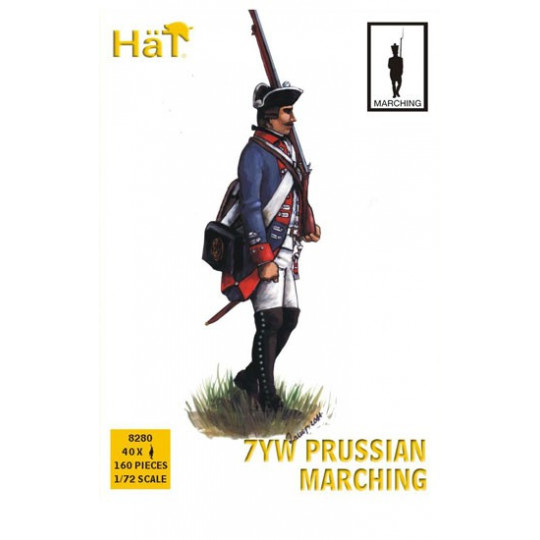
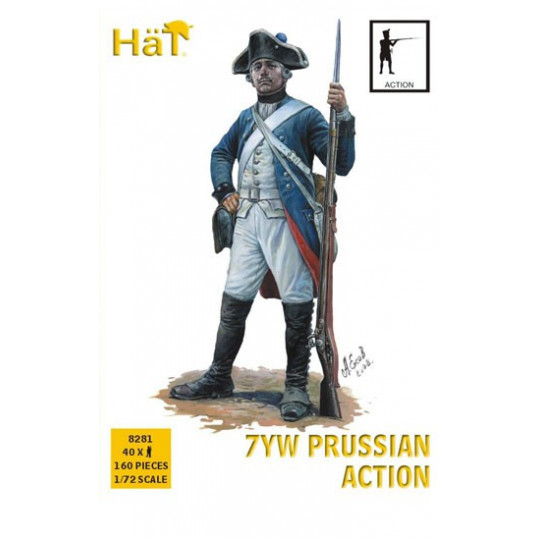
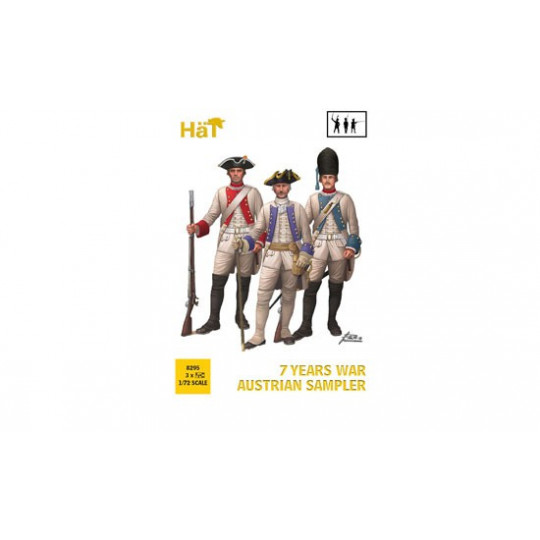
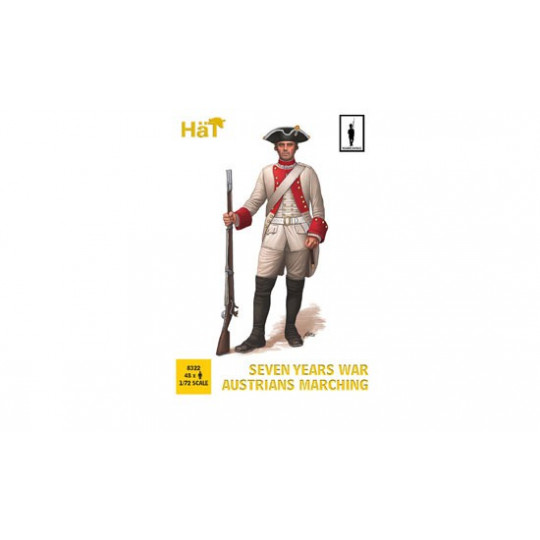
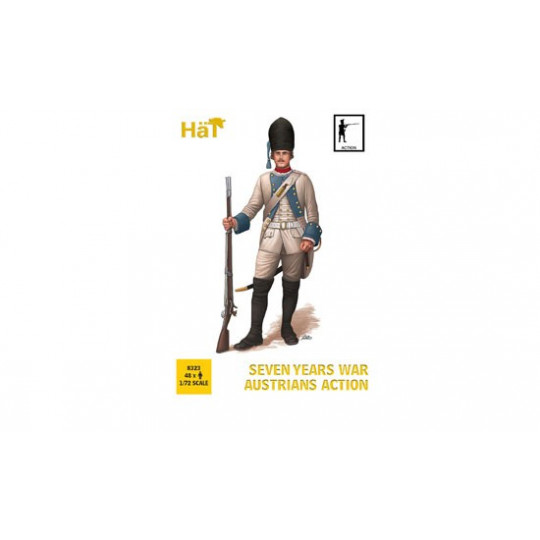
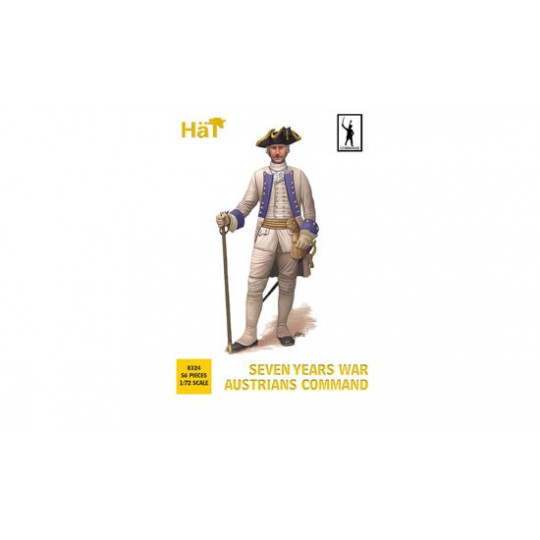
In Europe, the war pitted Prussia and Great Britain against France, Austria, Russia, and Spain. The campaigns of Frederick the Great, French offensives in Germany, and Austrian counterattacks form the backbone of the continental theater. HAT Industries and Strelet-R offer sets that faithfully reproduce Prussian grenadiers, French line infantry, and Austrian fusiliers with historically accurate uniforms and drill poses.
In North America, the war took the form of the French and Indian War. French forces allied with Native American nations to oppose British colonial militias and regular troops. The wilderness warfare, ambushes, and wooden fort sieges are beautifully recreated using plastic figures from figurine ORION or figurine CAESAR, representing musket-armed natives, colonial rangers, and French marines.
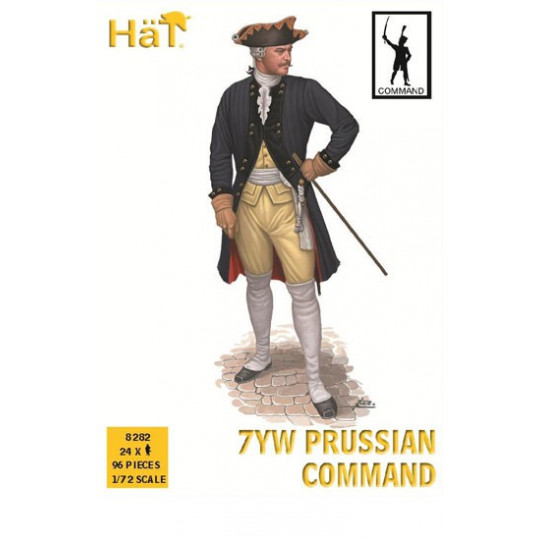
Eighteenth-century warfare in Europe revolved around tightly coordinated infantry formations. With 1/72 scale toy soldiers, collectors can recreate the symmetrical formations of Prussian musketeers, Austrian grenadiers, and French regulars. Strelet-R excels at offering diverse units, including command figures and drummers, while HAT Industries provides elegant line poses and marching stances.
Cavalry charges, skirmishes, and scouting missions were critical in open terrain. Cuirassiers, hussars, and dragoons, represented by CAESAR or Strelet-R, bring movement to dioramas. Horse-mounted figures with drawn sabres or pistols allow for dramatic cavalry scenarios on European battlefields or colonial plains.
Artillery, though less mobile, played a decisive role in sieges and large-scale battles. Plastic figures of Prussian and French gunners, handling cannons and mortars, offer dynamic compositions, whether positioned behind fieldworks or alongside infantry support.
In India, French and British East India Company troops fought for dominance. This less-known theater featured line infantry, sepoys, and exotic landscapes. ORION or Strelet-R figures representing colonial soldiers and native auxiliaries enrich dioramas with cultural diversity and different uniforms, from European coats to turbans and sashes.
Collectors can mix and match multiple brands for the most immersive layouts:
HAT Industries: excellent for Prussian, British, French, and Austrian regulars; clean sculpting and marching poses.
Strelet-R: wide selection of artillery, cavalry, and unique colonial troops.
Figurine ORION: perfect for irregular units, native forces, and light infantry.
Figurine CAESAR: expressive poses, elite units, and versatile cavalry figures.
Each plastic figure at 1/72 scale offers a piece of the strategic puzzle that defined this complex war.
With its global span and varied tactics—siege warfare, line battles, colonial skirmishes—the Seven Years’ War offers endless inspiration for collectors. Each toy soldier represents a faction in a vast military drama: redcoats in Canada, Prussian guards in Saxony, native warriors in dense forests, or French infantry under siege in Quebec.
These plastic sets not only appeal to hobbyists but also to history lovers who appreciate tactical detail and aesthetic diversity.
1756: Official outbreak. Prussia invades Saxony. France joins Austria.
1757: Major Prussian victories at Rossbach and Leuthen. Expansion of fighting to India and North America.
1758: Heavy fighting around Fort Carillon in North America.
1759: British victories at Quebec, Lagos, and Plassey. France loses key colonial positions.
1760: Ongoing continental war; Prussia stretched thin but resilient.
1761: Spain joins France. Peace discussions begin.
1762: British capture Havana. French forces decline in India and Canada.
1763: Treaty of Paris. France cedes Canada and India. Global shift in colonial power.
 Filter
7 Products
Fast shipping
Via Chronopost 24H
Via DPD 24/48H
Colissimo 48/72H
325247 products in stock
Real-time stock displayed
Secure payment




Secure payment
In 3 or 4 installments

 4.6/5
4.6/5

Specialist since 1955
Fast shipping
Via Chronopost 24H
Via DPD 24/48H
Colissimo 48/72H
325247 products in stock
Real-time stock displayed
Secure payment
Secure payment
In 3 or 4 installments
4.6/5
Specialist since 1955