-
News to come
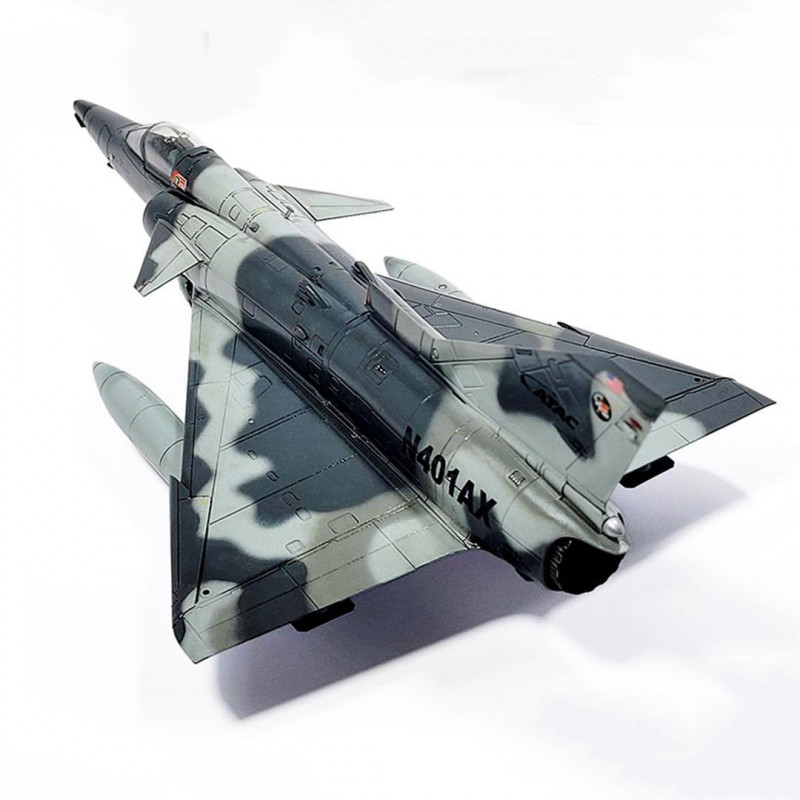
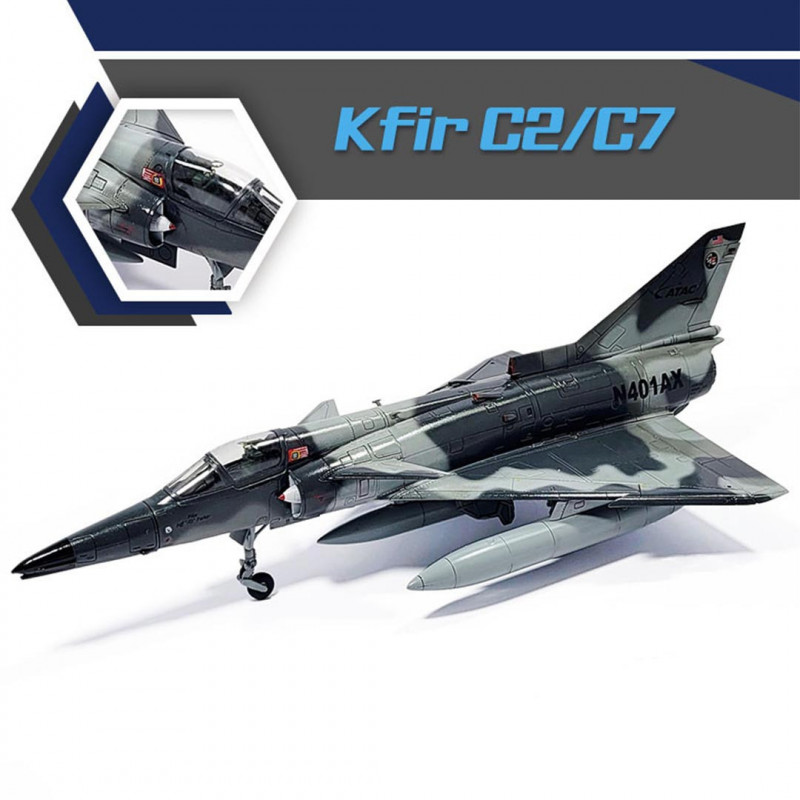
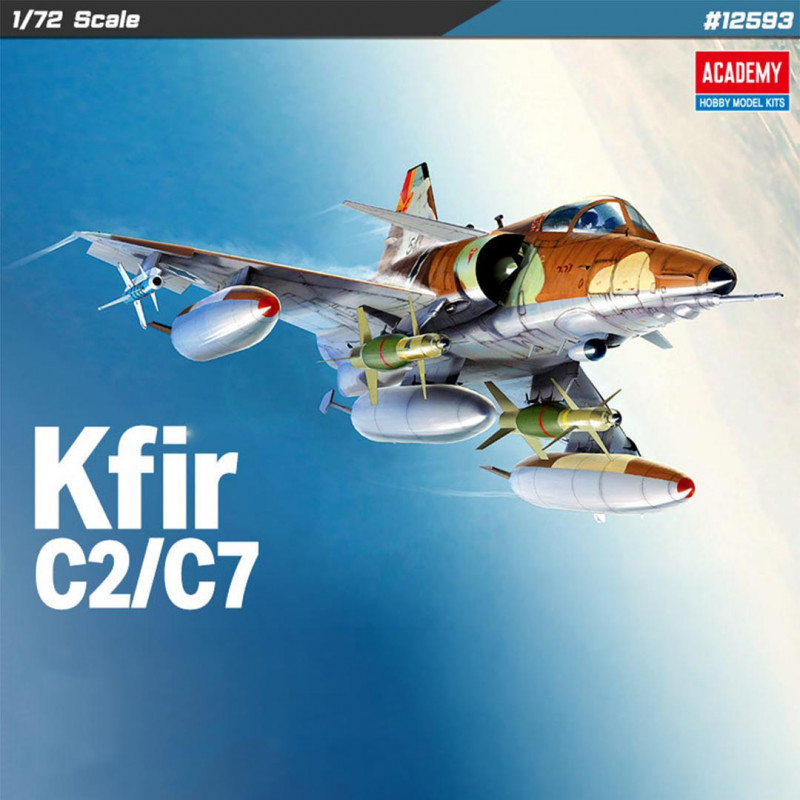
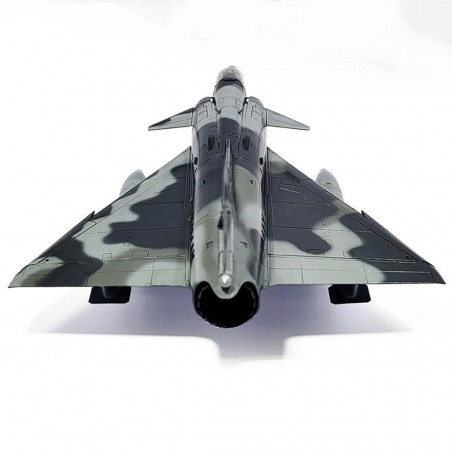
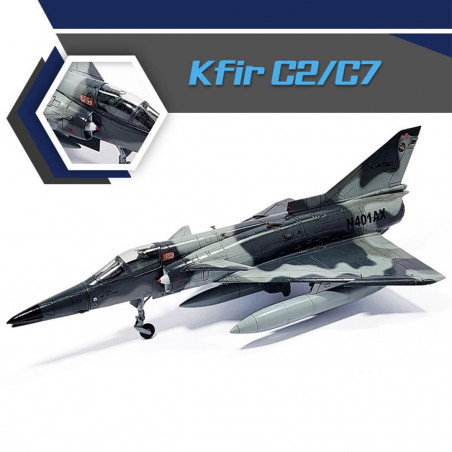
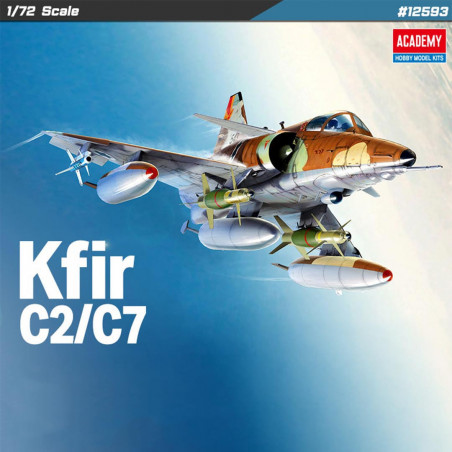
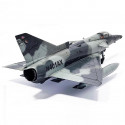
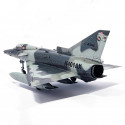
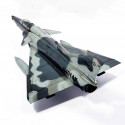
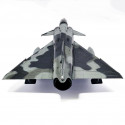
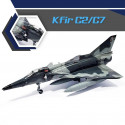
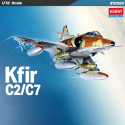
The Academy 12593 model at 1/72 scale reproduces the IAI Kfir in its C2 and C7 versions, a multirole combat aircraft developed in Israel from the Mirage 5.
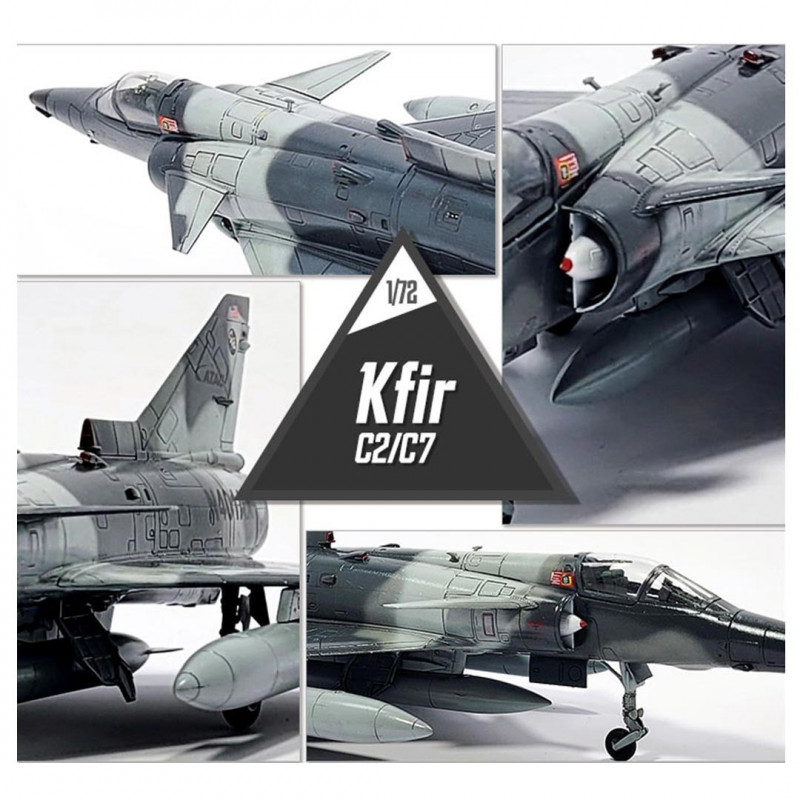
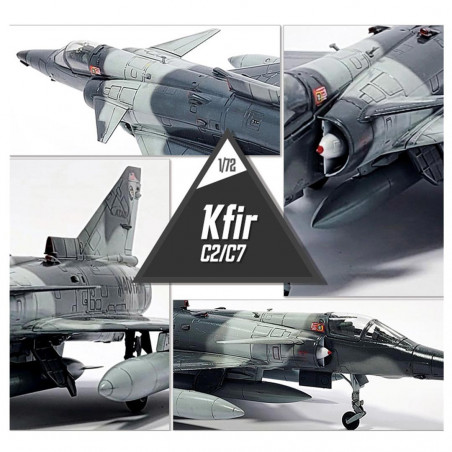
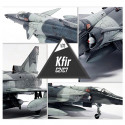
This plastic kit offers a detailed cockpit, a crafted landing gear, engraved recessed panel lines, and five decoration options.

Model IAI Kfir C2-C7 at 1-72 - Academy
Fast shipping
Via Chronopost 24H
Via DPD 24/48H
Colissimo 48/72H
342611 products in stock
Real-time stock displayed
Secure payment




Secure payment
In 3 or 4 installments

 4.6/5

Specialist since 1955
Fast shipping
Via Chronopost 24H
Via DPD 24/48H
Colissimo 48/72H
342611 products in stock
Real-time stock displayed
Secure payment
Secure payment
In 3 or 4 installments
4.6/5
Specialist since 1955
With this reference 12593, Academy offers the construction of a Kfir C2 or C7, two versions of an aircraft designed by Israel Aircraft Industries.
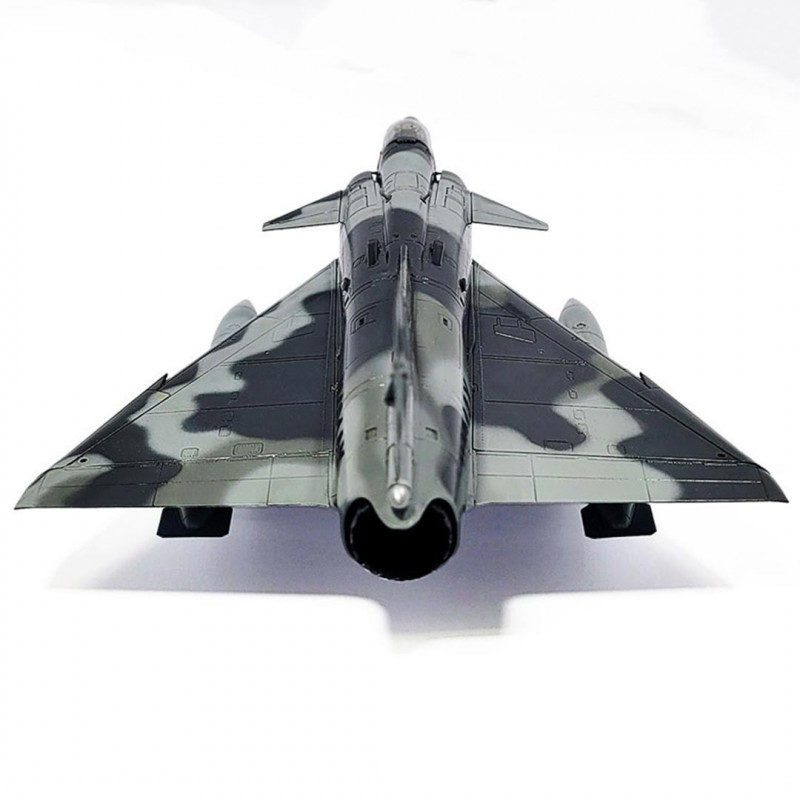
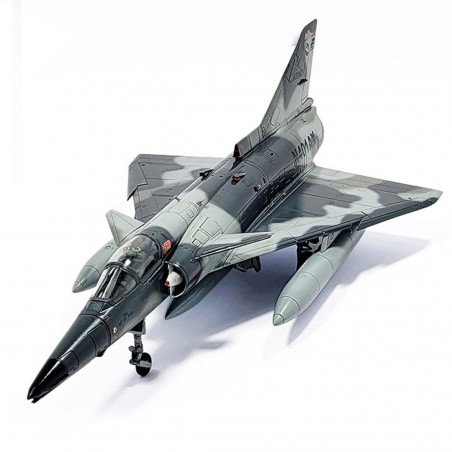
The model captures the characteristic silhouette of this aircraft: a delta wing combined with small canard surfaces located at the front of the fuselage.
At 1/72 scale, this model easily finds its place in a collection dedicated to modern military aircraft, Israeli aviation, or Cold War aircraft.
The kit is derived from the AvantGarde Model Kits (AMK) mold, rebranded under the Academy name.
It notably includes a detailed cockpit, a carefully reproduced landing gear, and recessed panel lines.
These details provide a good base for painting and weathering work aimed at highlighting the volumes and structure of the aircraft.
The Kfir, whose name means "young lion" in Hebrew, is a multirole combat aircraft developed by the Israeli aerospace industry.
Its design is based on the Dassault Mirage 5 airframe, adapted to accommodate a General Electric J79 engine built under license in Israel, as well as national avionics.
This combination results in an aircraft capable of performing air defense and ground attack missions.
The Kfir entered service with the Israeli Air Force in 1975.
The C2 version benefits from aerodynamic modifications, including the addition of small canard surfaces, intended to improve the aircraft's performance.
The C7 version later receives enhancements that strengthen its attack mission capabilities.
Israeli Kfirs are gradually withdrawn from active service during the second half of the 1990s.
Aircraft from this family are also used or exported to other countries, which explains the diversity of liveries offered on this model.
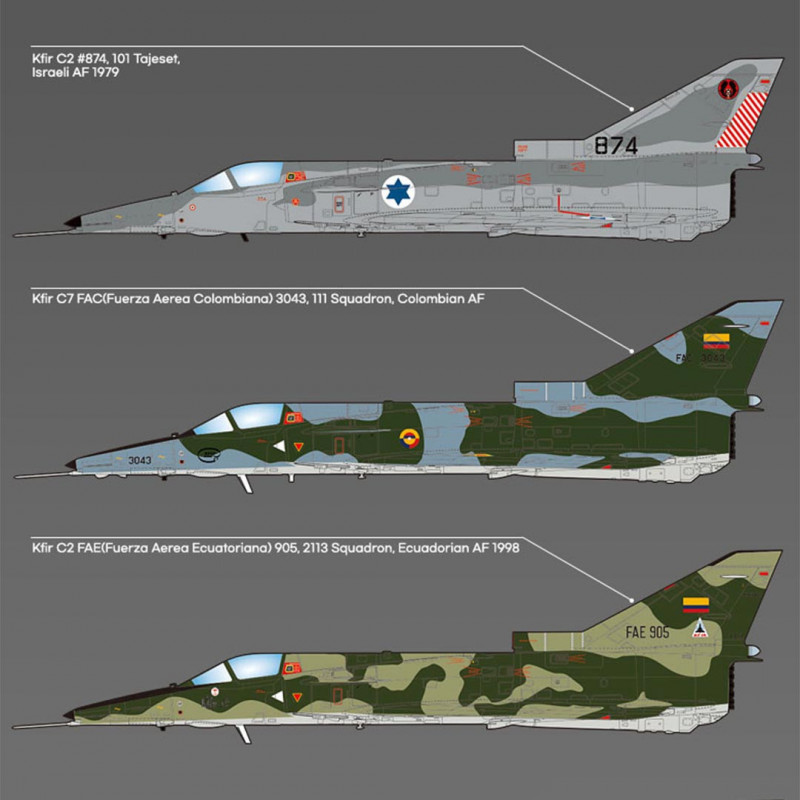
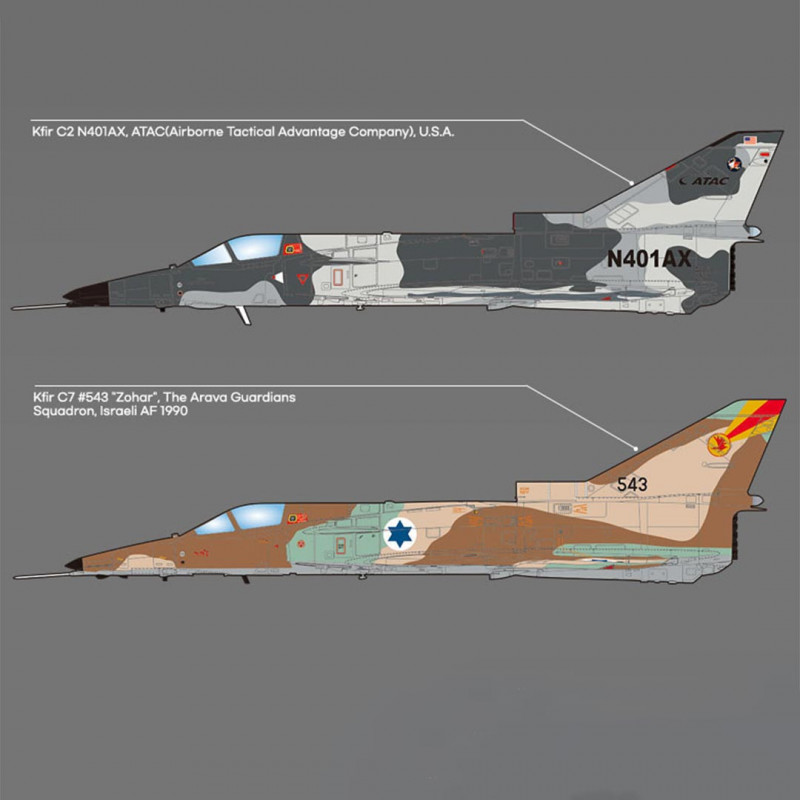
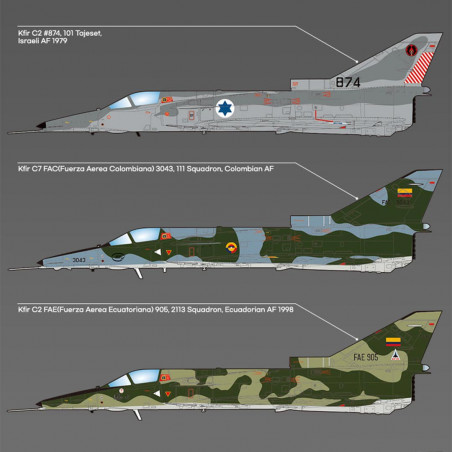
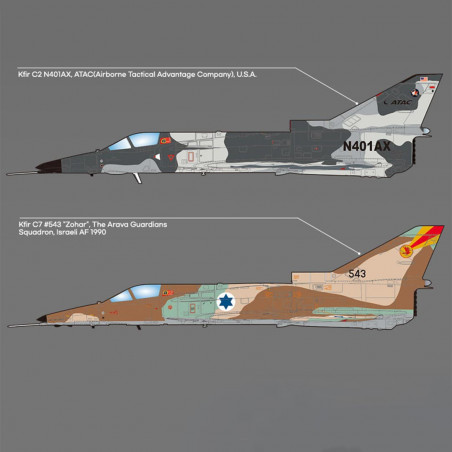
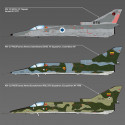
The decal sheet allows for a choice among five decorations.
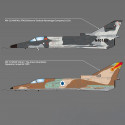
Two concern the Israeli Air Force: a Kfir C2 bearing the number 874 from the 1st squadron in 1979 and a Kfir C7 number 543, named "Zohar," from the Arava Guardians squadron in 1990.
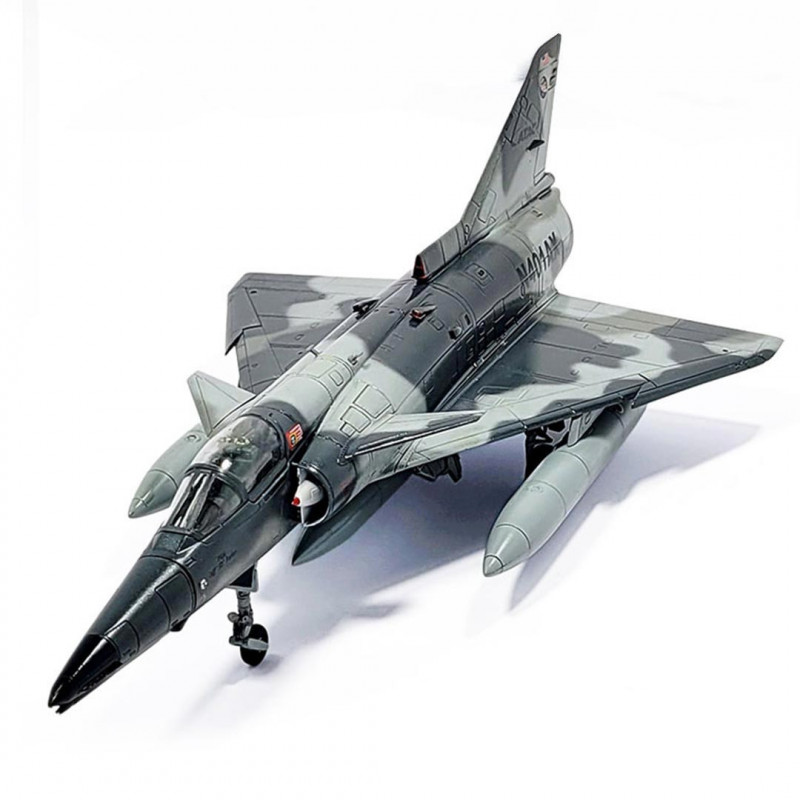
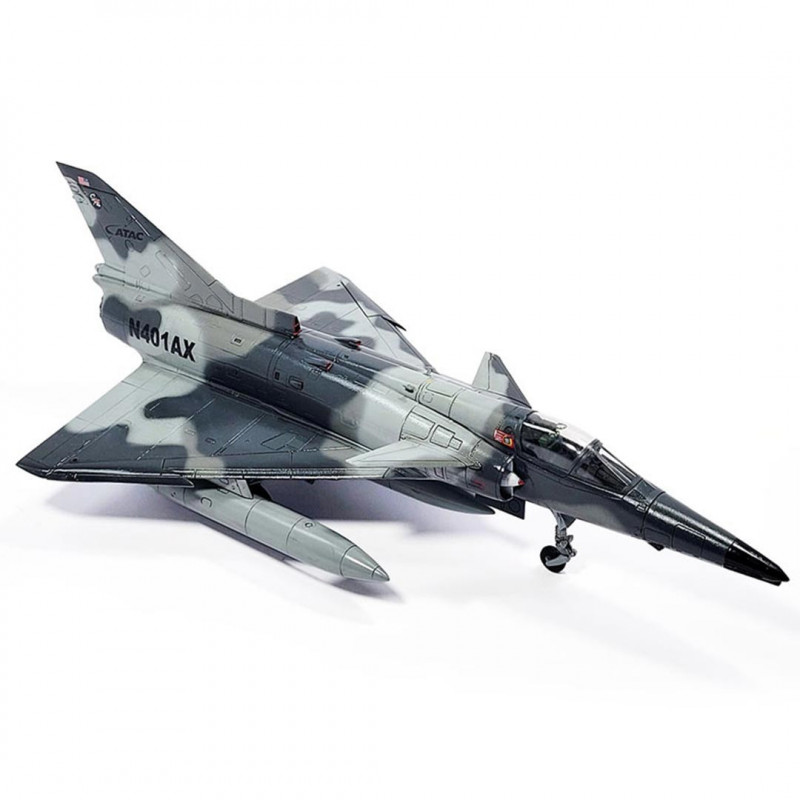
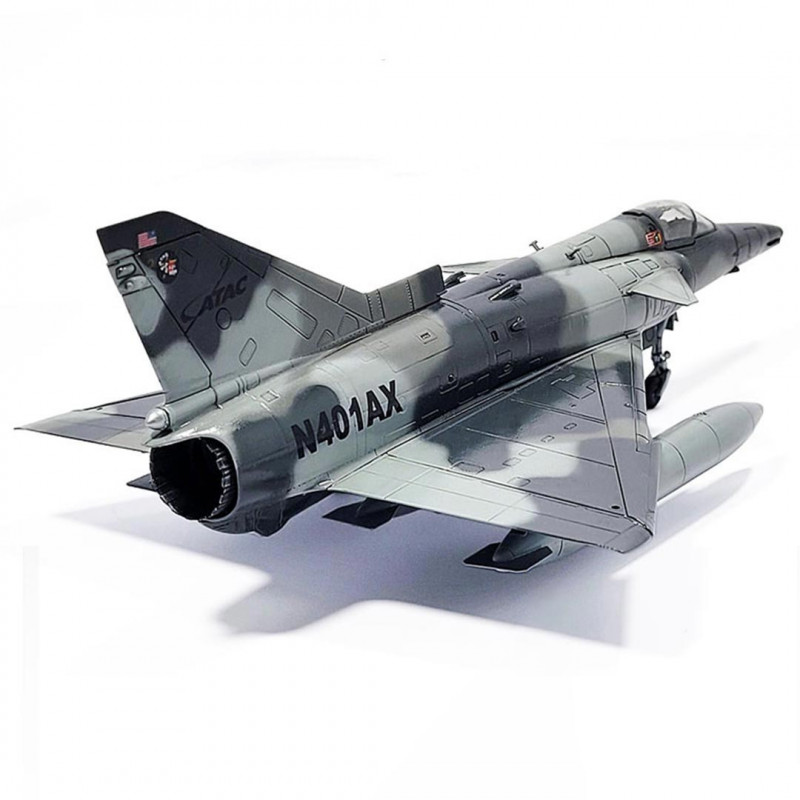
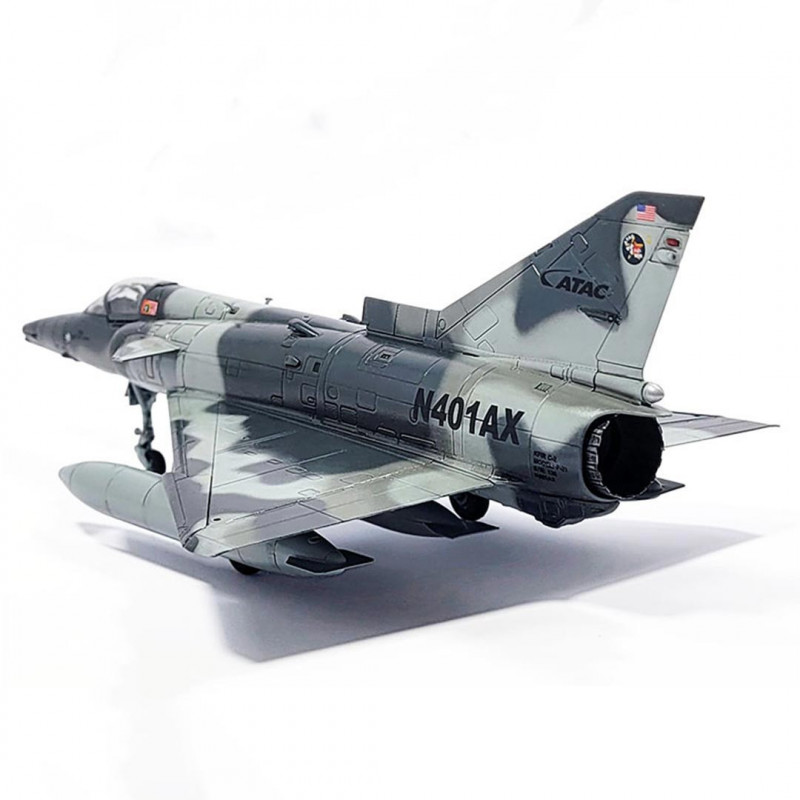
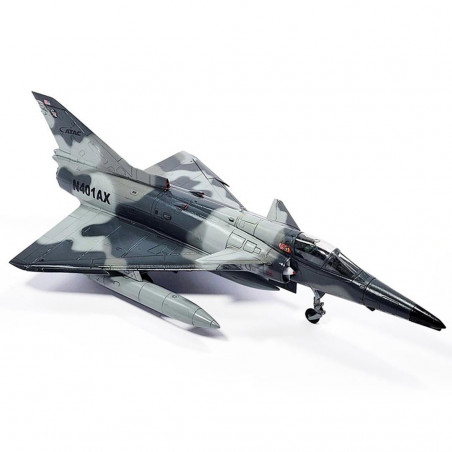
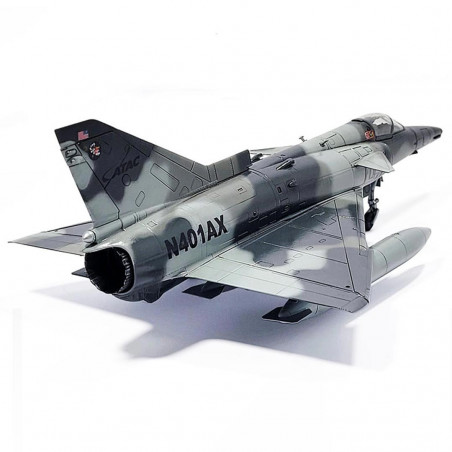
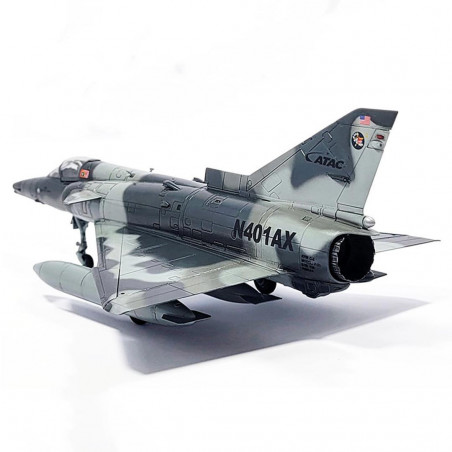
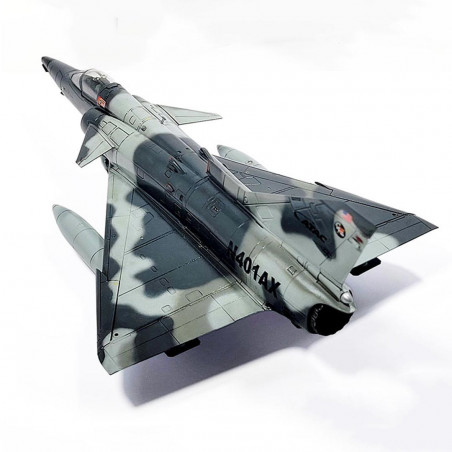
The three other options represent aircraft used by foreign operators: a Kfir C2 N401AX from the American company ATAC, an Ecuadorian aircraft FAE905 from the 2113th squadron in 1998, and a Colombian Kfir C7 FAC 3043 from the 111th squadron.
These five possibilities allow for varying the model's appearance without being limited to a single period or air force.
However, it should be noted that these are five marking options for a single aircraft to be built, not five distinct models.
Before starting assembly, the modeler will benefit from selecting their decoration and checking the instructions to identify the corresponding version and markings.
This plastic model requires assembly and painting.
The box does not include glue or paints, so appropriate plastic glue, a cutter to detach the parts, a modeling knife, and fine abrasives to clean the attachment points should be provided.
Precision tweezers can facilitate handling of small cockpit and landing gear parts.
A primer will prepare the surfaces before painting and check the joints of the fuselage and wings.
The difficulty level can be considered intermediate for a modeler who has already built a few 1/72 scale plastic aircraft.
The size of the parts and the cockpit details require precision, especially during the preparation of subassemblies.
A dry fit before final gluing helps verify adjustments and limit rework.
The colors to be used depend on the chosen decoration.
It is therefore preferable to follow the painting guide in the instructions rather than preparing a livery before selecting the represented aircraft.
An airbrush allows for an even coat on the delta wing and fuselage surfaces, while a brush is suitable for cockpit, landing gear, and small parts details.
The recessed panel lines can be highlighted with a suitable wash, applied after the base paint and protected by a varnish if necessary.
For applying decals, a smooth surface obtained with a gloss varnish facilitates their adhesion and limits the appearance of whitish marks.
A decal softener can help conform to the curves of the fuselage and surface details.
A matte or satin finish, depending on the desired look and chosen decoration, will unify the appearance.
With its delta silhouette and canard surfaces, the Kfir stands out from conventional fighters of the same period.
The Academy 12593 model can be displayed alone on an exhibition stand or integrated into a diorama dedicated to an airbase.
A ground scene can notably include a parking area, mechanic figurines, a pilot, and some 1/72 scale runway accessories.
The choice among five decorations also allows for creating a collection around the different users of the Kfir, by combining several separately built models.
This Academy kit is thus suitable for enthusiasts of fighter aircraft models, Israeli aviation, and 1/72 scale aeronautical modeling.