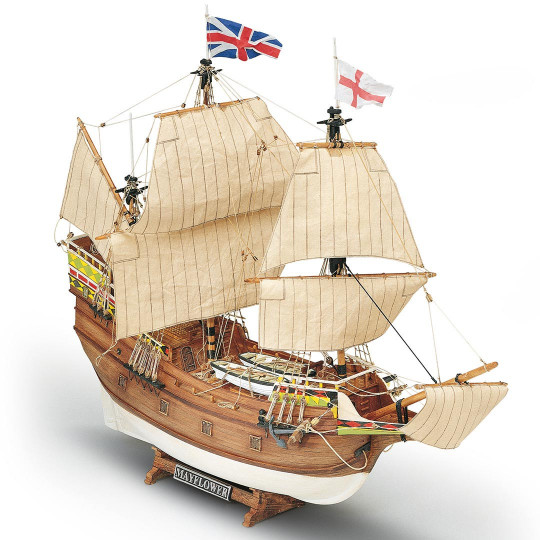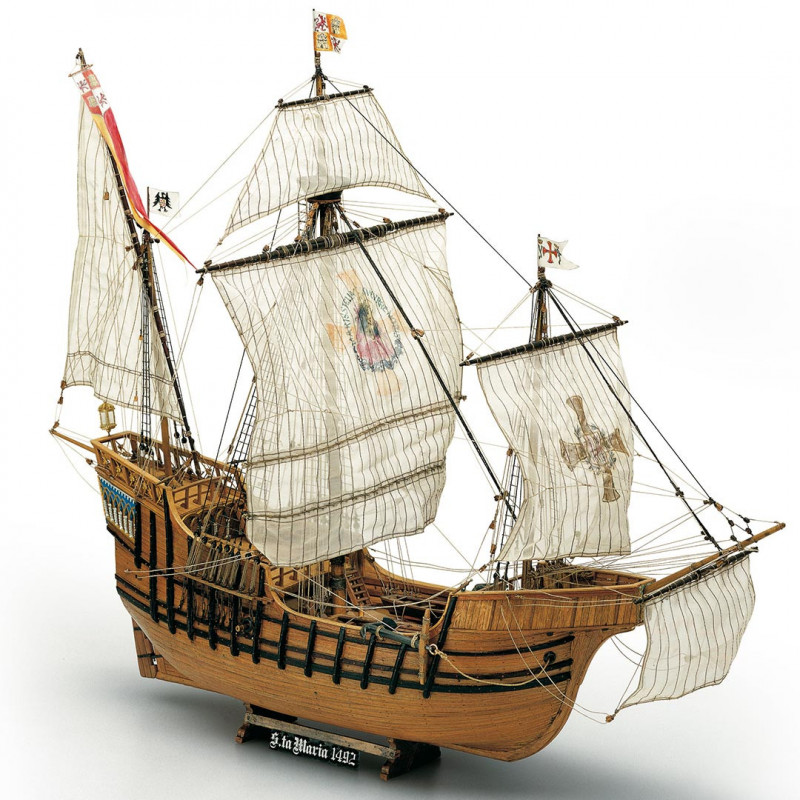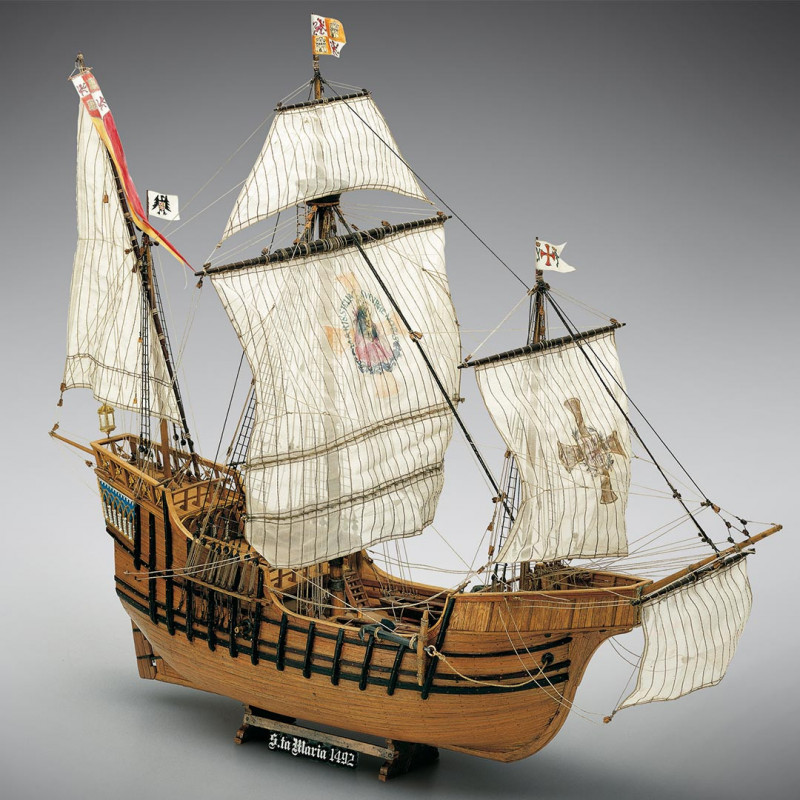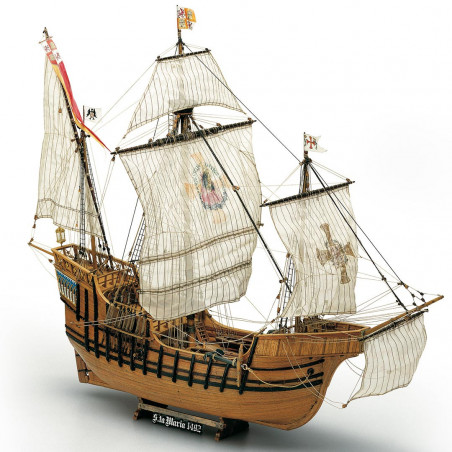
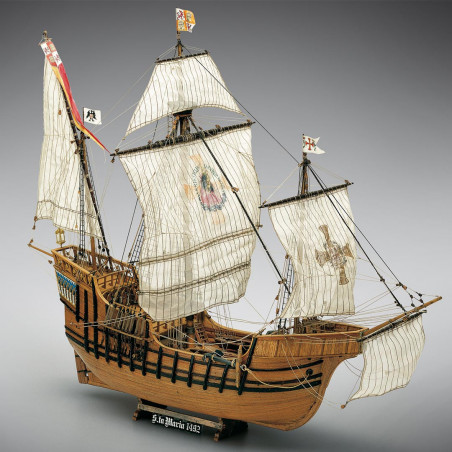
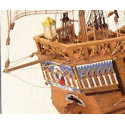
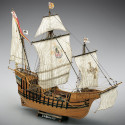
Relive one of the great maritime crossings of the 15th century with the Santa Maria 1/50 wooden model by Mamoli, reference MV42.
This naval modeling kit reproduces the famous flagship of Christopher Columbus during his 1492 expedition.
With its three masts, sails, rigging, and wooden hull, this historical reproduction offers a particularly interesting construction project for enthusiasts of ancient ships.
Once assembled, the Santa Maria Mamoli model measures 79 cm in length and 56.5 cm in height.
Its dimensions highlight the characteristic lines of late medieval ships, while offering a detailed work platform for assembling the hull, superstructures, and sails.

Model wooden ship Santa Maria 1/50 – Mamoli MV42
|
|

|
Belle Poule Paint Set - 6 pots - OcCre€21.95 - ref. S06190559 |
|
|
|
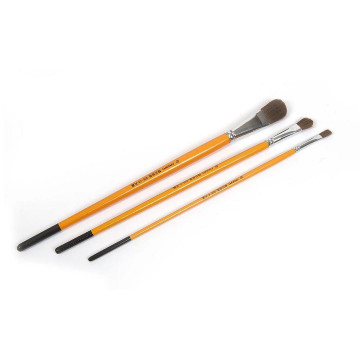
Set of 3 specific brushes for wooden boat model - OcCRE€5.95 - ref. S06110511 |
|
|
|
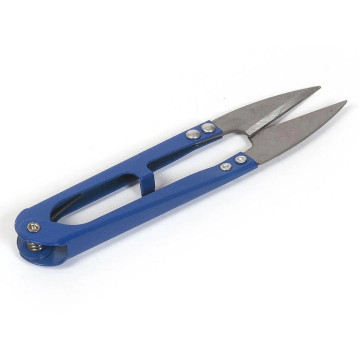
Wire cutter for boat rigging - Occre€3.95 - ref. S06110513 |
Fast shipping
Via Chronopost 24H
Via DPD 24/48H
Colissimo 48/72H
335072 products in stock
Real-time stock displayed
Secure payment




Secure payment
In 3 or 4 installments

 4.6/5

Specialist since 1955
Fast shipping
Via Chronopost 24H
Via DPD 24/48H
Colissimo 48/72H
335072 products in stock
Real-time stock displayed
Secure payment
Secure payment
In 3 or 4 installments
4.6/5
Specialist since 1955
In 1492, Christopher Columbus undertook a crossing of the Atlantic Ocean with three ships: the Santa Maria, the Niña and the Pinta.
Departing from the Spanish port of Palos de la Frontera on August 3, 1492, the expedition sought a new maritime route to Asia by sailing westward.
The Santa Maria played a central role in this adventure. Larger than the other two ships, it served as Christopher Columbus's flagship.
Unlike the Niña and the Pinta, which are caravels, the Santa Maria is a nao, a type of Iberian merchant ship generally akin to carracks.
Equipped with three masts, a sturdy hull, a forecastle, and rigging combining square sails and a lateen sail, it illustrates the navigation and shipbuilding techniques of the late 15th century.
On October 12, 1492, the expedition reached the Caribbean, lands already inhabited by indigenous populations.
The journey then continued to Cuba and Hispaniola. On the night of December 24 to 25, 1492, the Santa Maria ran aground on a reef off Hispaniola and could not be salvaged.
The ship now holds an important place in the history of maritime exploration.
Its characteristic silhouette, masts, and sails also make it a favored subject for enthusiasts of historical wooden ship models.
Since the original detailed plans of the Santa Maria have not been preserved, current representations are based on research and historical interpretations.
The Mamoli MV42 model thus constitutes a reconstruction of the ship as it is generally represented, rather than a reproduction of a known original construction plan.
Made at a 1/50 scale, this wooden ship model offers a sufficiently large format to work on construction details, masts, fittings, and rigging maneuvers.
Brand: Mamoli
Manufacturer reference: MV42
Ship name: Santa Maria
Era represented: late 15th century, 1492
Scale: 1/50
Assembled model length: 790 mm (79 cm)
Assembled model height: 565 mm (56.5 cm)
Main material: wood
Model type: static naval model to build
Construction: plank-on-frame hull
Recommended level: intermediate.
The kit is designed to create an old sailing ship model intended for display.
The construction allows for working on various naval modeling techniques, including assembling a miniature framework, laying planking strips, and creating the rigging.
The Santa Maria Mamoli MV42 uses a frame construction.
This method involves assembling the ship's structural elements before gradually covering the framework with wooden strips forming the hull planking.
The kit includes pre-cut wooden elements, strips of different types of wood, and components for the model's details.
The assembly operations require regularly checking the alignment of the frames, the fit of the pieces, and the curvature of the strips to achieve a regular hull.
This technique is particularly appreciated in wooden naval modeling because it allows for recreating, on a reduced scale, some principles of traditional hull construction.
Once the hull is assembled, the modeler can continue with the deck layout and the installation of various superstructure elements.
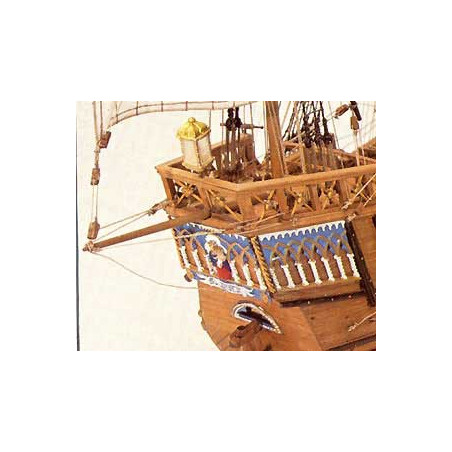
The wooden components and small metal or decorative pieces allow for reproducing the ship's visible equipment.
Their installation requires precision, particularly to maintain alignments, preserve the model's proportions, and achieve a uniform finish.
The deck details, fastening elements, and various rigging pieces contribute to the historical aspect of this 15th-century ship model.
The masts are one of the most characteristic stages of the Santa Maria's construction.
The ship has three masts and rigging combining square sails and a lateen sail, according to the representation chosen for this model.
The Mamoli MV42 kit includes fabric for the sails, rigging ropes, and decorative flags.
The installation of these various components allows for the representation of the maneuvers and general organization of the rigging of a late 15th-century ship.
The positioning of the masts, the adjustment of the yards, and the tensioning of the ropes require particular attention. A progressive assembly allows for maintaining a readable, balanced, and coherent rigging with the provided plans.
This wooden ship model kit is primarily intended for modelers who already have some experience in miniature construction or wish to advance in naval modeling techniques.
Its level can be considered intermediate, particularly due to the planking work, the necessary adjustments for the wooden parts, and the rigging construction.
The construction of the hull requires patience and precision.
The steps dedicated to the masts, sails, and ropes also require good organization to respect the order of assembly operations.
For an enthusiast who has already completed a simple wooden model, the Santa Maria represents a project to deepen several techniques: preparation of frames, adjustment of strips, assembly of superstructures, installation of fittings, and rigging creation.
The construction kit includes the main elements necessary for the model's realization, including pre-cut wooden parts, strips for the hull and fittings, rigging elements, rigging ropes, fabric for the sails, and flags.
Plans and assembly drawings accompany the components to guide the modeler through the various assembly operations.
Glue, paints, and tools are not provided and must be arranged separately. To successfully complete the construction, it is advisable to have modeling equipment suitable for working with wood and small parts.
For assembling the wooden components, a wood glue suitable for modeling is an appropriate solution.
A cyanoacrylate glue can also be useful for certain small metal parts, depending on the materials and assemblies involved.
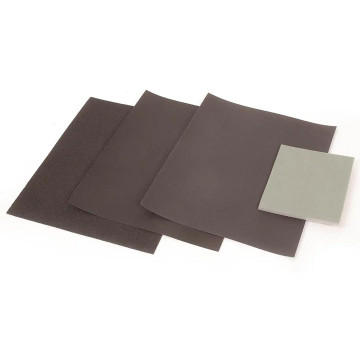
A precision cutter, fine pliers, sandpaper, and tools to hold the parts during gluing will facilitate the various assembly stages. The bending of the strips must be done carefully to avoid breaking them.
The paints and finishing products can be chosen according to the desired appearance: natural wood, colored elements, or a finish evoking the historical representations of the ship. It is recommended to test on wood scraps before applying a product to the visible parts of the model.
With its 79 cm length, the Santa Maria Mamoli at 1/50 scale can become an important piece in a collection of naval models. Its wooden hull, sails, and rigging add depth to the ship's silhouette.
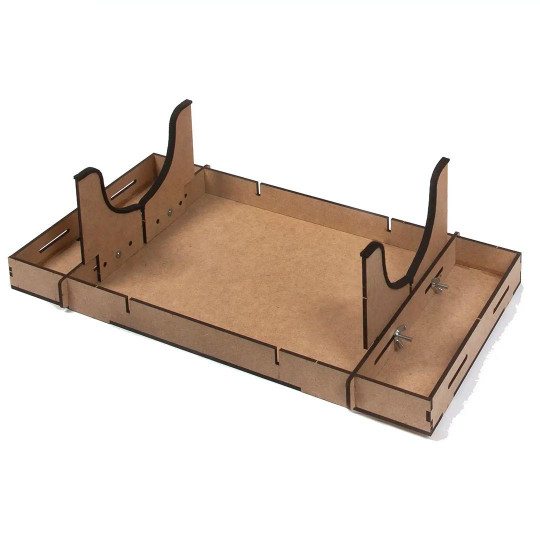
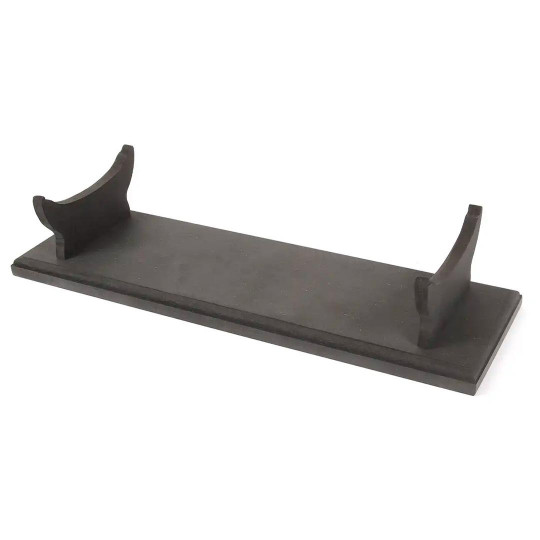
Once completed, the model can be installed on a suitable display stand or placed in a protective showcase.
A showcase presentation helps limit dust accumulation on the ropes and sails.
Fans of historical dioramas can also consider a scene inspired by a 15th-century port or the navigation voyages of the time.
In that case, the decor elements must be arranged separately, and the display space adapted to the model's dimensions.
The Mamoli MV42 model is made at a 1/50 scale. It reproduces the Santa Maria, Christopher Columbus's flagship during his 1492 expedition, in the form of a primarily wooden construction kit.
Once assembled, the Santa Maria MV42 model measures 790 mm in length, or 79 cm, and 565 mm in height, or 56.5 cm.
These dimensions correspond to the characteristics communicated by the manufacturer Mamoli.
No. Although sometimes called the Santa Maria caravel, it was historically a nao, a type of Iberian merchant ship related to carracks.
The two caravels of Christopher Columbus's expedition were the Niña and the Pinta.
The Santa Maria MV42 is generally classified among the intermediate difficulty models.
It is rather recommended for people who already have some experience with wooden modeling, as the construction requires making a planked hull, assembling the superstructures, and setting up a complete rigging.
Yes. The Santa Maria Mamoli MV42 kit includes fabric for the sails as well as ropes for making the rigging. Flags are also part of the model's finishing elements.
No. Glue, paints, and construction tools must be purchased separately.
The choice of products depends on the materials to be assembled and the type of finish desired.
Yes. This static naval model can be displayed in a showcase suitable for its dimensions.
It is important to provide enough space around the model to protect the masts, sails, and ropes, which are particularly sensitive to handling.
A wooden model of the Santa Maria allows you to discover traditional miniature shipbuilding techniques while creating a reproduction of a historical ship.
Building the hull on frames, arranging the decks, and crafting the rigging offer a complete modeling experience, combining woodworking, precision, and an interest in maritime history.