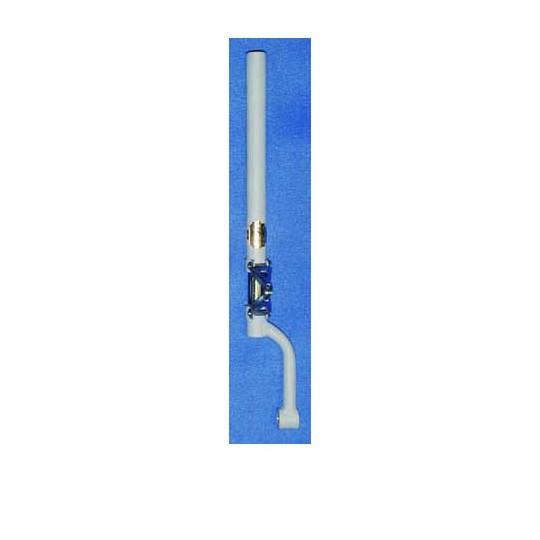
Robart Manufacturing: accessories and equipment for RC aircraft
Robart Manufacturing is a historic American brand in the radio-controlled modelling industry, particularly known for its retractable landing gear, pneumatic systems and control accessories.
Today, its product range has evolved: Robart no longer manufactures its retractable landing gear, landing gear struts or...
Robart Manufacturing: accessories and equipment for RC aircraft
Robart Manufacturing is a historic American brand in the radio-controlled modelling industry, particularly known for its retractable landing gear, pneumatic systems and control accessories.
Today, its product range has evolved: Robart no longer manufactures its retractable landing gear, landing gear struts or aluminium wheels, but continues to offer hinges, pneumatic accessories, scale wheels and various equipment for RC aircraft.
If you have been involved in model aviation for several years, the Robart name is probably familiar to you.
I have long associated it with large-scale aircraft, warbirds, pneumatic retractable landing gear and those small accessories that can make a real difference when building a model.
But today, two things need to be distinguished.
There is the historic Robart, whose retractable landing gear equipped many models, and the current Robart, whose range has been refocused on several products that are still manufactured.
This distinction is important if you are looking for an older reference.
The brand is historically associated with pneumatic and electric retractable landing gear, RoboStruts and aluminium wheels.
Robart has stopped manufacturing retractable landing gear, landing gear struts and aluminium wheels. Its Gear Finder remains available for locating older references.
Hinge Points, pneumatic accessories, scale wheels, control horns and several other accessories remain part of Robart's range.
Who is Robart Manufacturing?
Robart Manufacturing is an American company based in Elburn, Illinois, specialising in accessories for radio-controlled models.
Robart states that it has been working in this field for more than 45 years.
The brand explains that it has designed and manufactured RC accessories for modellers around the world.
This longevity is significant. In model aviation, some accessories remain in use for many years.
A retractable landing gear system, hinge or pneumatic system can equip an aircraft for a very long time.
It is therefore quite common to find Robart references today on older models.
I find this to be one of the distinctive features of the brand.
Its name does not refer only to a current product range. It is also part of the technical history of RC aircraft.
Why is Robart well known in RC modelling?
Robart became particularly well known for its retractable landing gear and pneumatic systems designed for radio-controlled aircraft.
The brand supplied equipment for many types of models, from sport aircraft to large-scale warbirds.
Its former Gear Finder can still be used to search for equipment associated with numerous kit and model manufacturers, including Top Flite, Hangar 9, Great Planes, Kyosho, Seagull Models, Sig, Ziroli, Balsa USA, Phoenix Models, Pica/Cox and many others.
This historical database is particularly useful when restoring an older aircraft.
For example, you can find Robart references associated with models such as the P-51 Mustang, P-47 Thunderbolt, F4U Corsair, P-40 Warhawk, F6F Hellcat and AT-6 Texan.
Robart therefore developed equipment specifically suited to certain kits.
The historical catalogue includes landing gear systems for P-51, P-47 and AT-6 models at different scales.
What types of retractable landing gear did Robart manufacture?
Older Robart retractable landing gear systems were available in several configurations, with pneumatic and electric versions designed for different models and weights.
There were systems intended for sport aircraft, warbirds and large-scale models.
How did a Robart pneumatic retractable landing gear system work?
A Robart pneumatic retractable landing gear system used compressed air to operate the landing gear retraction and extension mechanisms.
The principle was relatively simple. A tank stored the air. A valve operated by a servo then directed the pressure to the landing gear cylinders.
On older systems, Robart mechanisms were designed with locks in both the up and down positions.
This feature was particularly useful on large models, where the landing gear needs to remain securely locked during taxiing and flight.
Some systems also used RoboStruts, Robart's dedicated landing gear struts.
What were RoboStruts?
RoboStruts were landing gear struts designed by Robart to work with some of its retractable landing gear mechanisms.
Depending on the reference, they could use steel tubes and components or configurations designed for different landing gear diameters.
For example, the former catalogue includes systems using 1/2-inch or 5/8-inch RoboStruts, particularly on large-scale models.
The historical catalogue also shows particularly robust configurations for aircraft weighing several dozen pounds.
Are Robart retractable landing gear systems still manufactured?
No, Robart currently states that it has stopped manufacturing its retractable landing gear, landing gear struts and aluminium wheels.
This is probably the most important piece of information to remember if you are currently looking for Robart landing gear.
The Robart Gear Finder is still accessible, but the brand explains that it is retained solely for searching older references.
Robart also states that it no longer has stock of retractable landing gear or corresponding spare parts.
An old product page may therefore still appear in search results with a reference number, photograph, manual or detailed specifications, without that reference still being commercially available.
This is the case, for example, with several older landing gear systems designed for the P-51 Mustang, P-47 Thunderbolt and AT-6 Texan.
I therefore recommend that you do not automatically assume that an old Robart product page represents an available reference.
Its current status must be checked.
Which older Robart series can still be found?
Older catalogues and search pages contain numerous series.
Among the historical references you may encounter are the 510, 530, 550, 590, 620, 630 and 635 series.
The 630 series, for example, was designed for various aircraft and could support models weighing up to approximately 24 lb, depending on the historical version.
A reference such as the 630RSE was an electric mechanism with an 85- or 90-degree rotation, compatible with certain RoboStrut configurations.
Another example, reference 622P47, was a pneumatic landing gear system designed for the Top Flite P-47 Thunderbolt Giant 1/5, with adjustable struts and 5-inch wheels.
These examples show why the old Robart catalogue remains useful for restoration work.
They also show why historical documentation and current commercial availability must not be confused.
How did the Robart pneumatic system work?
A Robart pneumatic system consists of several complementary components: tank, tubing, fittings, control valve and pneumatic mechanism.
The normal operating pressure specified by Robart for its pneumatic systems is between 80 and 110 psi.
If the landing gear does not operate correctly even though the pressure is correct, Robart indicates that insufficient air volume may also be the cause.
In that case, adding a larger tank or a second tank may solve the problem.
I find this to be a particularly useful practical detail when diagnosing a system.
Correct pressure does not necessarily mean that the system has enough air to complete several operating cycles correctly.
What components make up a Robart Air Control Kit?
A Robart pneumatic kit can include a tank, tubing, fittings, control valve, fill valve and fill fitting.
Some kits also add quick-disconnect fittings and an onboard pressure gauge.
The #188VR, for example, is a variable-rate pneumatic kit designed for retractable landing gear systems.
It includes a small tank, approximately 5 feet of tubing, fittings, a variable-rate valve, a fill valve and its fitting.
The #188VRX additionally includes quick-disconnect fittings and a pressure gauge, with a stated weight of 3 oz, approximately 85 g.
What pressure should be used with a Robart pneumatic system?
Robart specifies a normal operating pressure between 80 and 110 psi.
You should therefore avoid treating pressure as an approximate value that can simply be exceeded without reason. All components in the circuit must be compatible with the pressure being used.
Some Robart tanks are specified for a maximum pressure of 110 psi.
What grease should be used in a Robart pneumatic system?
Robart recommends only white lithium grease or silicone grease for the relevant pneumatic components.
The brand advises against using other oils or greases, which may damage the O-rings.
This recommendation is worth following. In a pneumatic circuit, the O-ring is a small component, but its condition directly affects the system's airtightness.
How can you find an air leak?
A leak can prevent a pneumatic landing gear system from operating correctly, even when the circuit appears to be properly pressurised.
Robart provides a specific leak-detection guide in its technical documentation.
I would start by systematically checking the fittings, tubing, valves and pneumatic components before blaming the landing gear mechanism itself.
On an older system, the condition of the seals also deserves careful attention.
Why are Robart Hinge Points interesting?
Robart Hinge Points are now one of the most representative product families in the brand's range that is still manufactured.
The principle differs from that of a simple flat hinge. The Hinge Point is installed in holes drilled into the moving and fixed sections of the control surface.
This design allows the rotation axis to be positioned precisely.
Applications are numerous: ailerons, elevators, rudders, flaps and other control surfaces.
What is a Robart Hinge Point?
A Robart Hinge Point is a pinned hinge designed to provide an articulated connection between a control surface and the fixed section of the wing or tailplane.
Robart offers several sizes.
The current range notably includes:
#305: 3/32" Hinge Points, pack of 6;
#306: 3/32" Hinge Points, pack of 15;
#307: 1/8" Hinge Points with steel pin, pack of 6;
#308: 1/8" Hinge Points with steel pin, pack of 15;
#309: 3/16" Super Hinge Points, pack of 6;
#310: 3/16" Super Hinge Points, pack of 15;
#311: 1/8" Big Bag Combo;
#312: 3/16" Big Bag Combo.
Robart also offers the #319 Hinge Point Drill Jig, a jig designed to make drilling the hinge holes easier.
How do you choose the right Hinge Point size?
The hinge diameter should be suited to the size of the control surface, the model's structure and the mechanical loads it will have to withstand.
For a small aircraft, a 3/32" hinge may be perfectly suitable.
On a larger model, a 1/8" Hinge Point or 3/16" Super Hinge Point may be more appropriate.
However, I would not choose solely according to wingspan.
The size and weight of the control surface also matter, as do the model's speed and construction type.
How do you install a Robart Hinge Point?
Installation involves positioning the hinges along a perfectly consistent axis, drilling the holes, carrying out a dry fit and then gluing the hinges in place.
The most important point is alignment.
If the hinge axes are not properly aligned, the control surface may become stiff, return poorly to neutral or move irregularly.
The #319 Hinge Point Drill Jig is specifically designed to make this operation easier.
I always recommend carrying out a dry fit before applying the final adhesive. This allows you to check the control surface movement and avoid an unpleasant surprise once the adhesive has cured.
Which Robart wheels should you choose for an RC aircraft?
Robart scale wheels should be selected according to the available diameter, width, axle and aircraft model.
The main distinction to make is between the older aluminium wheels and the scale wheels currently offered.
Robart states that it has stopped manufacturing aluminium wheels, but continues to supply scale wheels, designed to provide an appearance suited to scale aircraft.
For a warbird, the appearance of the tyre can be almost as important as its function. A wheel that looks too modern or too narrow can immediately detract from the appearance of a scale landing gear system.
What should you check before choosing a wheel?
At a minimum, I would check:
wheel diameter;
wheel width;
axle diameter;
available space in the wheel well;
weight;
landing gear type;
model scale;
desired appearance.
On retractable landing gear, you must also check that the wheel can fit correctly inside the wing once retracted.
This is particularly important on warbirds, where the landing gear bay can be narrow and strongly constrained by the wing geometry.
Which other Robart accessories are still available?
Robart is not limited to hinges and pneumatic accessories.
The brand continues to offer control horns, scale wheels, smoke oil, aircraft stands, tools, pneumatic accessories and various accessories designed for building and setting up RC models.
This diversification is interesting if you are building an aircraft rather than simply looking for retractable landing gear.
Robart control horns
Control horns transmit movement between the servos and control surfaces.
They can be used on different types of RC aircraft, depending on the model's construction and control geometry.
For me, this is typically the kind of component that gets chosen too late.
It is better to determine the type of control system, the control throw and the servo position before permanently closing a wing or tailplane.
Robart tools
Robart also offers tools designed to make model construction and adjustment easier.
The #319 Hinge Point Drill Jig is a good example. The tool is directly associated with the hinge range and solves a very specific problem: creating correctly positioned hinge holes.
The brand also offers measuring and adjustment tools used when building an RC aircraft.
How do you choose a Robart accessory for your aircraft?
The right choice depends first on your model, its size and how you intend to use it, rather than simply on the Robart name printed on the packaging.
What is the aircraft's weight?
Weight is one of the first criteria to consider when selecting landing gear or control components.
Older Robart references were often designed for specific weight ranges. Some series were intended for models weighing several dozen pounds.
You should therefore always look for the exact reference corresponding to your model.
How much space is available in the wing?
With retractable landing gear, the available geometry is decisive.
A mechanism may be sufficiently strong but too tall, too wide or incorrectly oriented for your model.
Older Robart product sheets often provide dimensional drawings. They remain extremely useful when restoring an aircraft.
Which wheel should you use?
Wheel diameter must be compatible with the landing gear, wheel well and flying field on which you operate the aircraft.
On grass, a wheel that is too small can become a disadvantage. On a scale model, it must also maintain proportions consistent with the full-size aircraft.
Which Hinge Point size should you choose?
For a small control surface, a 3/32" Hinge Point may be suitable.
For a larger model, Robart offers 1/8" and 3/16" models.
I would mainly consider the surface area and weight of the control surface, the structure available around the hinge hole and the expected loads.
How can you find an old Robart reference?
The Robart Gear Finder is particularly useful for finding an older reference associated with a kit.
The database allows you to search by model manufacturer.
You can therefore find historical associations with manufacturers such as Top Flite, Hangar 9, Balsa USA, Great Planes, Kyosho, Seagull Models, Sig, Ziroli, Phoenix Models or Pica/Cox.
This function is valuable when restoring an older aircraft and the original manual no longer provides the landing gear reference.
However, keep in mind that Robart now states that the Gear Finder is maintained for research purposes.
A reference found in this database is therefore not necessarily available for purchase.
Which old Robart landing gear systems are most sought after?
References designed for large-scale warbirds remain particularly interesting for restoration projects.
These include equipment for:
Top Flite P-51 Mustang;
Top Flite P-47 Thunderbolt;
Hangar 9 P-47 Thunderbolt;
Ziroli AT-6;
Yellow Aircraft AT-6;
Byron AT-6;
P-40 Warhawk;
F4U Corsair;
F6F Hellcat;
AD-1 Skyraider.
Some older references were particularly robust.
Reference 161, for example, was a pneumatic main landing gear system for a 1/5-scale AT-6, with 5/8" struts and a stated capacity for models weighing 20 to 40 lb.
Reference 150 was a 100-degree rotating pneumatic retractable landing gear system intended in particular for 1/5-scale Corsair, P-40, Hellcat and Skyraider models.
These references are no longer current products. They remain useful as documentation or when restoring an existing model.
What does Robart still manufacture today?
Robart's current range is now more focused on accessories than on retractable landing gear.
Product family
Current status
Retractable landing gear
Manufacturing discontinued
Landing gear struts
Manufacturing discontinued
RoboStruts
Historical range
Aluminium wheels
Manufacturing discontinued
Hinge Points
Still offered
Pneumatic accessories
Still offered
Scale wheels
Still offered
Control horns
Still offered
Stands and RC accessories
Still offered
This evolution explains some of the confusion you may encounter online.
A Google search can still display an old Robart landing gear page.
The page may show a photograph, reference number and very detailed specifications.
Yet the reference may have been permanently discontinued.
This is particularly true of several older electric and pneumatic landing gear references.
Is Robart still an interesting brand for building an RC aircraft?
Yes, especially if you are looking for construction, control, hinging or pneumatic accessories.
For a new project, I would start by looking at products that are currently available rather than searching for an old landing gear reference.
For a restoration project, the approach is different. The Gear Finder, old manuals and dimensional drawings can become extremely valuable.
This is where Robart's old catalogue retains its full value.
A modeller restoring a P-51, P-47, Corsair or AT-6 may still need to identify a Robart reference manufactured several years ago, even though it is no longer produced.
Why do Robart Hinge Points deserve a place in your RC building toolbox?
Hinge Points are now one of the most interesting Robart solutions for creating clean and precise control surface hinges on an RC aircraft.
I particularly like them when I want a smooth, consistent and durable pivot axis without using a large number of small components.
The availability of several diameters also makes it possible to adapt the system to the size of the model.
The #319 drill jig is a logical complement to this range.
It is a good example of Robart's approach: not simply supplying the finished component, but also providing the accessory that helps you install it correctly.
What should you check before buying an old Robart reference?
I would systematically check four points:
The exact reference number.
The aircraft model concerned.
The mechanical dimensions.
The current availability of the reference.
An old reference can be fully documented and yet no longer be available.
This is particularly true for retractable landing gear.
If you are restoring an older model, therefore, do not simply search for "Robart landing gear".
Search for the reference number, kit manufacturer, scale and aircraft model.
You will greatly reduce the risk of fitting an incompatible component.
FAQ about Robart Manufacturing
Does Robart still manufacture retractable landing gear?
No. Robart states that it has stopped manufacturing retractable landing gear, landing gear struts and aluminium wheels.
The old references remain searchable in the Gear Finder for research purposes.
Can old Robart pneumatic landing gear still be repaired by the manufacturer?
Robart states that it no longer provides repairs for its old landing gear, RoboStruts and related components, following the discontinuation of this activity.
What pressure is required for a Robart pneumatic system?
Robart specifies a normal operating pressure between 80 and 110 psi.
What grease should be used in a Robart pneumatic system?
Robart recommends white lithium grease or silicone grease for the relevant pneumatic components.
What should you do if a Robart pneumatic landing gear system does not work properly?
Start by checking the pressure, then the circuit's airtightness and the available air volume. Robart indicates that insufficient volume may require a larger tank or a second tank.
What is a Robart Hinge Point?
It is a pinned hinge designed for RC aircraft control surfaces. Robart offers 3/32", 1/8" and 3/16" versions in particular.
Which Robart Hinge Point should you choose?
The choice depends on the size and weight of the control surface, the model's construction and the loads it will have to withstand.
The 3/32" Hinge Points are particularly suitable for smaller applications, while the 1/8" and 3/16" models are designed for larger models.
Does Robart still manufacture wheels?
Robart has stopped manufacturing its aluminium wheels, but continues to offer scale wheels.
How can you find an old Robart reference?
The Robart Gear Finder allows you to search old references by manufacturer and kit model.
Can you still find manuals for old Robart landing gear systems?
Yes, some manuals and technical documents remain available in Robart's documentation, even when the product itself is no longer manufactured.
Why can you still find old Robart references online?
Because Robart retains part of its old catalogue online for research purposes.
An old product page therefore does not mean that the reference is still manufactured or available.
Which aircraft used Robart landing gear?
The historical range included equipment for numerous warbirds and large-scale aircraft, including P-51 Mustang, P-47 Thunderbolt, P-40 Warhawk, F4U Corsair, F6F Hellcat, AD-1 Skyraider and AT-6 Texan, as well as many other models.
Robart, a historic brand that remains present in RC modelling
I find Robart to be quite a distinctive case in RC modelling.
Its name remains strongly associated with pneumatic retractable landing gear and RoboStruts, even though these product families now belong to the brand's history.
At the same time, Hinge Points, pneumatic accessories, scale wheels, control horns and other accessories continue to meet very practical needs for RC aircraft builders.
For a restoration, I would therefore look at the historical catalogue. For a new build, I would focus on references that are still manufactured.
This is also the best way to benefit from Robart's accumulated experience without getting lost among its older references.
Scientific MHD is the historic exclusive distributor of ROBART.
99% of the ROBART references that are still manufactured are available for sale on the Scientific MHD website.
You can therefore find current Robart accessories, while also benefiting from our knowledge of older references for your RC aircraft building, modification or restoration projects.
Some retractable landing gear systems are still available on the Scientific MHD website, such as the Focke Wulf retractable landing gear for TOPFLITE.
For you, this represents one of the last opportunities to purchase certain pneumatic landing gear systems from the American manufacturer.