To ride, fly, sail, everything is there at MHD!
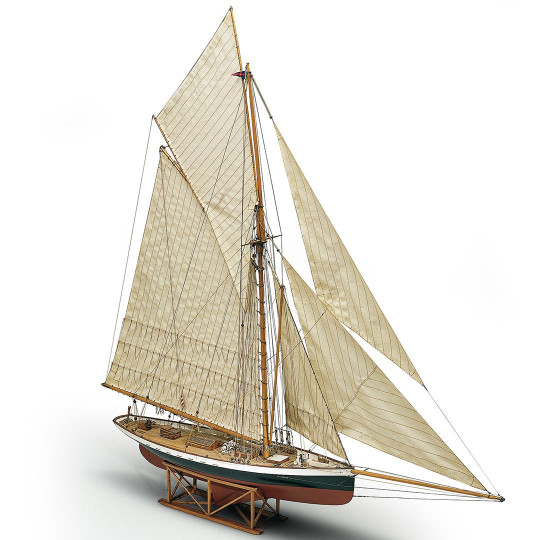
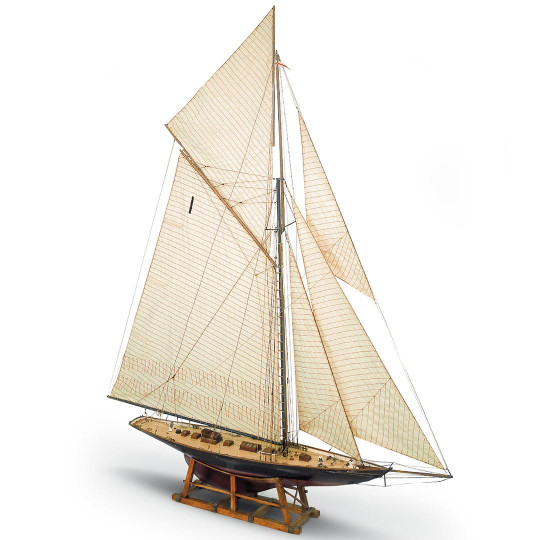
The wooden model boats of the America's Cup to build allow you to reproduce the historic yachts that have marked one of the oldest sailing competitions in the world.
To choose your model, I advise you to compare the sailboats, their era, their scale, their level of difficulty, and the techniques necessary for the construction of their hull and rigging.
From the famous schooner America, victorious in 1851, to the large J-class yachts of the 1930s, these boats testify to the...
The wooden model boats of the America's Cup to build allow you to reproduce the historic yachts that have marked one of the oldest sailing competitions in the world.
To choose your model, I advise you to compare the sailboats, their era, their scale, their level of difficulty, and the techniques necessary for the construction of their hull and rigging.
From the famous schooner America, victorious in 1851, to the large J-class yachts of the 1930s, these boats testify to the evolution of competitive sailing.
Their sleek hulls, slender masts, and impressive sails make them particularly interesting subjects for naval modeling enthusiasts.
On Scientific MHD, you will find reproductions of the America, the Endeavour, the Endeavour II, the Shamrock, the Puritan, and the Britannia, offered by OcCre, Billing Boats, Mamoli, and Mantua.
Some kits are suitable for modelers with some experience, while others require more precision and patience.
I suggest you discover the history of these yachts, their differences, and the particularities of their construction, in order to select a model that truly matches your desires.
• The America's Cup originated from the victory of the schooner America on August 22, 1851, during a race around the Isle of Wight, England.
• The models reproduce different generations of racing sailboats, from 19th-century schooners to the large J-class yachts of the 1930s.
• The wooden kits require precise work on the hull, planking, decks, masts, and the many ropes of the rigging.
• The choice depends on your experience, scale, final dimensions, and assembly time. The America and Endeavour models by OcCre at 1/75 scale each require about 120 hours of construction according to the manufacturer.
The America's Cup, also known as the America's Cup, is an international sailing competition whose history began in 1851. It pits yachts representing different yacht clubs against each other and is one of the oldest sports trophies in the world.
Over the decades, this competition has encouraged advances in naval architecture. Builders sought to design faster hulls, more efficient rigging, and boats capable of making the most of the wind.
For a model enthusiast, this heritage is particularly interesting. Each yacht has a silhouette and technical organization that reflect the knowledge of its time.
The America's Cup originated from the victory of the American schooner America during a regatta organized on August 22, 1851, around the Isle of Wight, off the English coast.
At that time, Great Britain held a major place in the world of navigation and nautical competitions. A team of American owners decided to cross the Atlantic with a yacht specially designed to face the best British sailboats.
The schooner America was designed by naval architect George Steers and built in New York by the William H. Brown shipyard.
It participated in a race organized by the Royal Yacht Squadron, whose course circled the Isle of Wight. Against several British yachts, the America prevailed and won the trophy then known as the Hundred Guinea Cup.
The trophy was then awarded to the New York Yacht Club. It gradually took the name America's Cup, in reference to the victorious yacht, not the American continent.
This victory marks the starting point of a competition that would pit the best naval architects, builders, and crews against each other for over a century.
I find this story particularly interesting to tell through a model. Building the 1851 America allows you to discover the boat that gave its name to the competition while reproducing the naval techniques of an era when large yachts still had multiple masts.
The America's Cup yachts have gradually evolved towards more efficient hulls and rigging specially designed for competition.
In 1851, the America was a two-masted schooner. Its architecture remained close to that of some fast sailboats used for coastal navigation, even though its lines had been optimized for speed.
At the end of the 19th century, yachts like the Puritan and the Shamrock adopted different configurations, with a single mast and a large sail area.
Naval architects paid increasing attention to waterline length, displacement, stability, and keel shape.
At the beginning of the 20th century, the evolution of materials and technical knowledge allowed for the design of even more specialized boats.
The large J-class yachts, like the Endeavour and the Endeavour II, illustrate this period. Their sleek hulls and particularly tall masts gave them an immediately recognizable silhouette.
For modeling, these differences are essential. A 19th-century schooner requires reproducing two masts and a relatively complex rigging, while a J-class yacht is distinguished by a single mast, a large sail area, and particularly fine lines.
A J-class yacht is a large racing sailboat designed according to a measurement rule used notably during the 1930, 1934, and 1937 editions of the America's Cup.
These boats were true racing machines. Their design called upon the most advanced knowledge of the time, with a constant search for speed and efficiency under sail.
The J-class is characterized notably by long and slender hulls, deep keels, and very large sail areas.
These yachts required large crews, capable of maneuvering their immense sails and managing the considerable forces exerted on the rigging.
The Endeavour of 1934 and the Endeavour II of 1937 belong to this family.
I particularly recommend their models to enthusiasts of racing sailboats. Their silhouette is very different from that of traditional merchant or military ships, and their construction places more emphasis on the purity of lines and the precision of the rigging.
Scientific MHD offers several models of yachts associated with the history of the America's Cup, from the founding schooner of 1851 to the large racing sailboats of the 1930s.
I advise starting by choosing a boat whose history and lines you like. Each model offers a different experience, both for the construction of the hull and for the realization of the masts and sails.
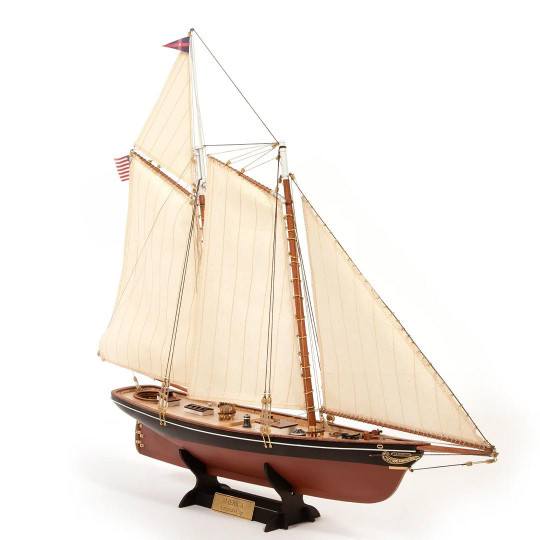
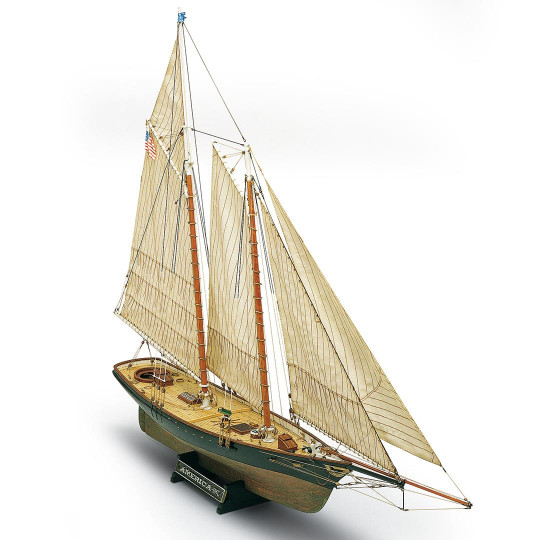
The America is an American two-masted schooner, famous for winning the 1851 regatta that gave birth to the America's Cup.
Designed by George Steers, it was distinguished by its sleek hull and particularly efficient rigging for its time.
Its victory against British yachts helped transform the history of competitive sailing.
Scientific MHD offers three reproductions of this boat, at different scales.
The America 1851 model at 1/75 by OcCre, reference S06112014, includes 1,135 pieces. Once completed, it measures 54 cm long, 9.7 cm wide, and 46 cm high.
The manufacturer classifies this construction at the intermediate level and estimates its assembly time at about 120 hours.
The kit combines different types of wood, including lime, mahogany, and walnut, with photo-etched brass parts and metal accessories. It also includes a display stand and a brass plaque bearing the boat's name.
The plans, assembly photographs, and video tutorials allow you to follow the different stages of construction.
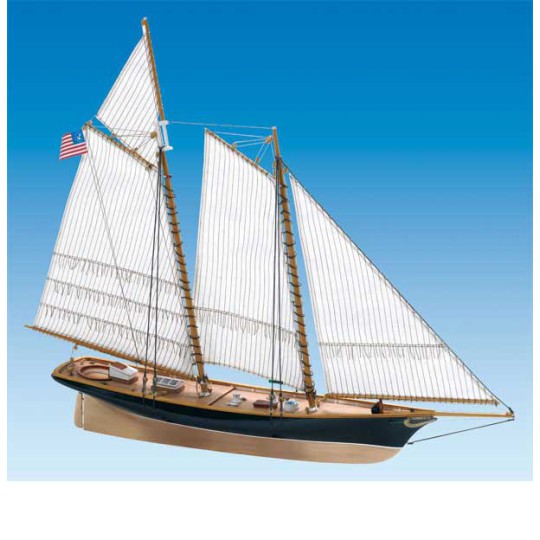
A second option is the static America boat at 1/72 by Billing Boats, reference S052609.
This wooden model also reproduces the historic schooner, with its hull, two masts, and various rigging elements.
Finally, the America model at 1/66 by Mamoli, reference Z49MV26, offers another interpretation of the same yacht.
I find it particularly interesting to have three versions of such a famous boat. You can thus compare the scales, construction method, and kit contents, rather than choosing solely based on the ship's name.
The Puritan is an American yacht designed by naval architect Edward Burgess and famous for its victory in the 1885 America's Cup.
Unlike the America of 1851, the Puritan was a single-masted sailboat, designed for competition and speed.
Its architecture reflected the nautical developments of the late 19th century, particularly in hull and rigging design.
The Puritan won the 1885 edition and helped confirm American dominance in the competition during this period.
Scientific MHD offers the Puritan model at 1/50 by Mamoli, reference Z49MV43.
This wooden kit includes laser-cut pieces and numerous fittings. Its construction allows for reproducing the hull shapes, deck, and rigging of the yacht.
The manufacturer indicates that it is possible to make the model for display or consider a sailing version, provided the necessary adaptations are made to ensure the hull's watertightness.
I recommend the Puritan to modelers who appreciate 19th-century racing yachts and wish to work on an elegant hull, accompanied by a relatively imposing mast.
Its 1/50 scale also provides an interesting model for detail reproduction.
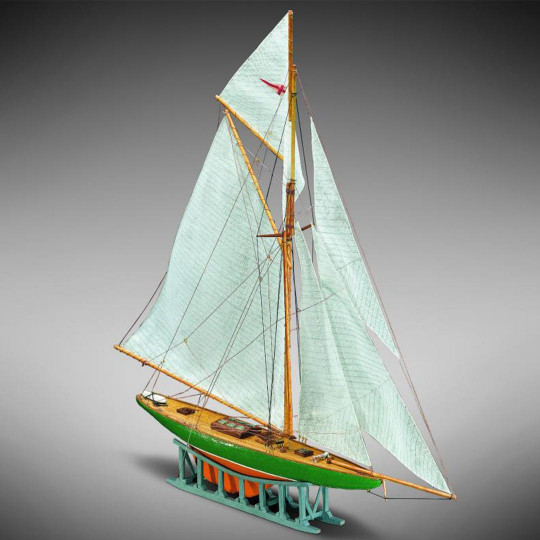
The Shamrock is a British yacht entered in the 1899 America's Cup, initiated by Sir Thomas Lipton.
This entrepreneur, known particularly for his activity in the tea trade, wanted to win the prestigious trophy and affirm the value of British yachts.
The first Shamrock participated in the 1899 edition, without managing to prevail against the American defender.
However, Sir Thomas Lipton continued his attempts for several decades. He participated in five challenges between 1899 and 1930, becoming one of the most well-known personalities in the history of the competition.
Scientific MHD offers the Shamrock model by Mamoli, reference Z49MM63, which reproduces the first yacht of this series.
This construction allows you to rediscover the lines of a late 19th-century racing sailboat, with its rigging and unique characteristics.
I find the Shamrock interesting for enthusiasts who wish to complete a collection dedicated to the evolution of the America's Cup.
Placed next to a model of the 1851 America or a yacht from the 1930s, its silhouette allows for a better understanding of the changes in racing yacht design.
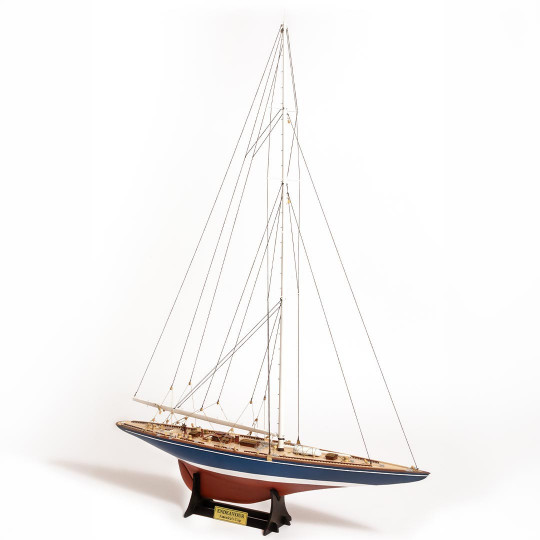
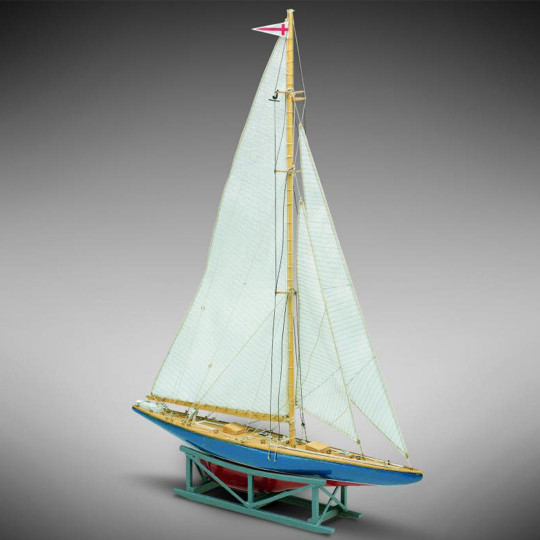
The Endeavour is a British J-class yacht, built to participate in the 1934 America's Cup under the impetus of Sir Thomas Sopwith.
This large sailboat represented a particularly modern approach to naval architecture for its time.
Its design called for advanced materials and techniques, particularly in the construction of its steel hull and mast.
The Endeavour was distinguished by its fine lines, deep keel, and imposing sail area.
In the 1934 edition, it won two races but was ultimately defeated by the American defender, who won four victories to two.
Scientific MHD offers the 1/75 scale Endeavour model by OcCre, reference S06112013.
This kit includes 1,277 pieces in wood, brass, and metal. Once assembled, it measures 52.8 cm long, 9.1 cm wide, and 72.3 cm high.
The manufacturer classifies this model at the intermediate level and estimates its construction at about 120 hours.
The materials include limewood, mahogany, and sapelli, as well as photo-etched brass accessories, metal parts, and textile elements for the sails and rigging.
The kit is accompanied by plans, detailed photographs, and video tutorials to facilitate the different stages of assembly.
I particularly recommend this model if you love large racing yachts. Its slender mast and sleek hull give a very different result from traditional historical sailboats.
However, you will need to plan for sufficient display height. With its 72.3 cm, the Endeavour takes up more vertical space than the OcCre America at the same scale.
The Endeavour II is a British J-class yacht, built to participate in the 1937 America's Cup edition.
It should not be confused with the 1934 Endeavour. They are two distinct boats, designed for two different editions of the competition.
The Endeavour II was created in a context of particularly intense technological research. Naval architects sought to improve the performance of large yachts, despite the high costs and significant constraints of their construction.
The sailboat participated in the 1937 edition but did not manage to win the trophy.
This competition marked the end of the first great period of J-class yachts in the history of the America's Cup.
Scientific MHD offers the static Endeavour II model by Mamoli, reference Z49MM14.
This model allows you to reproduce a racing yacht with elegant lines, a sleek hull, and a significant sail area.
I would particularly recommend it to collectors who wish to present several generations of racing sailboats side by side.
The 1934 Endeavour and the 1937 Endeavour II form an interesting set to illustrate the latest developments in the J-class before World War II.
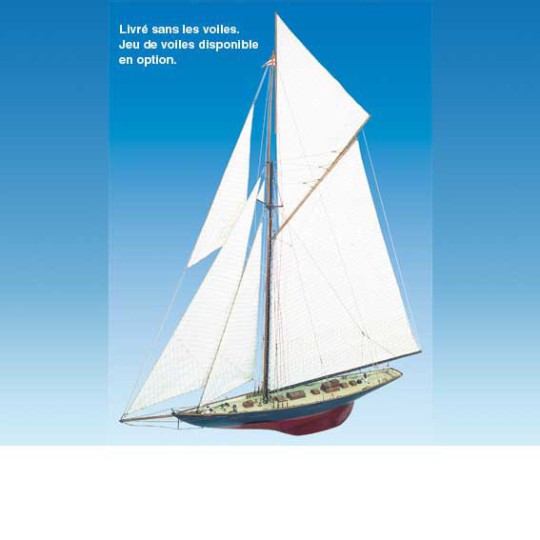
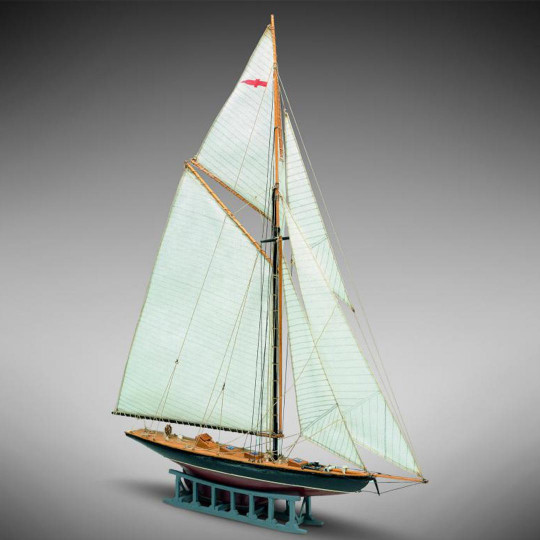
The Britannia is a British royal yacht launched in 1893, designed by naval architect George Lennox Watson for Albert Edward, then Prince of Wales and future King Edward VII.
This sailboat was one of the great racing yachts of its time. It stood out for its performance, longevity, and elegant architecture.
The Britannia participated in numerous competitions, notably in British waters, and was directly associated with the world of great yachts surrounding the America's Cup.
However, it should be noted that it did not itself participate in an edition of the America's Cup. It was notably used as a training partner for yachts entered in this competition.
Scientific MHD offers several reproductions of the Britannia.
The Britannia at 1/60 scale from Mantua, reference S068733, uses traditional construction with frames and planking strips. The kit includes laser-cut wooden parts and rigging elements.
To complete this model, Scientific MHD also offers the sails for Britannia Mantua, reference S06834030, available separately.
The Britannia model at 1/64 scale from Mamoli, reference Z49MV44, is another option for reproducing this historic yacht.
Scientific MHD also offers a more compact version of the Britannia from Mamoli, reference Z49MM9, depending on catalog availability.
I find the Britannia particularly appealing for its elegance. Its elongated hull, deck, and large sail area make it a beautiful display piece, even though it did not directly participate in the trophy conquest.
To compare several models of historic yachts, I recommend looking at their scale, dimensions, difficulty level, and the materials provided.
Two kits representing the same boat can offer very different constructions. Conversely, two yachts from the same era can have architectures and rigging that have almost nothing in common.
Here is a table of the main references offered by Scientific MHD.
| Model | Manufacturer | Scale | Feature |
|---|---|---|---|
| America 1851 | OcCre | 1/75 | Historic schooner, 1,135 pieces, intermediate level |
| America | Billing Boats | 1/72 | Wooden reproduction of the 1851 schooner |
| America | Mamoli | 1/66 | Another reproduction of the founding yacht |
| Puritan | Mamoli | 1/50 | American yacht winner in 1885 |
| Shamrock | Mamoli | According to the sheet | British challenger of 1899 |
| Endeavour | OcCre | 1/75 | J-class yacht of 1934, 1,277 pieces |
| Endeavour II | Mamoli | According to the sheet | J-class yacht of 1937 |
| Britannia | Mantua | 1/60 | Royal racing yacht, sails available separately |
| Britannia | Mamoli | 1/64 | Large British yacht launched in 1893 |
I advise you to consult the product sheets to know the precise content of each box. The plans, accessories, sails, and finishing products are not necessarily identical from one manufacturer to another.
The difficulty level of a yacht model mainly depends on the construction of its hull, the number of pieces to assemble, and the complexity of its rigging.
A large model is not necessarily more difficult than a small one. Some pieces even become easier to handle when the scale is large.
I therefore advise you to prioritize the construction method and the manufacturer's instructions, rather than choosing solely based on dimensions or the number of masts.
To start in naval modeling, I recommend choosing a kit accompanied by clear instructions, easy-to-identify parts, and a limited number of very delicate operations.
Competition yachts generally have thin hulls and rigging that require a certain precision.
The installation of the planking, the alignment of the masts, and the tension of the rigging are important steps.
It is therefore preferable to have already completed some wood assemblies before tackling a large regatta model.
The small reproductions offered by Mamoli can be interesting to examine, but their compact format does not automatically guarantee easy assembly.
I advise checking the number of pieces, the type of instructions, and the necessary operations before deciding.
If you wish to acquire the basics of naval modeling, you can also consult our category wooden boat models to build, which offers models of varying difficulties.
With initial experience in shipbuilding, the America and Endeavour models by OcCre at 1/75 scale are two interesting projects.
These kits are classified as intermediate level by the manufacturer.
Their construction is based on the assembly of wooden pieces, the creation of the hull, the installation of deck details, and the rigging setup.
The America OcCre includes 1,135 pieces, while the Endeavour OcCre has 1,277.
Both models are estimated at approximately 120 hours of assembly.
I find this comparison interesting because the two yachts have relatively similar dimensions but very different rigging.
The America features two masts and a 19th-century schooner silhouette. The Endeavour has a single large mast and a sail plan representative of J-class yachts.
Your choice can therefore directly depend on the type of rigging you wish to learn to create.
Models intended for experienced builders generally require more precision in planking, accessory assembly, and rigging setup.
Large regatta yachts, such as the Puritan at 1/50 scale or detailed reproductions of the Britannia, can be interesting projects for those who have already completed several wooden models.
The difficulty does not lie solely in the number of pieces. The hull shapes, the fineness of the strips, and the tensions exerted on the masts can require a lot of patience.
I recommend taking the time to prepare each step and check the adjustments before final gluing.
To discover other demanding construction projects, you can also consult the expert boat models offered on Scientific MHD.
The scale of a model indicates the ratio between the dimensions of the model and those of the original boat. For example, at 1/75 scale, one meter on the model corresponds to 75 meters on the real yacht.
The America’s Cup models offered by Scientific MHD use different scales, including 1/50, 1/60, 1/64, 1/66, 1/72, and 1/75.
A 1/50 scale produces a larger model than a 1/100 scale when it comes to the same real boat.
Take the example of a 30-meter long yacht. At 1/50 scale, the model would measure 60 cm. At 1/75 scale, it would measure 40 cm. At 1/100 scale, it would reach 30 cm.
However, I advise not to choose solely based on this reduction ratio.
The original boats do not all have the same dimensions. A small scale can therefore yield a relatively large model if the real yacht was particularly large.
The America and Endeavour have different rigging architectures, which partly explains their height differences once reproduced as models.
Both OcCre kits are offered at 1/75 scale.
The America measures 54 cm long and 46 cm high.
The Endeavour measures 52.8 cm long but reaches 72.3 cm in height.
Despite being slightly shorter, the Endeavour is therefore 26.3 cm taller.
This difference is mainly due to the large mast of the J-class yacht.
I find this example particularly illustrative: a sailboat model may seem unobtrusive when looking only at its length, then require a much taller display case than expected.
To anticipate the space a model will occupy, I recommend considering the length, width, and height of the yacht once assembled.
The height of the masts, the position of any yards, and the presence of sails can significantly alter the necessary space.
It is also important to allow for a margin around the boat to handle it, dust it, and avoid damaging the rigging.
If you wish to display your model in a showcase, I advise choosing it based on the final dimensions of the model, not the kit box.
A historical wooden yacht kit generally includes structural elements, planking pieces, decks, masts, and accessories necessary for reproducing the boat.
The content, however, varies depending on the manufacturer. Some kits include sails, rigging, and a display stand, while others require additional accessories.
Historical yacht models use different types of wood, chosen for their strength, flexibility, and appearance.
Plywood is generally used for the keel, frames, and some structural parts.
Linden is appreciated for its ease of work. Mahogany, walnut, and sapele can be used for planking, decks, or decorative finishes.
The America 1851 kit from OcCre includes linden, mahogany, and walnut.
The Endeavour from OcCre combines linden, mahogany, and sapele.
I recommend respecting the intended use for each type of wood. A strip intended for planking does not necessarily have the same characteristics as a deck or mast element.
To supplement your materials or conduct tests, Scientific MHD also offers different types of wood for modeling.
The masts, sails, and rigging are the main elements of a racing yacht's rigging.
The standing rigging is used to support the masts. It includes shrouds and stays.
The running rigging allows for maneuvering the sails, with different ropes used to hoist, adjust, or orient them.
On a schooner like the America, the presence of two masts multiplies the attachment points and elements to assemble.
On a J-class yacht like the Endeavour, attention is particularly focused on the main mast, boom, and large sails.
I advise following the assembly plans precisely. A rope installed too early can obstruct access to certain parts, while excessive tension may deform fragile elements.
The sails should also be installed carefully to maintain a natural presentation and avoid unsightly creases.
Deck accessories allow for reproducing the equipment used to maneuver the sails and ensure the yacht's operation.
They include pulleys, cleats, winches, mooring points, and various rigging elements.
Some kits use photo-etched brass or cast metal parts to reproduce the finest details.
On OcCre models, these elements help enrich the reproduction of decks and rigging.
I recommend painting or preparing certain parts before installation when it facilitates handling.
You can find different accessories in our boat model rigging category.
The necessary tools generally include a precision knife, pliers, abrasives, miniature clamps, and measuring instruments.
I also advise planning for glues suitable for different materials, particularly wood and metal.
OcCre models may include the main construction parts, but paints, glues, and some finishing products must be purchased separately.
For rigging work, fine pliers and a suitable cutting tool facilitate handling the threads.
A construction stand can also help hold the hull during assembly.
You will find a selection of materials in our tools and accessories for wooden boat models category.
The construction of a historical wooden yacht model generally begins with the assembly of the hull, followed by planking, decks, masts, and rigging.
The exact method depends on the chosen kit. I recommend following the order indicated in the instructions, especially for operations that become difficult once certain elements are fixed.
The first step is to identify the different parts and build the framework that will shape the yacht.
The keel forms the main axis of the boat. The frames are installed perpendicularly to define the hull's shapes.
I advise doing a dry fit before gluing the first pieces. This method allows you to check their fit and spot any errors.
The structure must remain perfectly aligned. A deformation at this stage can cause difficulties during the planking installation.
For the long and slender hulls of racing yachts, I recommend working on a stable support and regularly checking the symmetry.
Planking involves covering the structure with wooden strips, gradually adjusted to the curves of the hull.
Racing yachts generally have very fine lines. The planking must therefore follow these shapes without creating breaks or irregularities.
I recommend working alternately on both sides of the boat to limit tensions.
The strips may require bending adapted to the type of wood used. They should not be forced abruptly, at the risk of breaking them or deforming the structure.
On double-planked models, the first layer mainly serves to form the hull.
The second allows for a more regular and aesthetic finish.
Progressive sanding is then necessary to prepare the surfaces before installing the decks and accessories.
Laying the deck completes the structure of the yacht and prepares for the installation of the main equipment.
On a racing sailboat, the decks are often relatively clear, but the accessories must be positioned precisely.
Winches, cleats, pulleys, and various mooring points occupy locations determined by the rigging's operation.
I advise checking the plans before permanently fixing these elements.
The most fragile parts can be kept aside during sanding and painting operations to limit the risk of breakage.
Assembling the masts and rigging is one of the most delicate steps in a racing yacht model.
The masts must be correctly positioned and secured before installing the ropes.
I recommend starting with the standing rigging elements, which ensure the mast's stability, then proceeding with the lines intended for sail maneuvers.
The order indicated on the plans must be respected, as some attachment points become difficult to access once other ropes are installed.
The tension of the lines must remain consistent. Excessive tension can deform the mast or damage small parts.
On the America of 1851, the work must consider the two masts. On the Endeavour, attention is particularly focused on the main mast and the arrangement of the sails.
I advise taking your time during this step. The quality of the rigging strongly influences the overall appearance of the finished boat.
The final steps consist of checking alignments, finishing the paintings, and installing the remaining accessories.
I recommend inspecting the hull, decks, and rigging before considering the construction complete.
The ropes must maintain correct tension. The sails should be presented naturally, without exerting excessive force on the masts.
Small metal parts and deck accessories can be installed after the main finishing operations, when the instructions allow.
A final cleaning removes construction dust and prepares the model for display.
The quality of the painting and varnishing plays an important role in the final appearance of a historical yacht model.
The sleek lines of racing boats make surface defects and irregularities particularly visible.
I consider this step a true part of the construction.
A properly assembled hull deserves a sufficiently careful finishing job to restore all the elegance of the sailboat.
Wood preparation involves progressive sanding, careful cleaning, and checking joints before applying paint or varnish.
I advise starting by correcting small irregularities in the planking, then using increasingly fine abrasives.
You can notably use the OcCre model boat sandpaper, reference S06119156, offered on Scientific MHD.
The goal is to achieve a regular surface without removing too much material, especially when the second planking is done with thin strips.
If some parts intended to be painted have gaps or small defects, a filler product can facilitate preparation.
The OcCre filler of 135 ml, reference S06119143, allows filling small imperfections before sanding.
However, I recommend reserving opaque fillers for surfaces intended to be covered or painted. On exposed wood, they can mask the natural grain.
To reproduce the colors of a historical yacht, I recommend following the manufacturer's instructions and consulting, when possible, the documentation corresponding to the era represented.
Racing yachts often had painted hulls, wooden decks, and sails in relatively subdued tones.
However, it is important to avoid assuming that the same boat always retained exactly the same colors throughout its existence.
Historical yachts have sometimes been modified, restored, or presented in different configurations.
I therefore advise choosing a specific period when multiple interpretations are possible.
To achieve these finishes, you can consult our category paints and stains for model boats.
A beautiful varnish protects the wood and highlights the details of the decks while maintaining a consistent appearance with the yacht represented.
I recommend carefully preparing the surfaces before starting. Dust, glue marks, and scratches can become more visible after applying the varnish.
The product should be chosen based on the type of wood, the desired finish, and its compatibility with any paints or stains.
A satin varnish can offer a discreet appearance, particularly suitable for certain historical presentations.
Scientific MHD notably offers the OcCre satin varnish 50 ml, reference S06119419.
I advise following the manufacturer's recommendations regarding application, drying, and any intermediate sanding.
On yacht decks, working too quickly can produce thicknesses or mask small details. It is better to take the time to achieve a regular finish.
The sails and the most fragile accessories should generally be installed after the main sanding and painting operations, when the instructions allow.
This precaution prevents soiling the fabrics, damaging the rigging, or breaking a piece during handling.
I advise preparing the rigging elements in advance, then proceeding with their installation in the planned order.
The sails should be handled with clean hands, especially when made of light cotton.
For metal accessories, it is preferable to check their fit before the final finishing coats.
A model of a historical yacht can sail if it has been designed or properly adapted for this use. E
However, the kits presented in this Scientific MHD category are primarily intended for static construction and display.
I recommend clearly distinguishing these two uses before choosing your model.
A static model reproduces the appearance of the yacht for display, while a radio-controlled sailboat must have a watertight hull, suitable ballast, and equipment to control its direction and sails.
Static models prioritize reproduction fidelity, deck details, and rigging precision.
A sailing yacht must also meet balance, stability, and water resistance constraints.
Its remote control generally allows adjusting the rudder and sails using suitable servos.
I therefore advise not to consider a static model as automatically compatible with sailing.
Transforming a static model into a sailing yacht is sometimes possible, but it requires significant technical modifications.
It is necessary to check the hull's watertightness, the rigging's strength, and the possibility of installing ballast and radio-controlled equipment.
The Mamoli Puritan at 1/50 is notably presented by the manufacturer as being adaptable for sailing, provided the necessary recommendations are followed to make its hull watertight.
Such a transformation nevertheless requires sufficient experience in naval modeling.
If your main goal is to sail, I recommend directly consulting our selection of radio-controlled sailboats, designed to operate on water.
The budget and construction time of a historical yacht model depend on its size, the number of parts, the materials, and the assembly difficulty.
I advise evaluating the project as a whole, taking into account the kit price, necessary tools, and finishing products.
The price of a yacht model mainly depends on its size, the quality of materials, the number of pieces, and the accessories provided.
A kit including detailed metal parts, sails, rigging, and a display stand may be more elaborate than a simpler design model.
The precision of the cuts, illustrated instructions, and available tutorials can also facilitate construction.
I recommend comparing the features of the models rather than choosing solely based on their price.
For the America and Endeavour kits from OcCre, the numerous parts and assembly resources allow for detailed reproductions, intended for static display.
The construction time varies depending on the difficulty of the kit and your experience in naval modeling.
The America 1851 and Endeavour models from OcCre at 1/75 scale are each estimated at around 120 hours of assembly by the manufacturer.
These indications serve as benchmarks but do not guarantee the same duration for all modelers.
The necessary time particularly depends on your mastery of planking, accessory assembly, and rigging.
I advise dividing the work into several stages: structure, hull, decks, masts, rigging, and finishes.
At a rate of six hours of modeling per week, a 120-hour project represents about twenty weeks of construction.
This organization allows for regular progress without rushing the most delicate operations.
Additional purchases mainly concern glues, abrasives, paints, varnishes, and some precision tools.
Depending on the kits, sails, stands, or certain accessories may also be sold separately.
I recommend systematically checking the list of provided elements before ordering additional materials.
To complete your equipment, you can find the tools and accessories for wooden boat models offered on Scientific MHD.
A historical yacht model must be protected from dust, repeated handling, and conditions that could damage the wood or rigging.
The masts, sails, and rigging elements are particularly fragile.
A stable stand allows the yacht to be displayed while protecting its hull from direct contact with the display furniture.
The America and Endeavour kits from OcCre include a display stand.
A display case is also an interesting solution for the most detailed models.
I recommend providing enough space around the masts, especially for J-class yachts.
You will find different solutions in our model display cases category.
Cleaning a sailboat model must be done carefully, using soft tools suitable for small parts.
I advise using a soft brush to gradually remove dust from the decks and accessories.
Avoid pulling on the rigging or directly rubbing the sails.
Aggressive household products can also damage paints, varnishes, and some textile materials.
Finally, choose a location sheltered from prolonged direct sunlight and significant humidity variations.
For beginners, I recommend choosing a kit with clear instructions and a difficulty level suited to your experience.
The America and Endeavour models from OcCre at 1/75 scale are classified as intermediate level.
They are therefore more suitable for those who have already acquired some basics in wooden model construction.
The America of 1851 is a two-masted schooner, while the Endeavour of 1934 is a large J-class yacht with a single mast.
Their architectures reflect two different periods in the history of the competition.
In model form, these differences are particularly evident in the hull shapes, mast heights, and sail arrangements.
The Endeavour and the Endeavour II are two distinct British yachts.
The first participated in the 1934 America's Cup, while the second was built for the 1937 edition.
Both belonged to the J-class, but their characteristics and competition periods were different.
The choice depends on the scale, materials, box contents, and your experience.
OcCre offers the America at 1/75 scale with 1,135 pieces and an estimated assembly time of 120 hours.
Billing Boats sells a version at 1/72 scale, while Mamoli offers a reproduction at 1/66 scale.
I recommend comparing the plans, accessories, and dimensions before choosing.
A J-class yacht is a large racing sailboat designed according to a gauge rule used notably during the America's Cup editions of 1930, 1934, and 1937.
These boats are distinguished by their long and sleek hulls, deep keels, and large sails. The Endeavour and Endeavour II belong to this category.
Sails may be included in the kits, but their presence depends on the manufacturer and the reference. OcCre models include textile elements intended for rigging reproduction.
For some models, like the Britannia at 1/60 scale from Mantua, sails are offered separately. I advise checking the precise contents of each box.
The time required depends on the model and your experience. The America 1851 and Endeavour kits at 1/75 scale from OcCre are estimated at about 120 hours of assembly.
Planking operations, rigging, and finishing can extend this duration depending on the care taken in construction.
An America's Cup model can sail if its design allows for adaptation to this use.
Most historical kits in this category are, however, intended for display.
The Puritan from Mamoli can notably be adapted, provided its hull is made watertight and the necessary equipment is planned.
The main tools are a modeling knife, pliers, abrasives, measuring instruments, miniature clamps, and suitable glues.
Rigging assembly may also require fine pliers and specific cutting tools. I recommend preparing these accessories before starting.
To successfully rig, I advise following the assembly order indicated in the plans, properly aligning the masts, and gradually adjusting the tension of the ropes.
The threads should not exert excessive pressure on fragile elements. A careful installation of sails and pulleys greatly contributes to the final appearance of the model.
The Britannia is a famous British royal yacht launched in 1893.
It participated in many competitions and was associated with the great racing sailboats of the time, notably as a training partner.
However, it did not directly compete in an edition of the America's Cup.
Its presence in this category allows for the discovery of a historic yacht belonging to the same competitive universe.
A static model is intended to faithfully reproduce a yacht and be displayed.
A radio-controlled sailboat must have a watertight hull, suitable ballast, and equipment to control its sails and rudder. The construction and balance constraints are therefore different.
To choose your America's Cup model, I advise prioritizing the yacht whose history and characteristics attract you the most, while considering your experience and available space.
If you wish to reproduce the boat at the origin of the competition, the America of 1851 is a particularly interesting choice.
Scientific MHD offers three versions of this famous schooner, manufactured by OcCre, Billing Boats, and Mamoli.
For fans of J-class yachts, the Endeavour of 1934 and the Endeavour II of 1937 allow for the discovery of the great racing sailboats of the interwar period.
The Puritan and the Shamrock are interesting for exploring the regattas of the late 19th century, while the Britannia will appeal more to enthusiasts of royal yachts and great historical competitions.
I recommend comparing the scales, dimensions, kit contents, and assembly techniques before making your choice.
Building one of these wooden yachts is a project that requires patience, particularly for planking, rigging, and finishing.
But it is also an opportunity to discover the history of competitive sailing through an object that you will have entirely assembled.
From the first wooden strip to the last rope, each step contributes to reproducing the elegant lines of these historic sailboats.
Once completed, your model can find its place in a collection dedicated to the America's Cup or, quite simply, become a beautiful display piece.
 Filter
10 Products
Fast shipping
Via Chronopost 24H
Via DPD 24/48H
Colissimo 48/72H
337786 products in stock
Real-time stock displayed
Secure payment




Secure payment
In 3 or 4 installments

 4.6/5

Specialist since 1955
Fast shipping
Via Chronopost 24H
Via DPD 24/48H
Colissimo 48/72H
337786 products in stock
Real-time stock displayed
Secure payment
Secure payment
In 3 or 4 installments
4.6/5
Specialist since 1955