
-
-€120.00
-
Promotion
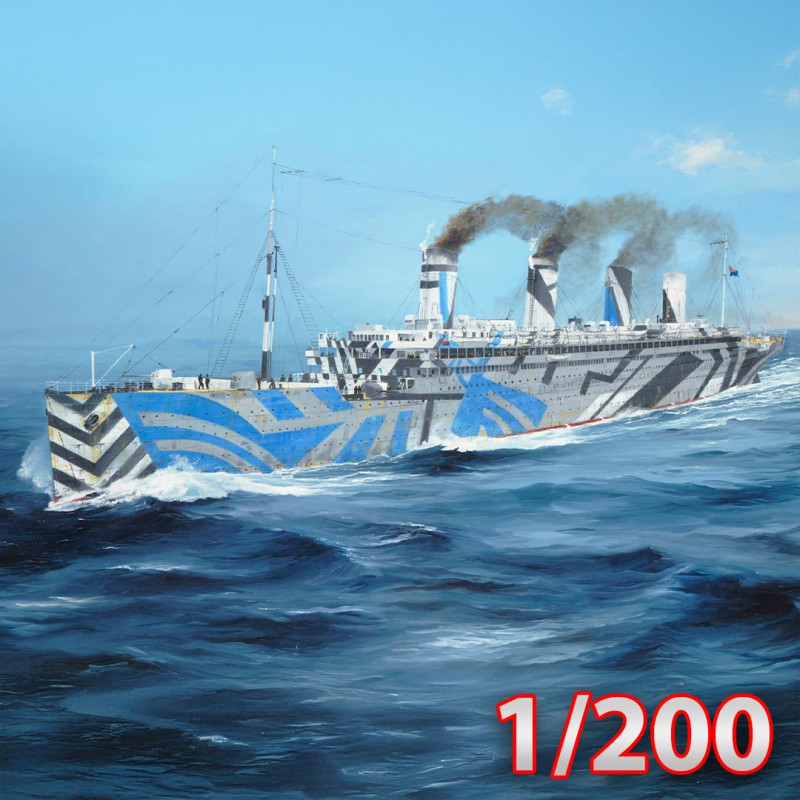
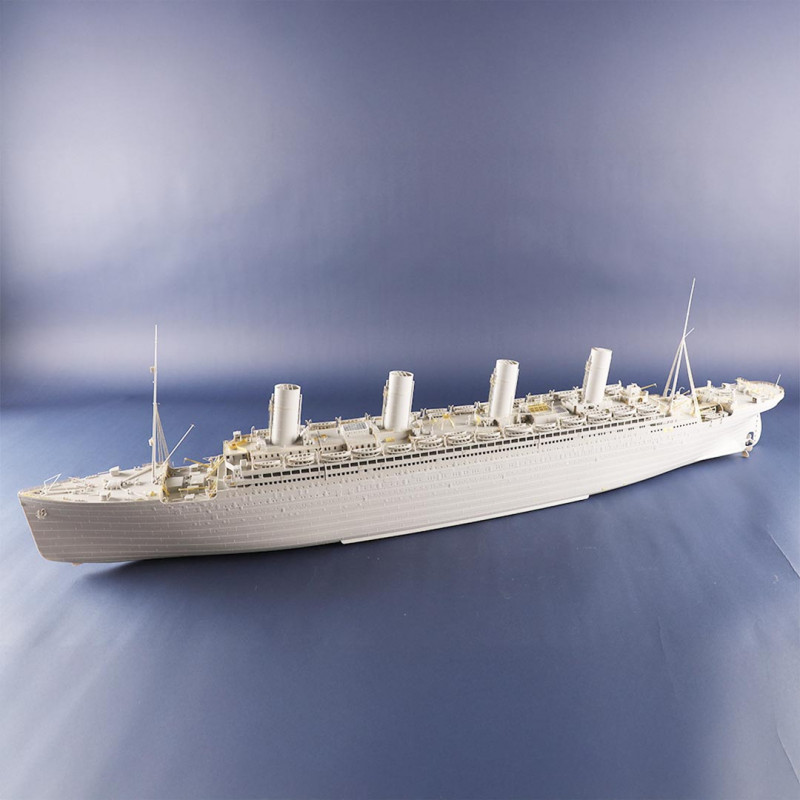
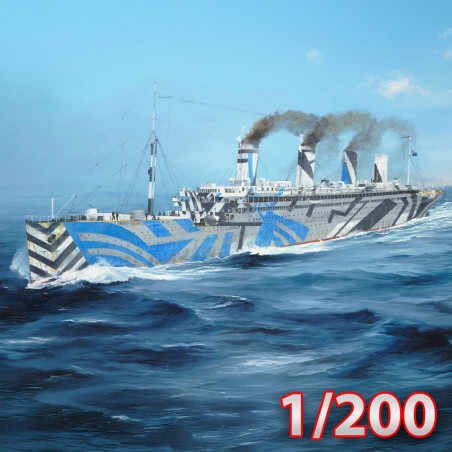
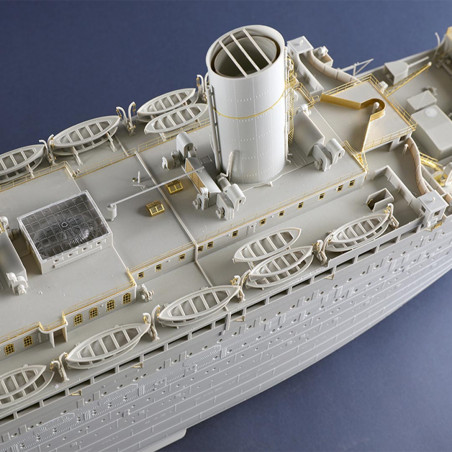
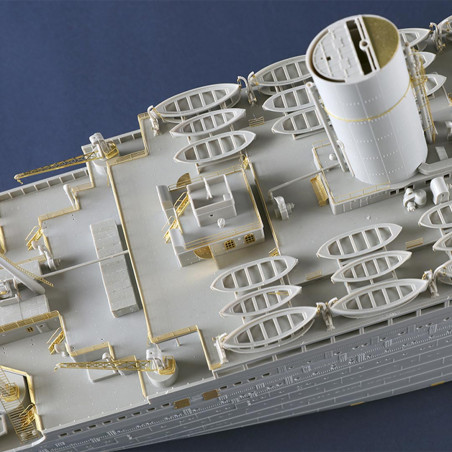
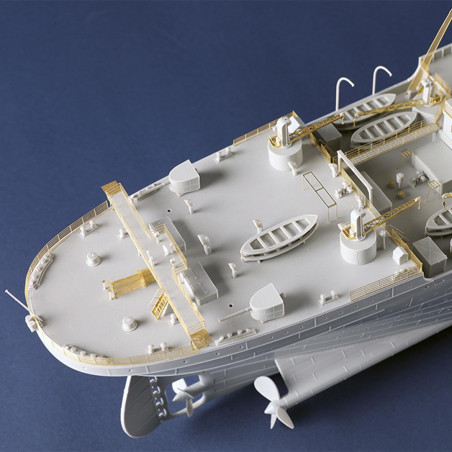
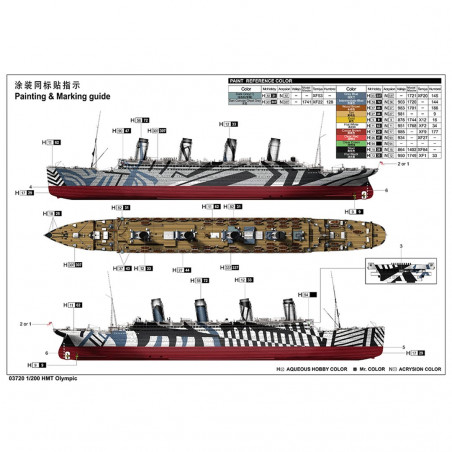
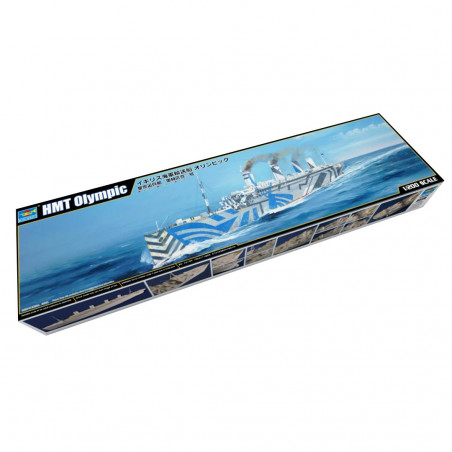
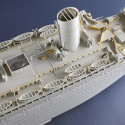
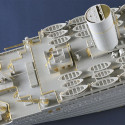
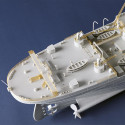
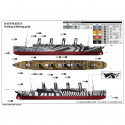
Sister ship of the famous TITANIC which was requisitioned by the army during the war.
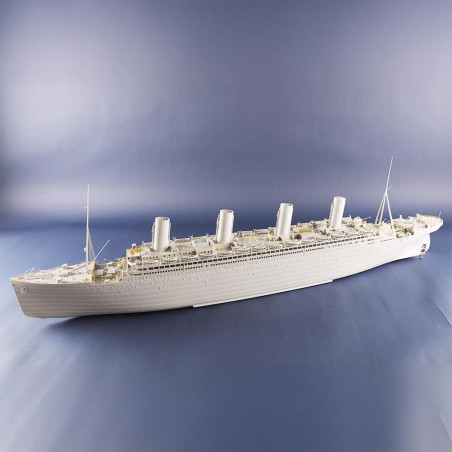
Assembled model dimensions:
Length: 1.34 m
Width: 14.4 cm
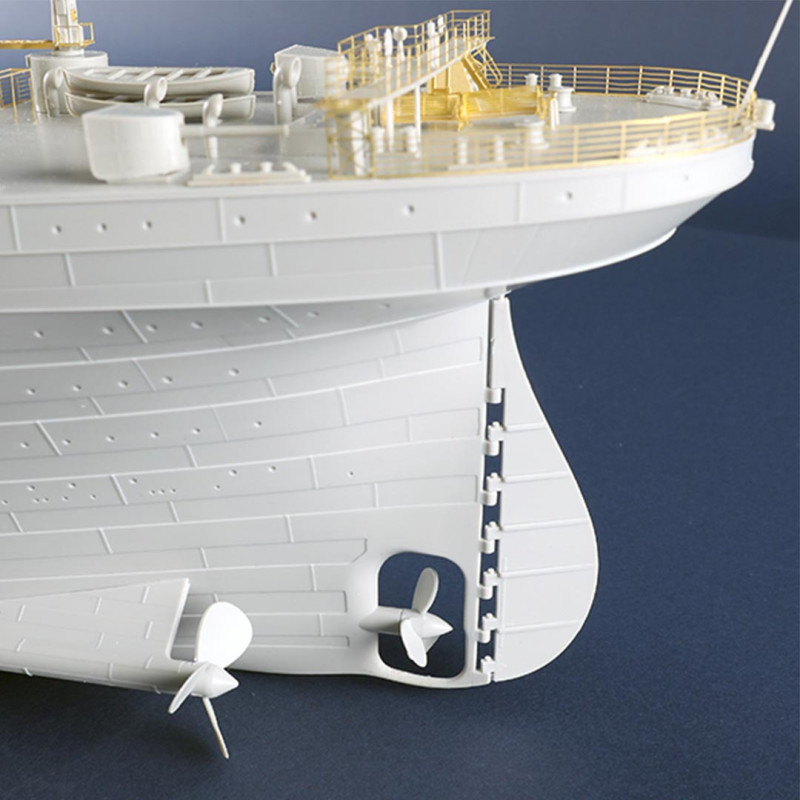
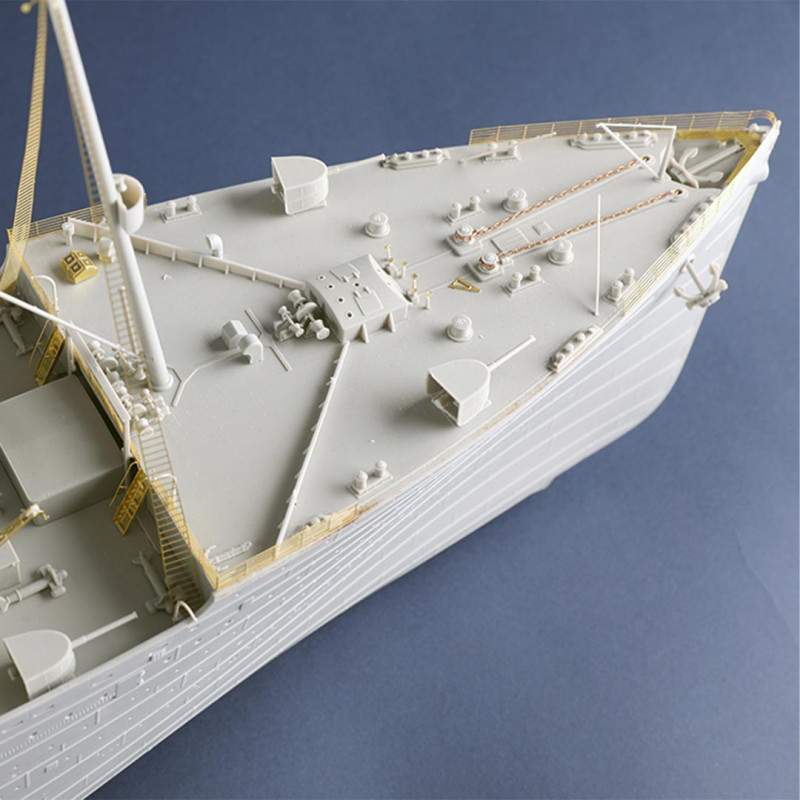
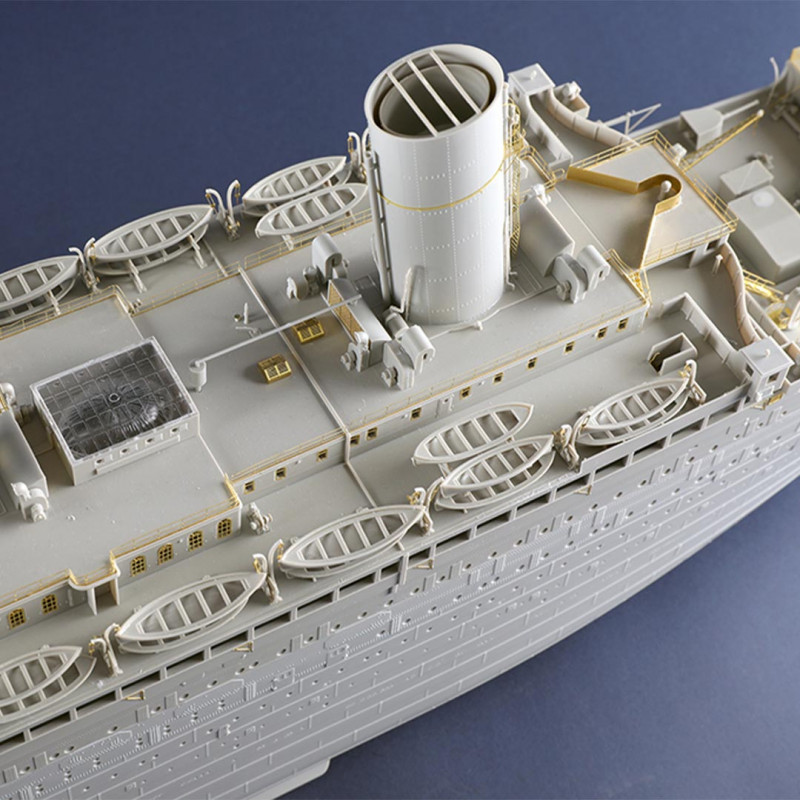
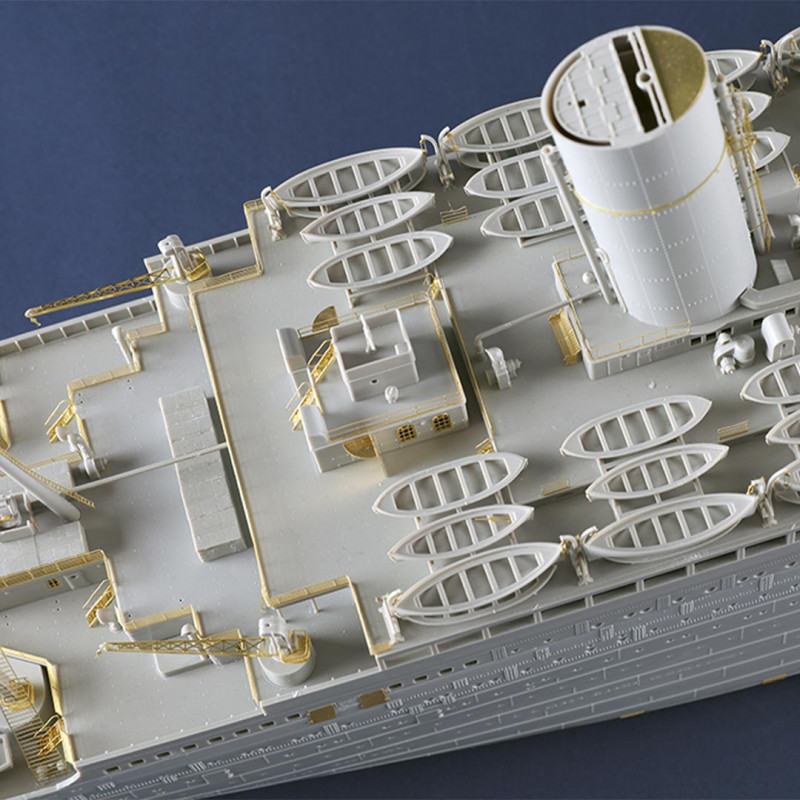
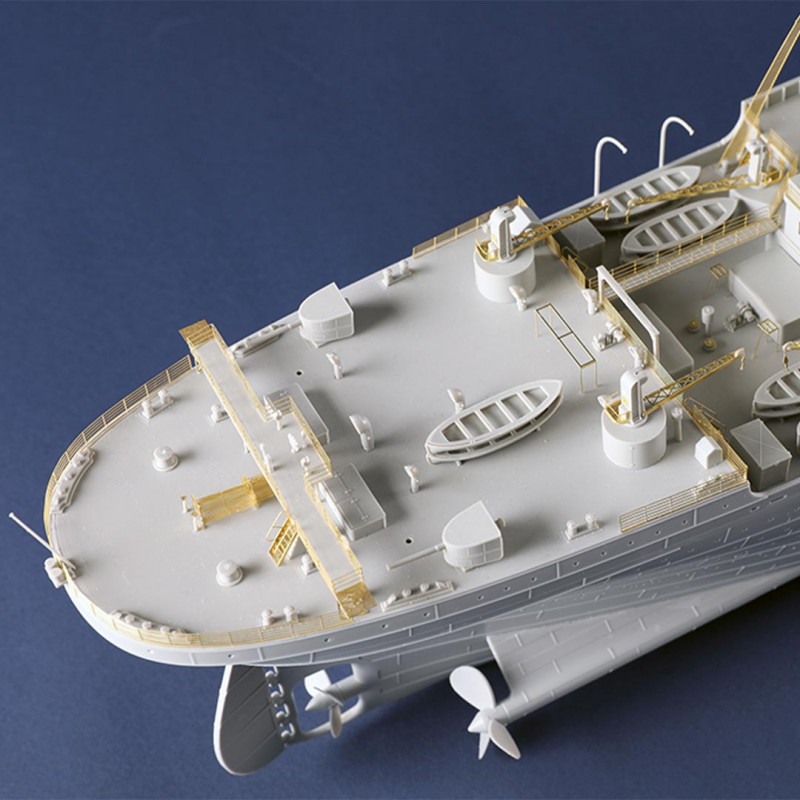
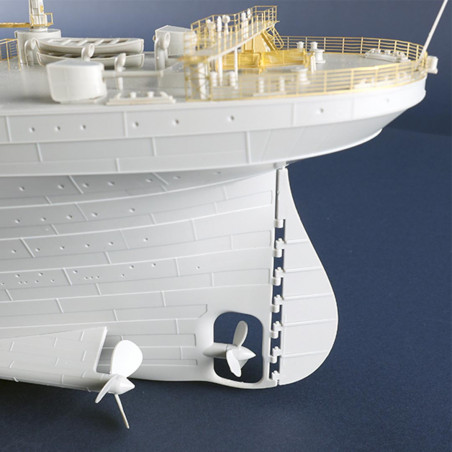
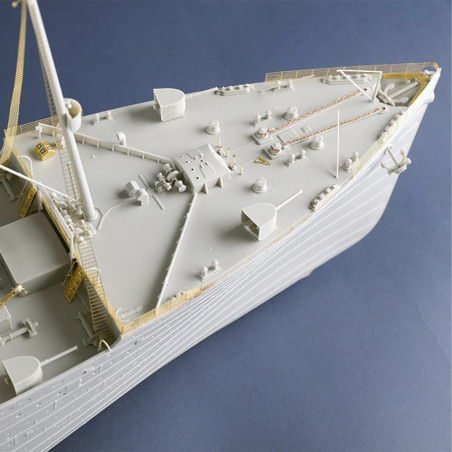
1880 pieces to assemble

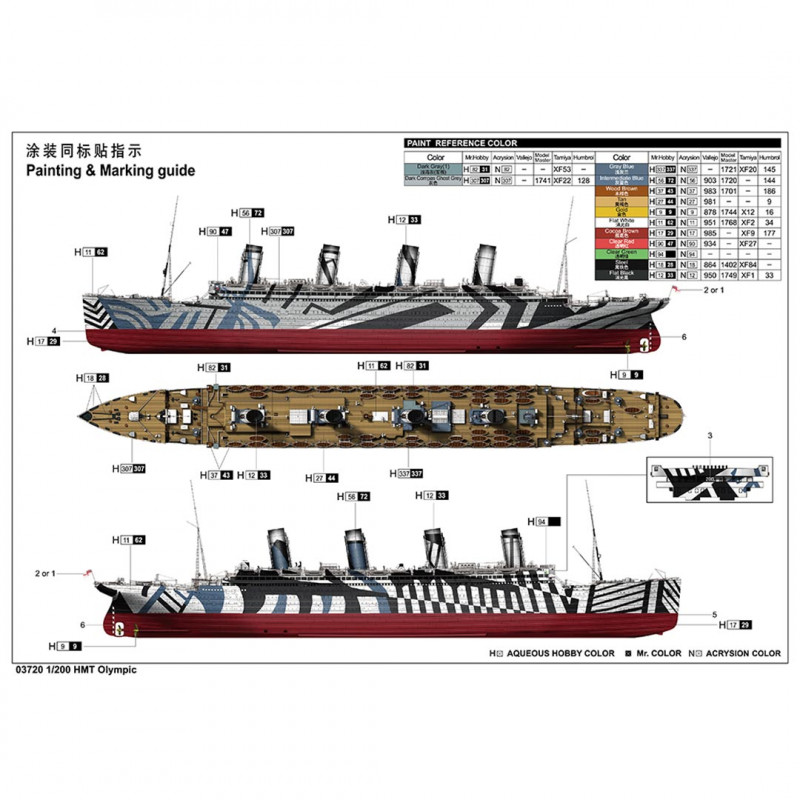
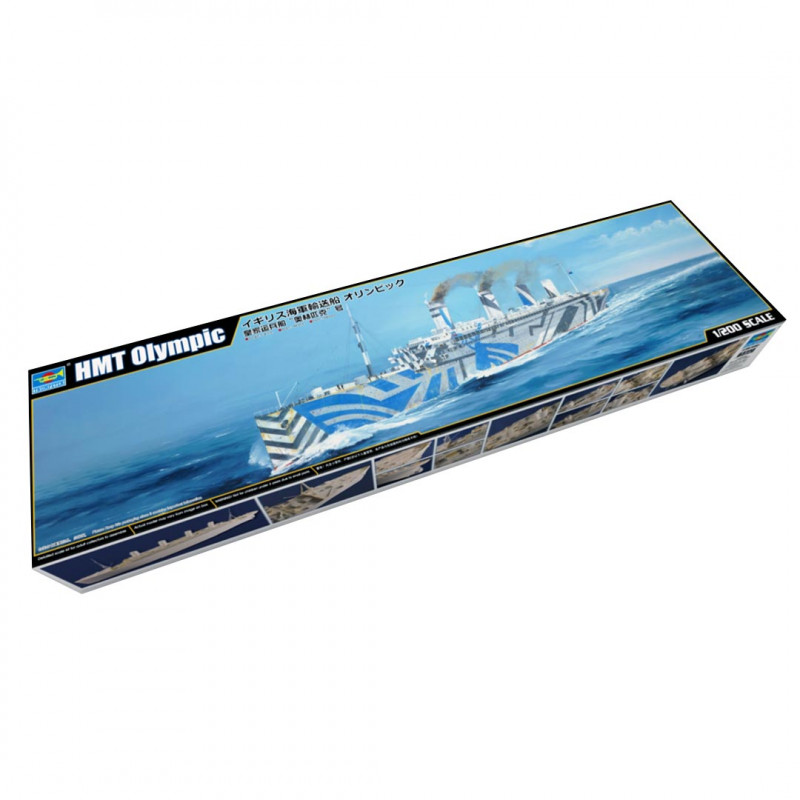
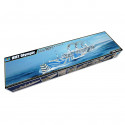
Plastic Model of Ship H.M.T. OLYMPIC 1:200
Plus de detailsPlastic Model of Ship H.M.T. OLYMPIC 1:200
|
|

|
Model of plastic boat lighting kit for OLYMPIC 95T03720€32.50 - ref. 95T06655 |
Fast shipping
Via Chronopost 24H
Via DPD 24/48H
Colissimo 48/72H
331137 products in stock
Real-time stock displayed
Secure payment




Secure payment
In 3 or 4 installments

 4.6/5
4.6/5

Specialist since 1955
Fast shipping
Via Chronopost 24H
Via DPD 24/48H
Colissimo 48/72H
331137 products in stock
Real-time stock displayed
Secure payment
Secure payment
In 3 or 4 installments
4.6/5
Specialist since 1955
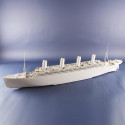
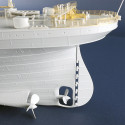
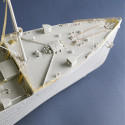
Model of the sister ship of the famous TITANIC which was requisitioned by the army during the war.
Lighting kit available as an option under reference 95T06655.
The British maritime company White Star Line, founded in 1845, decided at the beginning of the 20th century to build a new series of liners to strengthen its transatlantic connections.
The first of this series is the Olympic. Its name evokes the prestige of Antiquity and also symbolizes the year of its construction: 1908, the year of the London Olympic Games, and the year the construction of this immense ocean liner began.
In the shipyards of Belfast, the keel laying of the Olympic took place on December 16, 1908. Less than four months later, at the same location, the construction of its twin, the Titanic, began. The two ships, assembled side by side, each measure 269 meters.
The brand new ocean liner is equipped with luxurious facilities: several lounges, libraries, as well as sports and leisure facilities, such as a gymnasium, a squash court, a swimming pool, and Turkish baths.
The Olympic will lend its name to the famous Olympic Class, comprising the three ocean liners of the White Star Line: the Olympic, the Titanic, and the Britannic.
In June 1911, the Olympic made its maiden voyage in five days between Southampton and New York, with Captain Edward Smith at the helm. He would later take command of the Titanic and perish in its sinking in 1912.
The early voyages of the Olympic were marked by some incidents, including a collision with the British warship Hawke in November 1911. On February 24, 1912, a storm damaged the Olympic by breaking a propeller blade. The White Star Line then decided to use parts originally intended for the Titanic to repair the Olympic, leading to the postponement of the Titanic's maiden voyage from March 20 to April 10, 1912.
During the tragedy of April 15, 1912, the Olympic, en route from New York to Southampton, was 500 miles away from its twin. Too far to intervene immediately, it used its radio waves to relay the distress call.
After the Titanic's sinking, the Olympic underwent a series of tests and modifications were made to enhance its safety. It then resumed its commercial service until being requisitioned by the British military during World War I.
After the armistice, it returned to ocean crossings, transporting numerous passengers, celebrities, and royalty. However, competition and difficult economic conditions ended its career in 1934, and the Olympic was dismantled in 1937, the year of Pierre de Coubertin's death.
Several decorative elements of the Olympic were saved through an auction. Director James Cameron was inspired by some details and remnants of the Olympic for his film Titanic (1997).
The main difference distinguishing the Titanic from the Olympic in 1912 was their tonnage: the Titanic weighed 1,000 tons more than the Olympic. However, after the Titanic's sinking, the Olympic was reinforced for increased safety, surpassing the Titanic's tonnage.
The differences between the Titanic and the Olympic, although subtle at first glance, involve their initial design, structure, and operational history, each marked by distinct maritime events.
Design and technical characteristics: The Titanic and the Olympic belonged to the Olympic Class, built by the White Star Line in the early 20th century to strengthen its transatlantic connections.
If the two ocean liners were visually almost identical and each measured 269 meters long, the Titanic, built after the Olympic, was slightly more imposing with a gross tonnage of approximately 46,328 tons compared to the Olympic's 45,324 tons. This weight difference allowed the Titanic to have improved amenities and additional luxury compared to its predecessor.
Structural differences and interior fittings: The interior differences between the Titanic and the Olympic were mainly seen in certain first-class spaces. For example, the Titanic had more luxurious suites, an exclusive Parisian restaurant, and an elegant indoor promenade on the first-class deck, which did not exist in the same dimensions or proportions on the Olympic. These enhancements aimed to make the Titanic even more appealing to wealthy clientele, solidifying its image as a floating palace.
The Titanic also had additional windows in some lounges to bring in more natural light, while the Olympic had simple portholes in those locations.
Safety and hull structure: Although designed to be the safest of their time, both the Titanic and the Olympic had structural weaknesses. The Titanic had 16 watertight compartments, an innovative feature at the time, but lacked sufficient watertight bulkheads above the waterline, which could have improved safety in case of a breach. After the Titanic's sinking in April 1912, the Olympic underwent significant safety modifications.
Its hull was reinforced, higher watertight bulkheads were installed, and the number of lifeboats was increased to match the maximum capacity of passengers and crew. These changes allowed the Olympic to sail safely for several decades after the Titanic disaster.
Distinct operational histories: The Olympic, launched in 1911, had a much longer and more eventful career than the Titanic. In November 1911, it collided with the HMS Hawke, a British warship, causing significant damage.
In 1912, it suffered another mishap by losing a propeller blade, forcing the White Star Line to use parts from the Titanic to repair it, delaying the Titanic's maiden voyage.
In contrast, the Titanic sank on its maiden voyage in April 1912, hitting an iceberg and causing the deaths of over 1,500 people.
After this tragedy, the Olympic was modified and continued to sail, serving as a troop transport during World War I and resuming commercial service after the armistice, until it was scrapped in 1937.
Their legacy: The Titanic is widely recognized today for its tragic end, which turned it into a legend, while the Olympic is often forgotten despite its notable career.
However, the Olympic inspired several aspects in the making of James Cameron's film Titanic, and some decorative elements from the ship were even preserved during its dismantling.
The main visible difference between the two liners remained their tonnage and the safety modifications made after the disaster.
Customers who bought this product also bought: