-
News to come
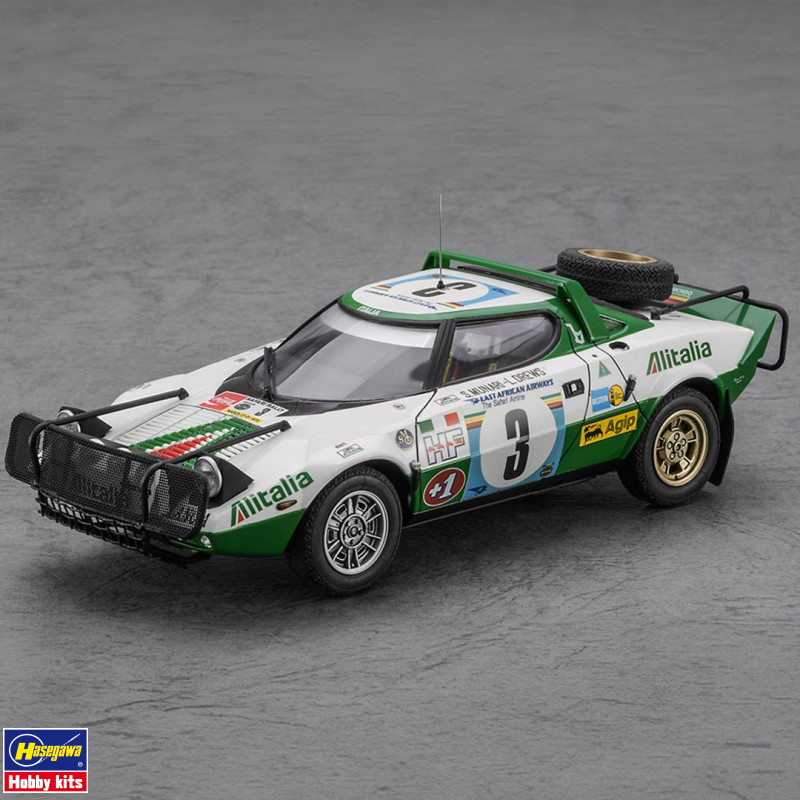
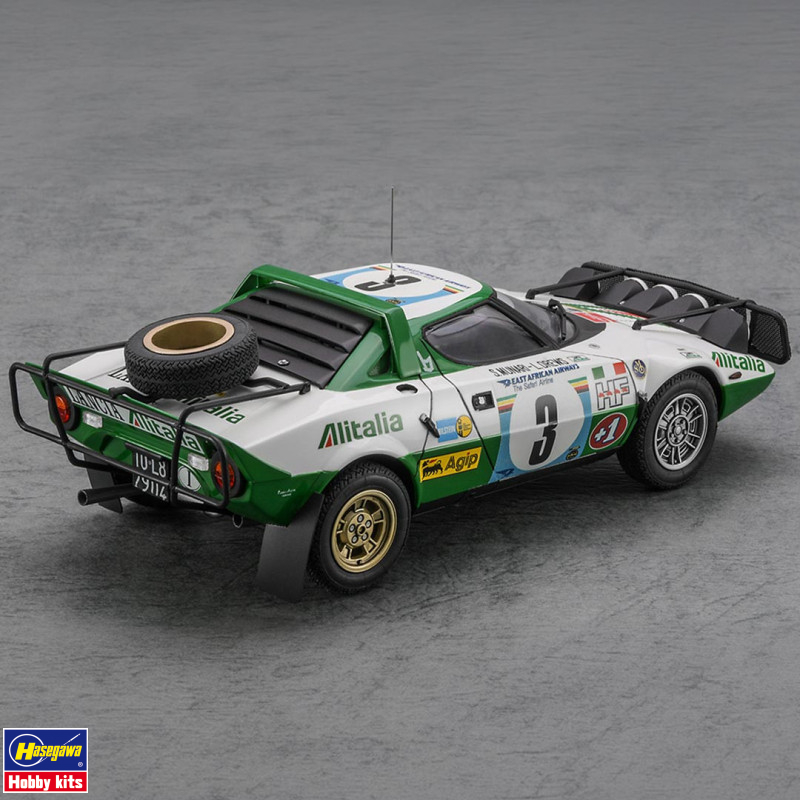
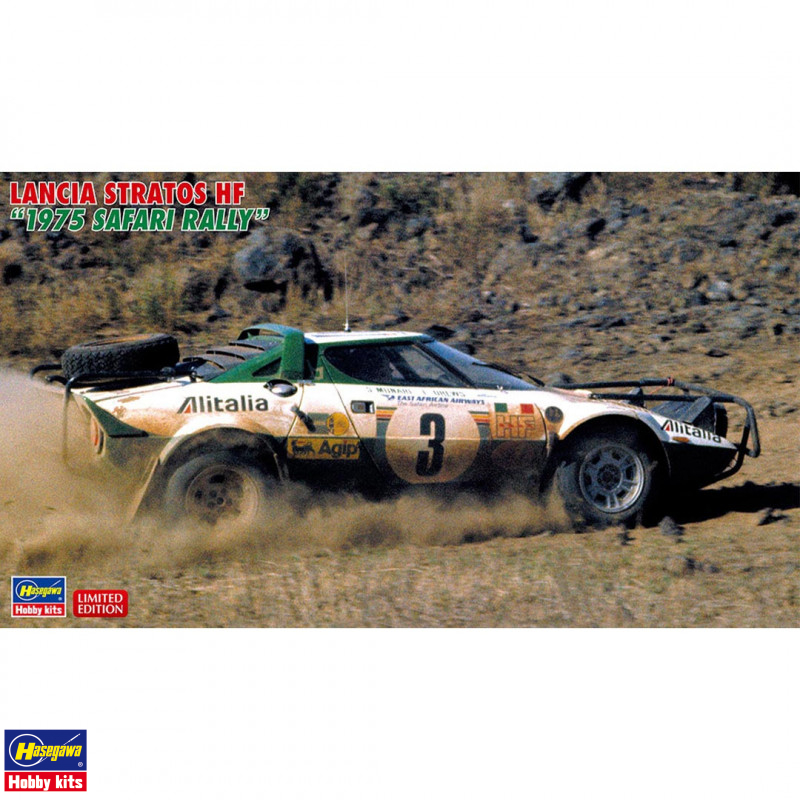
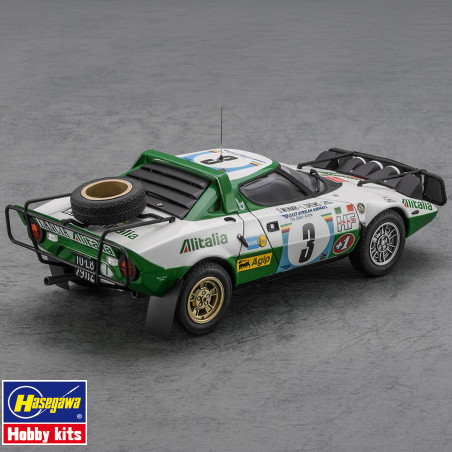
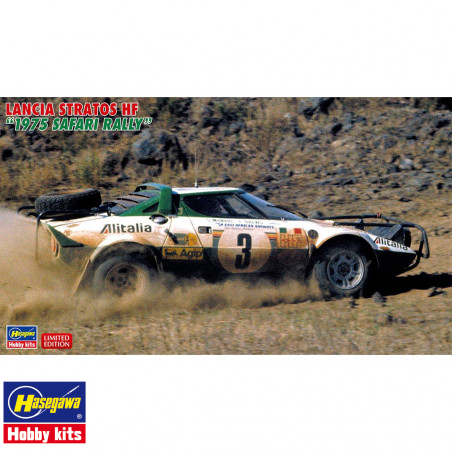
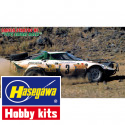
This Lancia Stratos HF model "1975 Safari Rally" in 1/24 scale reproduces a car entered in the WRC Safari Rally in 1975.
This limited edition allows you to build one of the two competition versions, with the liveries of car No. 3 driven by S. Munari or car No. 8 driven by B. Waldegård.

Model Lancia Stratos HF 1975 Safari Rally 1-24 - Hasegawa
Fast shipping
Via Chronopost 24H
Via DPD 24/48H
Colissimo 48/72H
331678 products in stock
Real-time stock displayed
Secure payment




Secure payment
In 3 or 4 installments

 4.6/5
4.6/5

Specialist since 1955
Fast shipping
Via Chronopost 24H
Via DPD 24/48H
Colissimo 48/72H
331678 products in stock
Real-time stock displayed
Secure payment
Secure payment
In 3 or 4 installments
4.6/5
Specialist since 1955
This plastic model of an Italian rally car is designed to be assembled by gluing and then painted.
At 1/24 scale, it measures approximately 166 mm in length by 73.5 mm in width once assembled.
Its subject is directly related to the 1975 Safari Rally, an event known for its particularly demanding conditions.
The limited edition offers two liveries corresponding to the Lancia Stratos HF cars entered in this rally edition.
The modeler can choose between car No. 3 associated with S. Munari, finishing second, and car No. 8 driven by B. Waldegård, finishing third.
The "1975 Safari Rally" livery allows for the representation of two cars that achieved podium positions.
The Lancia Stratos HF No. 3 driven by S. Munari finished in second place, while car No. 8 driven by B. Waldegård took third place.
These two configurations give the model a specific identity and help place the model in the historical context of the event.
For a modeler, the choice of version before assembly is important, especially for organizing the livery and final presentation.
Once the bodywork is prepared and painted, the application of decorative elements must be done on a clean and sufficiently smooth surface to achieve a uniform finish.
The Lancia Stratos HF was designed around an architecture particularly suited for motorsport competition.
Its compact silhouette and specific proportions made it immediately recognizable in rally championships.
Participation in the Safari Rally, however, represents a different context from the more traditional European events, with long routes and challenging terrain conditions.
The subject of this model focuses on the version entered in the 1975 Safari Rally.
The presence of two Lancia Stratos HF cars on the podium allows for the representation of an important period in the model's racing career and provides an interesting theme for a collection dedicated to great Italian rally cars.
Assembling this plastic model requires the usual tools for automotive modeling: cutting pliers to separate parts from the sprue, file or fine sandpaper to remove molding traces, plastic glue, and precision clamps.
A hobby knife can also be useful for small preparation operations, with the necessary precautions.
Before final gluing, a dry fit allows for checking the fit of the bodywork and various sub-assemblies.
This step is particularly useful before painting to avoid having to correct an assembly after applying the finish.
The parts intended for decoration must be prepared carefully to ensure a smooth surface.
Painting can be done after preparing and priming the bodywork.
For a finish intended for a historic competition car, it is recommended to work on the bodywork and small parts separately to facilitate the application of different shades.
Mechanical details and chassis components can receive different finishes to add depth to the model.
Decoration is an essential part of the reproduction.
The application should be done gradually, respecting the contours of the bodywork.
Once the elements are in place, a varnish suitable for models can protect the decoration and provide a uniform finish.
The Lancia Stratos HF "1975 Safari Rally" can be integrated into a diorama dedicated to the Safari Rally, the World Rally Championship, or 1970s competition cars.
Its 1/24 scale allows it to be paired with other rally vehicles and scenic elements such as technical support, a checkpoint area, or a dirt track.
To evoke the conditions of the Safari Rally, weathering can be applied to the lower parts of the bodywork, wheels, and chassis.
Dust and dirt effects can represent a car after several kilometers on challenging tracks.
Conversely, a clean finish is suitable for a static presentation of the car as it appears before the start or in a collection.
Scale: 1/24.
Length: 166 mm.
Width: 73.5 mm.
Type: Plastic model of an Italian rally car to be assembled by gluing and painting.
Edition: Limited.
Liveries: 1975 Safari Rally, 2nd place, car No. 3, driver S. Munari; 1975 Safari Rally, 3rd place, car No. 8, driver B. Waldegård.