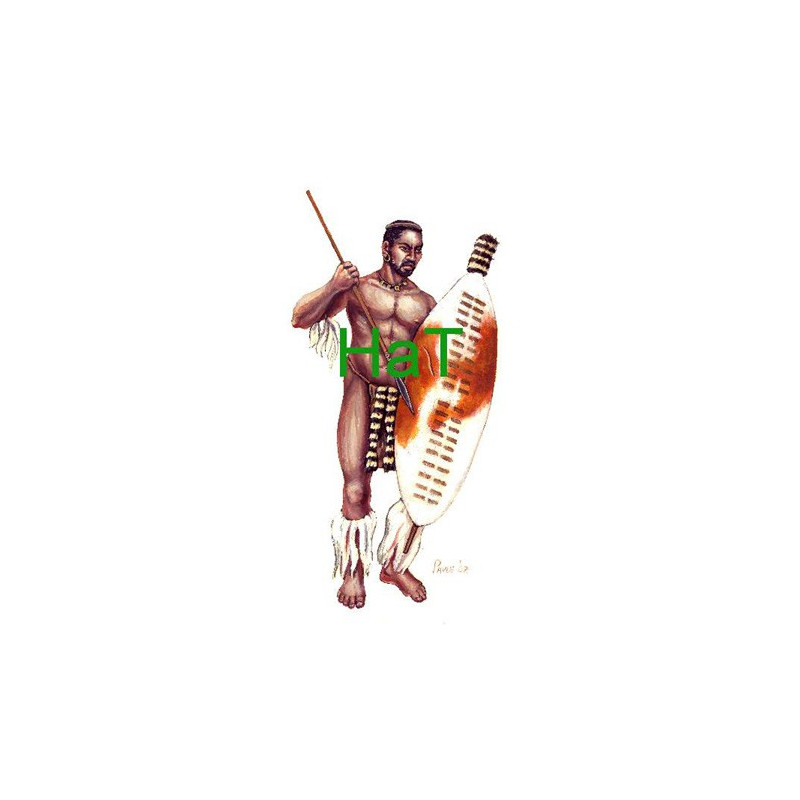
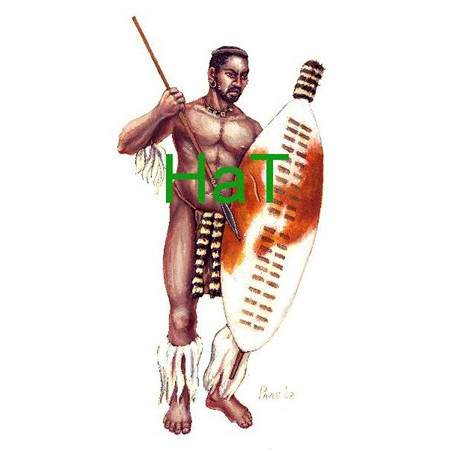
Zulu Warriors, Victorian Era (1870-1880) 1/72. In the 1870s, England believed that to ensure the security and stability of the region, it was necessary to establish a federation under its authority encompassing all of South Africa. After the Boer republic of Transvaal was annexed without resistance, the last strong state in the region was the Zulu kingdom, restored by King Cetshwayo. While Chelmsford, the commander-in-chief of the English forces in South Africa, made military preparations, Frere, the governor of the Cape, exerted a series of diplomatic pressures against Zululand, under false pretenses, until issuing an ultimatum. On January 11, 1979, when the ultimatum expired, the English army entered Zululand. The main tactic of the Zulus, theorized under Shaka, relied on a close-contact charge, accompanied by envelopment from both sides. These were the famous horns of the bull. A reserve was kept slightly behind. The Zulu warriors were fierce and difficult to control, and the rivalry between amabutho was great. At Khambula, the English used their cavalry to provoke uncoordinated and uncontrolled attacks. The Zulus were equipped with the famous shield and the stabbing spear or wooden club. A large proportion of them were armed with firearms, often obsolete. After Isandhlwana, they would have Martini-Henry rifles taken from the English. However, their firepower would never be as effective as that of a Western army. Estimates indicate between 30,000 and 40,000 Zulu warriors available at the start of hostilities. Zulu Warriors 1/72, Victorian Era, Colonial Wars. 32 figures to paint.









 4.6/5
4.6/5