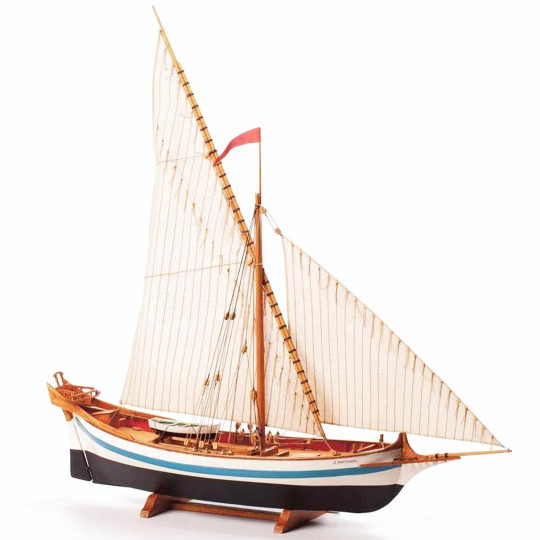
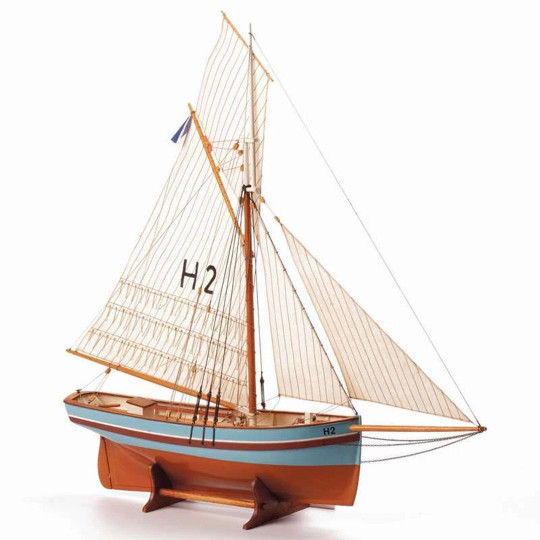
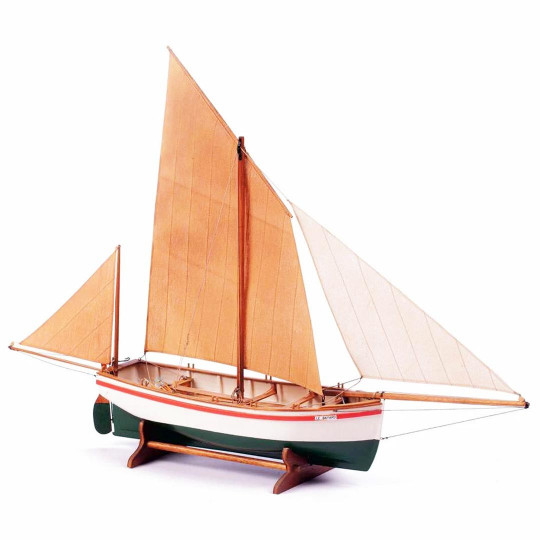
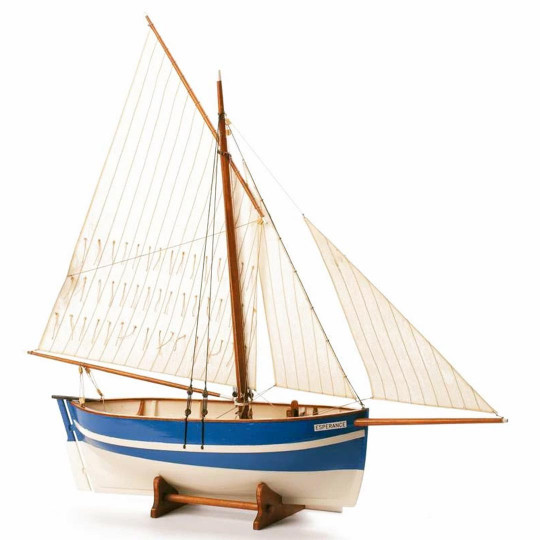
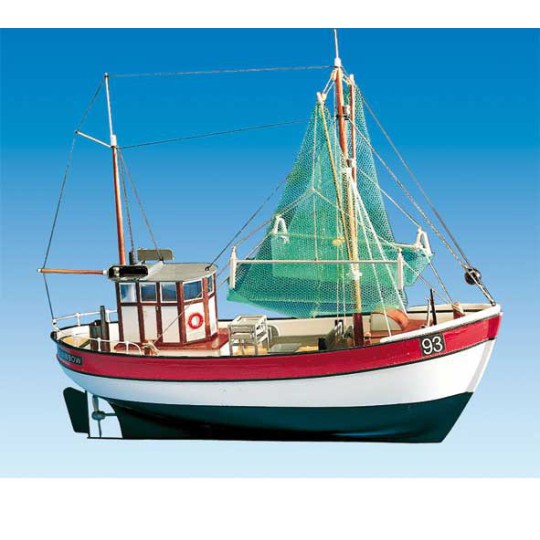
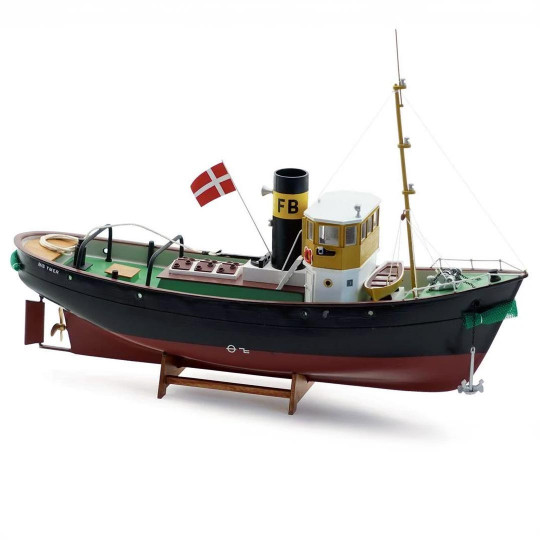
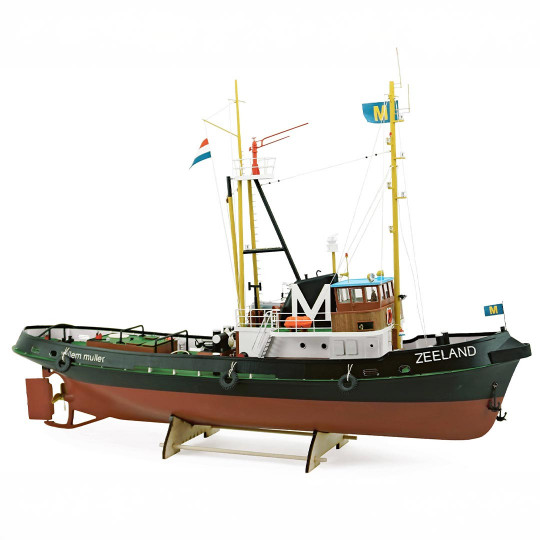
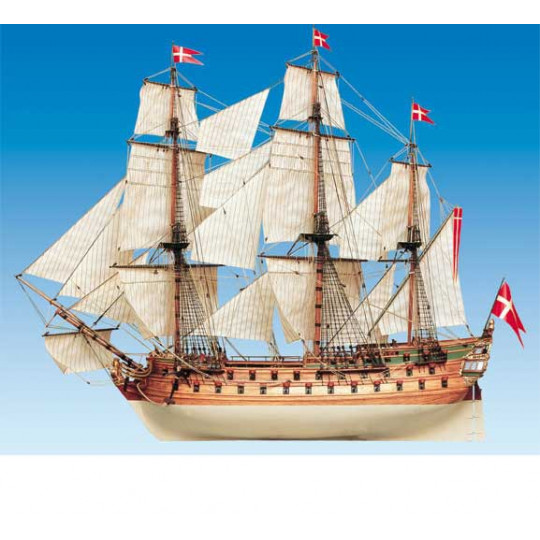
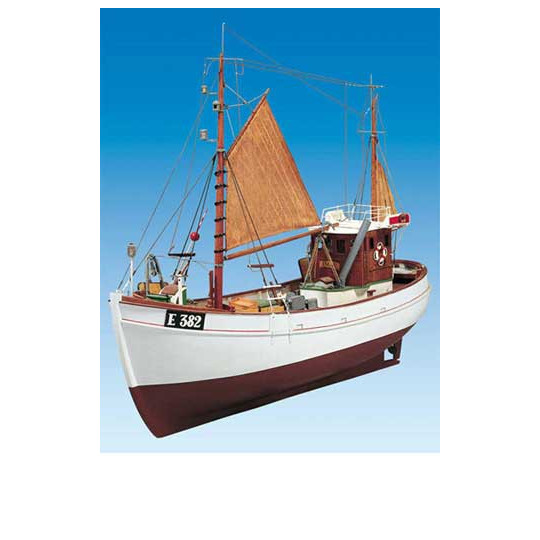
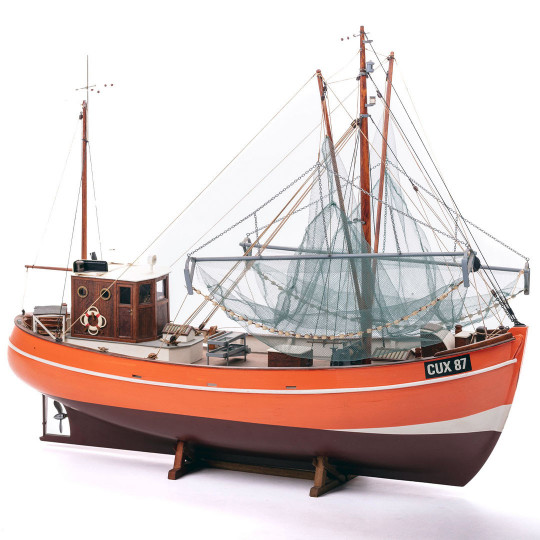
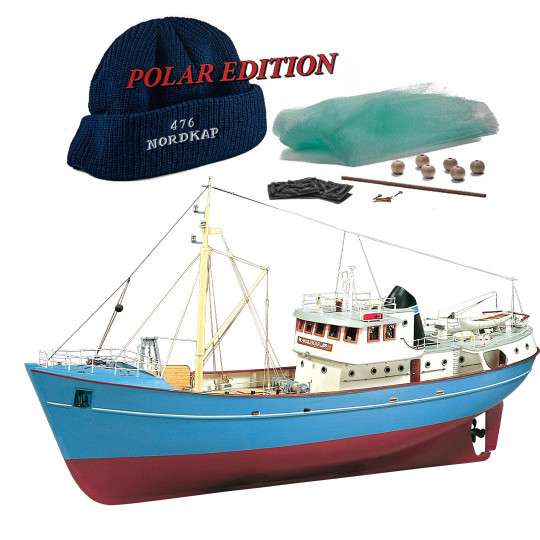
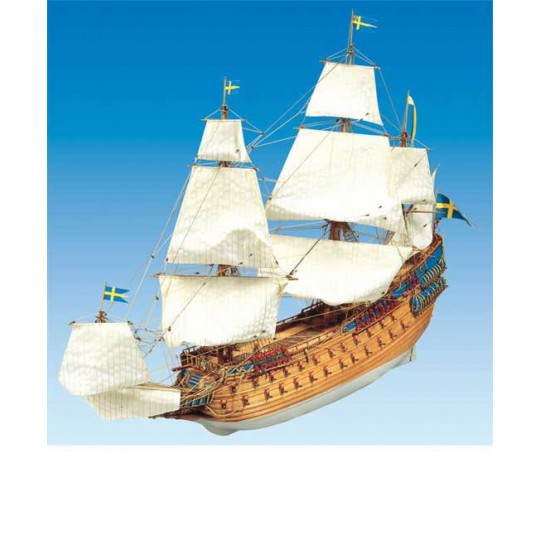
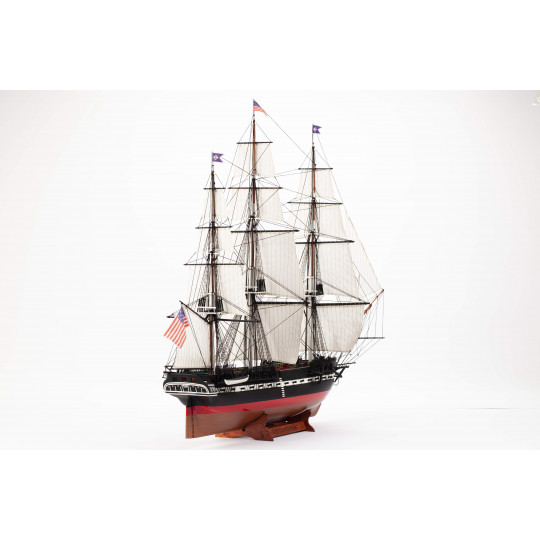
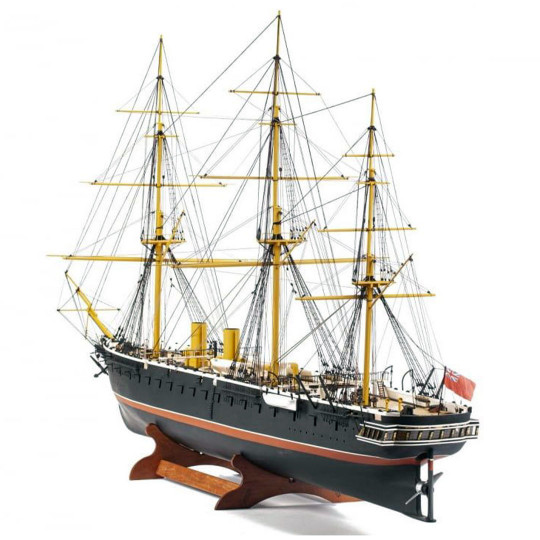
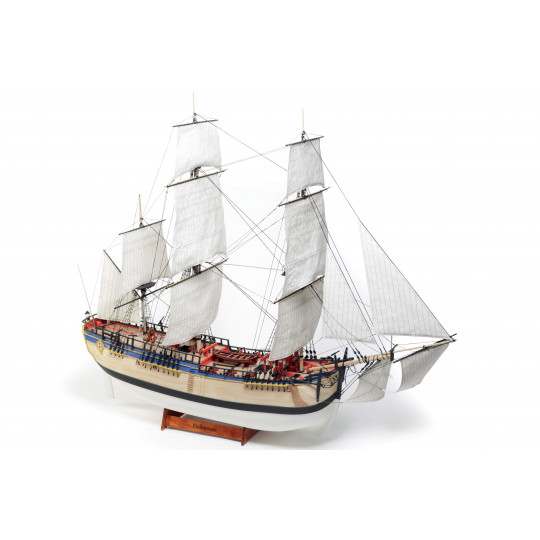
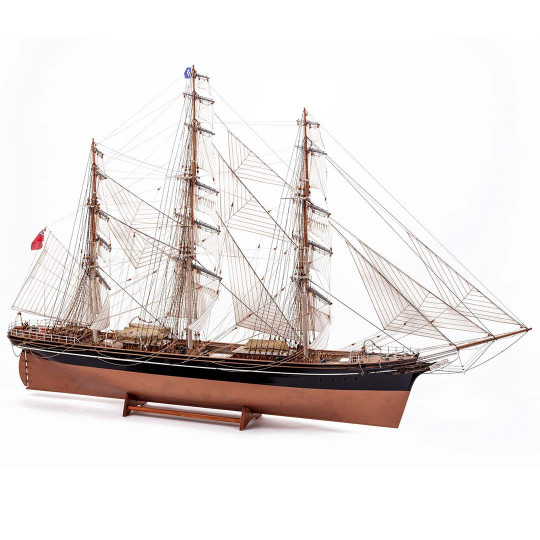
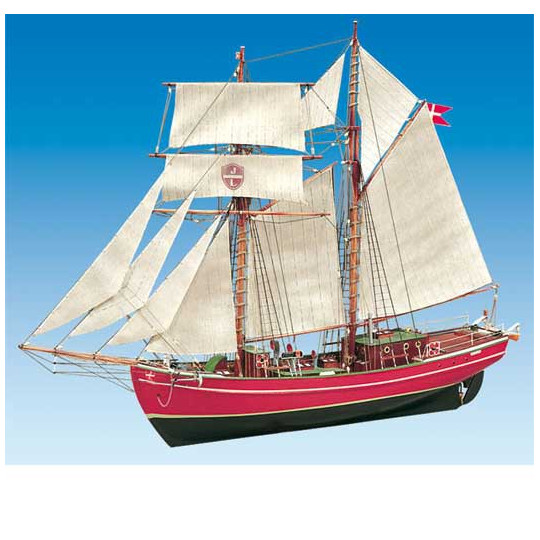
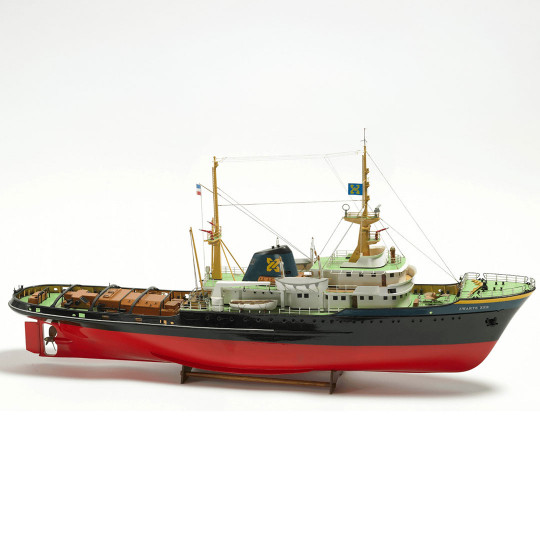
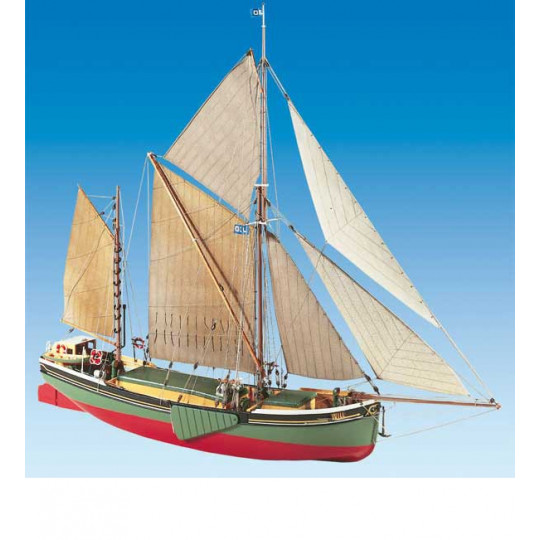
Depending on the model, the hulls may be made of wood or ABS plastic.
Some boats originally designed for radio-controlled sailing can also be assembled for display when the modeller is primarily interested in the vessel itself rather than sailing it. The best example is the Calypso, the research vessel associated with Commander Cousteau.
Choose the category that matches your project and find the right boat for you.
Billing Boats and Scientific France: A Shared History
The collaboration between Billing Boats and Scientific France dates back to the 1960s.
This long-standing relationship helped introduce French boat models into the Danish manufacturer's range.
Discover the Billing Boats model kits available on our website and consult each product page for details about the model, its scale and the components required for assembly.
Which Billing Boats Model Should You Choose for Your Skill Level?
Discover Billing Boats model ship kits classified according to their building difficulty.
From your first wooden boat kit to the most complex ship models, this table helps you choose a model suited to your experience.
Find the boat names, reference numbers, scales and the manufacturer's four difficulty levels: beginner, beginner-intermediate, intermediate and expert.
67 Billing Boats models divided into four difficulty levels.
Which Difficulty Level Should You Choose for a Model Boat?
Beginner: ideal for discovering ship modelling and learning the basic techniques for building a wooden model boat.
Beginner-intermediate: designed for model makers who have already completed their first kit and want to progress to more detailed assemblies.
Intermediate: recommended for enthusiasts who have mastered the main shipbuilding techniques and are looking for more elaborate models.
Expert: intended for experienced model makers who want to build historic boats, sailing ships or particularly detailed vessels.
Tools and Glues for Building Model Boats
To assemble your models, Scientific MHD offers a range of glues suited to different materials.
For assembling the different types of wood used in your model, including applications where the glue needs to be sandable, Scientific MHD offers aliphatic white glues from Evergreen or Mantua.
For plastic, metal or brass fittings, the range of ZAP cyanoacrylate glues is extensive enough to cover all your needs.
You will also find all the tools you need for your builds on the Scientific MHD website.
The History of Billing Boats
In the early 1950s, Mr Ejnar (Ed) Billing, who had served as a Royal Air Force pilot during the Second World War, was working as an architect in the town of Esbjerg, Denmark.
Meanwhile, his wife managed a hobby shop called Vestjydsk Hobby.
Mr Billing proudly displayed his painstaking work: a model of a Danish fishing boat.
At the time, authentic kits for building model boats were not available, making it difficult to construct a vessel to scale.
One day, a Danish periodical spotted this impressive creation in the window of the hobby shop.
The publication expressed great interest in purchasing fifty "pre-assembled models" of the fishing boat for an upcoming summer competition.
Mr Billing was excited by the proposal but faced a considerable challenge: producing fifty replicas.
That was when he came up with the idea of creating a model in kit form, to be assembled in much the same way as a real ship is built.
This was the moment when the concept of a "plank-on-frame hull" was born, an approach devised by Mr Billing and now adopted worldwide by model boat manufacturers.
Until 1958, the kits were produced under the name "VHT" (Vestjydsk Hobby Teknik). The name gradually disappeared as Mr Billing's creations became increasingly well known beyond Denmark.
In August 1958, the Billing Boats name and logo were introduced, launching the company on its path to international recognition as a leading model boat manufacturer.
Throughout the 1960s, 1970s and 1980s, the kits underwent improvements and refinements. Their gradual simplification helped meet the changing expectations of customers.
The frames were pre-cut or laser-cut, and during the 1960s ABS hulls were introduced for enthusiasts who wanted to sail their models using radio control.
In 1989/90, the first laser-cutting machine was introduced, streamlining production and making the kits more accessible to model makers.
Mr Billing passed away in 1990, leaving his wife and son to continue his work in accordance with his principles.
During the 1990s, it became increasingly clear that the market was changing, with competition coming not only from Europe but also from around the world.
In 2003, Kent Billing, Mr Billing's heir, and his wife Rikke Dolleris Billing took over the company with a clear vision: to inject new energy into the business and integrate more technology.
In August 2008, the 50th anniversary of the Billing Boats brand was proudly celebrated as the company prepared to offer a range of high-quality model boats using the latest technology, Danish know-how and refined expertise.
In 2016, Billing Boats was acquired by the Vestergaard Group.
SCIENTIFIC FRANCE AND BILLING BOATS: A Collaborative Partnership.
Since the 1960s, SCIENTIFIC FRANCE has been responsible for distributing BILLING BOATS' maritime models in the French market.
The founders of these two companies, the late Ejnar Billing and his successor Kent Billing, together with the late Jean Fontaine, maintained a lasting partnership.
This ongoing collaboration helped select models of particular interest to French model makers from the BILLING range.